
Short Answer
Definition of a Supergiant Star
Supergiant stars are among the most massive and luminous stars in the universe, representing a late evolutionary stage of stellar development. These colossal stars possess masses several times greater than that of the Sun and exhibit extraordinary brightness and size. Their life cycle culminates in dramatic transformations that often lead to spectacular cosmic events.
- Massive Stellar Bodies:
Supergiants typically have masses ranging from 10 to over 50 times that of the Sun. - High Luminosity:
Their brightness can outshine thousands to millions of Suns, making them visible across vast cosmic distances. - Short Lifespan:
Due to their immense mass and energy output, supergiants live only a few million years, a brief period compared to smaller stars.
Stages in the Lifecycle of a Supergiant
The evolution of a supergiant star is marked by a sequence of complex phases, beginning with its formation in dense nebulae and ending in a cataclysmic event such as a supernova. As these stars age, they undergo significant changes in their internal structure and external appearance.
- Birth in Nebulae:
Supergiants originate from massive clouds of gas and dust, where gravitational collapse initiates nuclear fusion. - Core Fusion Processes:
Initially, hydrogen fusion dominates, but as fuel depletes, heavier elements like helium, carbon, and beyond fuse in the core. - Expansion and Instability:
The star’s outer layers swell dramatically due to changes in internal pressure and energy output. - Terminal Phase:
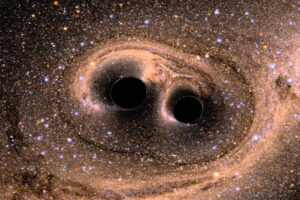
The final stage often involves a supernova explosion, leaving behind neutron stars or black holes.
Mechanisms Behind the Swelling of Dying Supergiants
The pronounced expansion observed in aging supergiant stars is primarily driven by the exhaustion of lighter nuclear fuels in their cores. As hydrogen and helium are depleted, fusion shifts to heavier elements, generating intense thermal pressure that disrupts the star’s equilibrium.
- Core Fuel Depletion:
The reduction of hydrogen and helium initiates fusion of heavier nuclei, increasing energy output. - Thermal Pressure Increase:
Elevated energy production raises internal pressure, causing the star’s outer layers to expand. - Gravitational and Radiative Forces:
The interplay between gravity pulling inward and radiation pushing outward leads to pulsations and size fluctuations.
Observational Techniques and Technological Advances
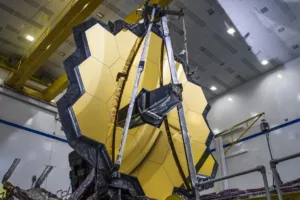
Modern astronomy employs a variety of observational methods to study supergiant stars, especially during their swelling phase. Multi-wavelength astronomy, including optical, infrared, and radio observations, provides a comprehensive understanding of these complex phenomena.
- Optical Telescopes:
Capture visible light to monitor changes in brightness and surface features. - Infrared Observations:
Penetrate dense gas and dust clouds, revealing hidden processes in the star’s outer layers. - Space-Based Instruments:
Telescopes like the Spitzer Space Telescope offer high-resolution data free from atmospheric interference.
Significance of Studying Swelling Supergiants
Investigating the expansion and eventual demise of supergiant stars is crucial for multiple scientific fields. These studies enhance our comprehension of stellar evolution, nucleosynthesis, and the cosmic recycling of matter.
- Element Formation:
The fusion of heavy elements and subsequent ejection enrich the interstellar medium, fostering the birth of new stars and planets. - Stellar Population Dynamics:
Understanding supergiants helps clarify the lifecycle and distribution of massive stars within galaxies. - Exotic Remnants:
The death of supergiants leads to neutron stars or black holes, objects that are key to studying extreme physics.
Real-World Examples of Swelling Supergiants
Several well-known supergiant stars have been observed undergoing significant expansion, providing valuable case studies for astronomers.
- Betelgeuse:
This red supergiant in the constellation Orion has exhibited notable swelling and dimming events, sparking widespread scientific interest. - Antares:
Another red supergiant, Antares shows pulsations and size variations linked to its late evolutionary stage.
Common Misconceptions About Supergiant Stars
Supergiants explode immediately after swelling.
The swelling phase can last thousands of years before a supernova occurs.
All supergiants end as black holes.
Depending on mass, some become neutron stars instead.
Why Understanding Supergiant Stars Is Essential
The study of supergiant stars is fundamental to astrophysics and cosmology. These stars act as cosmic forges, synthesizing heavy elements essential for life and shaping the structure of galaxies. Their dramatic life cycles offer insights into the forces that govern the universe and inspire a deeper appreciation of our place within the cosmic tapestry.
FAQ
What causes a star to swell in its dying phase?
A dying supergiant star swells primarily due to the depletion of hydrogen and helium in its core, leading to fusion of heavier elements which increases thermal pressure and causes the outer layers to expand.
Why is observing swelling supergiant stars important?
Observing swelling supergiants helps astronomers understand the late stages of stellar evolution, mechanisms of star death, and the cosmic recycling of elements essential for new stars and planets.
What technologies are used to observe these dying stars?
Advanced telescope technology, including the Spitzer Space Telescope and multi-wavelength astronomy techniques such as infrared and radio observations, are employed to study these stars.
What happens after a supergiant star finishes swelling?
After swelling, a supergiant typically undergoes a catastrophic collapse or explosion, potentially forming a neutron star or black hole.



Leave a Reply