
Short Answer
Understanding Supernovae
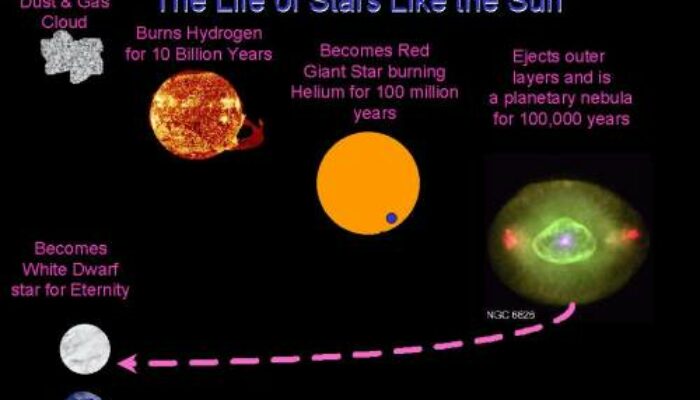
Supernovae represent some of the most spectacular and energetic events in the cosmos, marking the dramatic end of a star’s life cycle. These colossal explosions not only signal stellar death but also reveal intricate nuclear reactions and the influence of elusive cosmic components such as dark energy and dark matter. Traditionally, supernovae are understood through well-established astrophysical mechanisms, yet emerging theories propose that an often-overlooked factor-darkness itself-might play a crucial role in triggering these stellar cataclysms.
Classification and Mechanisms of Supernovae
Supernovae are primarily categorized into two main types based on their origin and characteristics:
- Type I Supernovae:
These occur in binary star systems where a white dwarf star accumulates material from its companion. When the white dwarf reaches a critical mass, it undergoes a runaway thermonuclear explosion. - Type II Supernovae:
These result from the gravitational collapse of massive stars after they exhaust their nuclear fuel, leading to a core implosion followed by a powerful explosion.
Both types rely on well-understood physical processes, yet the hypothesis that darkness-conceived not merely as the absence of light but as a pervasive cosmic entity-could influence these events introduces a novel perspective to supernova research.
Darkness in the Cosmic Context
In cosmology, the term “darkness” often relates to dark matter and dark energy, two mysterious components that shape the universe’s structure and expansion:
- Dark Matter:
A form of matter that does not emit or absorb electromagnetic radiation, making it invisible to current detection methods, yet it exerts gravitational effects on visible matter. - Dark Energy:
An unknown form of energy that permeates space and accelerates the expansion of the universe.
Considering darkness as a metaphorical fuel suggests that these unseen forces might influence the environments around stars, potentially affecting the conditions that lead to supernova explosions.
Potential Interactions Between Dark Matter and Stars
One intriguing possibility is that dark matter interacts gravitationally with ordinary (baryonic) matter in ways that destabilize stars. In regions with high dark matter density, the gravitational pull could disrupt a star’s hydrostatic equilibrium, making it more susceptible to collapse. This subtle influence might act as a hidden trigger for supernovae, challenging the notion that these explosions arise solely from observable stellar processes.
Dark Energy’s Role in Stellar Explosions
Dark energy, as the driving force behind the universe’s accelerated expansion, might also have localized effects on dying stars. Hypothetically, fluctuations or temporary reductions in dark energy density near massive stars could alter the energy balance within their cores. Such changes might initiate or amplify the chain reactions that culminate in supernovae, suggesting a complex interplay between cosmic expansion forces and stellar death.
Implications for Astrophysics and Cosmology
If darkness indeed contributes to supernova mechanisms, this revelation could transform our understanding of stellar and cosmic evolution. It would prompt astronomers to reconsider observational data, exploring whether supernovae serve as indirect indicators of dark matter concentrations. This perspective could lead to the development of new detection technologies aimed at uncovering obscured cosmic phenomena and refining cosmological models that predict the universe’s fate.
Challenges and Scientific Scrutiny
While the idea that darkness fuels supernovae is captivating, it remains speculative and requires rigorous testing. Scientific progress depends on empirical evidence and theoretical consistency, so this hypothesis must undergo thorough validation through observation and modeling. Such bold proposals, though unconventional, are essential for advancing astrophysical knowledge but must be approached with critical analysis.
Conclusion: Exploring the Cosmic Dance of Light and Darkness
The proposition that supernovae might be energized by darkness invites a profound reevaluation of cosmic phenomena. By integrating established astrophysical concepts with innovative ideas, it challenges prevailing scientific paradigms and encourages deeper inquiry into the universe’s hidden forces. As research advances, the interplay between light and darkness continues to inspire curiosity, reminding us that many cosmic mysteries remain to be unveiled beyond the shadows of current understanding.
FAQ
What are supernovae?
Supernovae are massive explosions marking the end of a star’s life cycle, classified into Type I and Type II, based on their origin and characteristics.
How does darkness relate to supernovae?
The hypothesis suggests that darkness, as a cosmic entity, may influence supernovae by affecting the gravitational balance and energy dynamics in stars.
Leave a Reply