

Short Answer
Understanding Cosmic Radiation
Cosmic radiation refers to the high-energy particles and electromagnetic waves that continuously bombard Earth from outer space. Originating from powerful astrophysical phenomena such as supernovae explosions and quasars, these particles-primarily protons, electrons, and atomic nuclei-serve as messengers carrying vital information about the distant and ancient universe. Their study provides critical insights into the processes shaping cosmic evolution and the fundamental forces at play.
Particle-Wave Duality in Cosmic Rays
One of the most intriguing aspects of cosmic radiation is its dual nature, exhibiting characteristics of both particles and waves. At times, cosmic rays behave like discrete particles, capable of penetrating Earth’s atmosphere and interacting with matter. Conversely, they can also display wave-like properties, such as interference patterns, which challenge classical physics and highlight the deep connection between energy and matter. This duality complicates detection and interpretation but enriches our understanding of quantum phenomena on a cosmic scale.
String Theory and Cosmic Radiation
String theory offers a compelling framework to interpret the fundamental nature of particles involved in cosmic radiation. Instead of viewing particles as zero-dimensional points, string theory posits that they are one-dimensional vibrating strings. The specific vibrational modes of these strings determine the particle’s properties, much like how different vibrations on a musical string produce distinct notes. This perspective extends to cosmic rays, suggesting that their high-energy interactions can be understood as manifestations of underlying string vibrations, thereby linking quantum mechanics with cosmological observations.
Cosmic Strings: Hypothetical Structures in the Universe
Cosmic strings are theoretical one-dimensional defects that may have formed during phase transitions in the early universe. These topological features could exert significant gravitational influence, warping spacetime and affecting the motion of nearby celestial bodies. Additionally, cosmic strings are predicted to emit gravitational waves, ripples in spacetime that add complexity to the cosmic energy landscape. Studying these hypothetical entities helps scientists explore the universe’s formative moments and the interplay between gravity and quantum fields.
Detection and Analysis of Cosmic Signals
Advanced observatories equipped with state-of-the-art instruments capture fleeting cosmic signals, such as gamma-ray bursts-intense explosions marking the death of massive stars. These observations bridge quantum mechanics and general relativity, offering a window into extreme astrophysical events. However, the detection process is complicated by background noise from various cosmic sources, which can obscure or mimic genuine signals. To address this, researchers employ sophisticated filtering techniques, analogous to tuning a musical instrument, to isolate meaningful data from the cosmic cacophony.
Challenges in Interpreting Cosmic Radiation
- Misconception: Cosmic radiation signals are always clear and easily distinguishable.
Correction: Cosmic signals are often masked by background noise, requiring complex data processing to extract accurate information. - Misconception: Cosmic rays behave solely as particles.
Correction: Cosmic rays exhibit both particle and wave properties, reflecting the principles of quantum mechanics.
The Interdisciplinary Quest to Decode the Universe
Deciphering cosmic radiation involves collaboration across physics, astronomy, and philosophy, as researchers seek to differentiate authentic cosmic messages from noise and explore the deeper metaphysical implications. This interdisciplinary approach enriches our comprehension of the universe, pushing the boundaries of knowledge and inspiring new theoretical and experimental advancements.
Technological Advances in Cosmic Observation
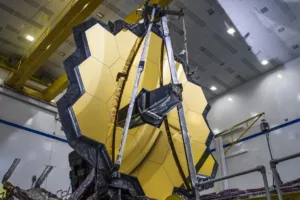
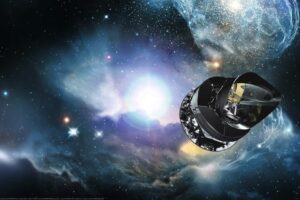
The advent of space-based telescopes and other cutting-edge technologies has revolutionized the study of cosmic radiation. These tools enable scientists to gather high-precision data on phenomena such as the cosmic microwave background radiation-a faint glow left over from the Big Bang that permeates the universe. This radiation serves as a cosmic backdrop, helping to map the universe’s history and structure with remarkable detail.
Limitations and Evolving Frameworks in Cosmic Research
Despite technological progress, the interpretation of cosmic radiation remains constrained by the limitations of current theoretical models and observational methods. Scientific frameworks must continuously adapt to incorporate new findings and refine our understanding of the cosmos. This dynamic interplay between established knowledge and emerging discoveries fuels the ongoing pursuit of cosmic truths.
Significance of Cosmic Radiation Studies
Exploring cosmic radiation is vital for unraveling the universe’s fundamental nature and the forces governing it. These studies inform astrophysics, cosmology, and particle physics, contributing to technological innovations and enhancing our grasp of the universe’s origin, evolution, and ultimate fate. The enigmatic signals and strings of cosmic radiation remind us that science is an ever-evolving journey, inviting humanity to deepen its curiosity and expand its horizons within the grand cosmic symphony.
FAQ
What is cosmic radiation?
Cosmic radiation refers to high-energy particles and waves from space that provide insights into the universe's evolution.
What are cosmic strings?
Cosmic strings are theoretical one-dimensional defects that may have formed in the early universe, influencing gravity and emitting gravitational waves.


Leave a Reply