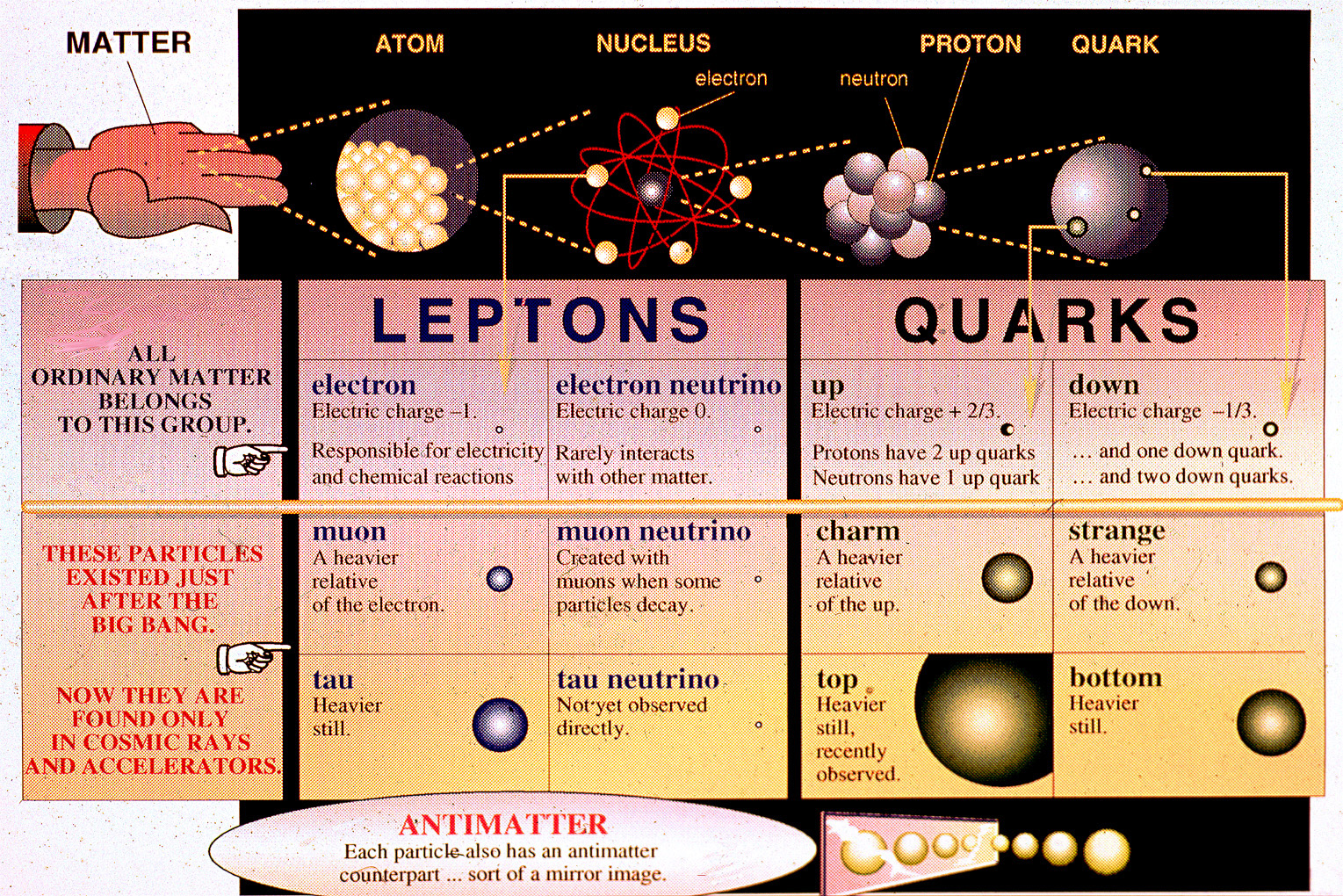
Is there any building block smaller than quarks and electron?

Understanding Fundamental Particles At the core of particle physics lies a complex network of elementary particles that form the foundation of all matter. Among these, quarks and electrons are recognized as the primary constituents. However, the quest to determine if there exist even more elementary entities beneath these particles has driven physicists to explore beyond […]

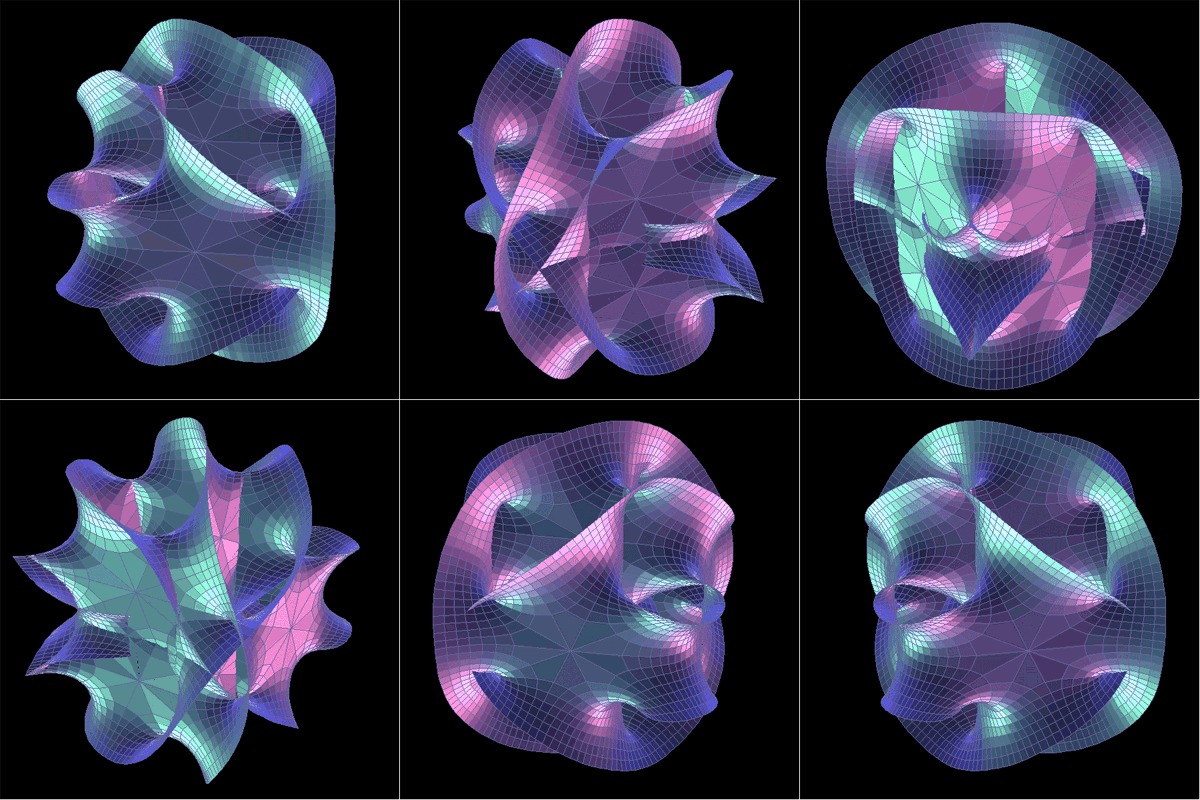
Read More →

Weighing the Antiproton: Precision at the Edge of Matter

Understanding Antimatter and the Antiproton Antimatter, a fascinating subject bridging theoretical physics and experimental research, has intrigued both scientists and the general public. Among its various components, the antiproton stands out as the antimatter equivalent of the proton. This particle holds significant importance due to its energetic properties and its role in probing the fundamental […]

Read More →

Single-Atom Interference: Quantum Mechanics at Its Most Elegant

Definition of Single-Atom Interference Single-atom interference is a quintessential quantum mechanical phenomenon that reveals the dual wave-particle nature of matter at the atomic scale. It demonstrates how individual atoms, when passed through a barrier with multiple openings, can produce interference patterns typically associated with waves. This effect challenges classical intuitions about particles and highlights the […]

Read More →

The Role of Radiomics in Precision Medicine?

Definition of Radiomics Radiomics is an advanced field within medical imaging that involves extracting a vast array of quantitative features from radiographic images such as CT, MRI, and PET scans. Unlike traditional image interpretation, which relies on visual assessment, radiomics employs sophisticated computational algorithms to analyze characteristics like shape, texture, and intensity. This transformation of […]

Read More →

What is environmental ethics?

Definition of Environmental Ethics Environmental ethics is a vital branch of philosophy that explores the moral connections between humans and the natural environment. It marks a significant shift from human-centered (anthropocentric) perspectives to a more inclusive worldview that acknowledges the intrinsic value of all living organisms. This discipline critically examines human duties toward nature and […]

Read More →

How are lights reflected in the atomic level?

Definition of Light Reflection at the Atomic Scale Light reflection at the atomic level refers to the process by which electromagnetic radiation interacts with the microscopic structure of materials, resulting in the redirection of light waves. This phenomenon bridges the disciplines of physics and material science, revealing how the fundamental particles and energy states within […]

Read More →

Antineutrinos: The Nuclear Watchdogs You Never See

Definition of Antineutrinos Antineutrinos are subatomic particles that serve as the antimatter counterparts to neutrinos. Characterized by their extremely weak interaction with matter, they carry no electric charge and possess an almost negligible mass. These elusive particles are primarily generated through neutron beta decay, a process in which a neutron transforms into a proton, emitting […]

Read More →

How to make graphene?

Definition of Graphene and Its Significance Graphene is a single layer of carbon atoms arranged in a two-dimensional honeycomb lattice. This remarkable material has attracted widespread interest due to its outstanding mechanical strength, exceptional electrical and thermal conductivity, and unique physical properties. These characteristics make graphene a highly promising candidate for applications spanning materials science, […]

Read More →

Do they check for metal stuff in you before an MRI?

Definition of MRI and Its Safety Considerations Magnetic Resonance Imaging (MRI) is a groundbreaking diagnostic tool that produces highly detailed images of the body’s internal structures without requiring invasive techniques. Unlike imaging methods such as X-rays or CT scans that use ionizing radiation, MRI relies on powerful magnetic fields and radiofrequency waves to visualize tissues. […]

Read More →