
Short Answer
Overview of Optical Fiber and Satellite Communication
In today’s telecommunications arena, the comparison between optical fiber communication and satellite communication has garnered significant attention from researchers, engineers, and industry experts. Each technology offers distinct benefits and faces unique challenges, influencing the evolution of worldwide connectivity. A comprehensive understanding of their core features, practical uses, and limitations provides valuable insight into this dynamic technological landscape.
Understanding Optical Fiber Communication
Definition and Core Principles
Optical fiber communication represents a pinnacle of modern telecommunication technology, utilizing light signals transmitted through slender strands of glass or plastic fibers. This method relies on the principle of total internal reflection, which allows light to travel long distances within the fiber with minimal loss of signal strength.
Key Advantages
- High Bandwidth Capacity:
Optical fibers support the transmission of enormous volumes of data simultaneously, making them essential for the high-speed data infrastructure that underpins the Internet of Things (IoT) and the surge in digital media consumption. - Resistance to Electromagnetic Interference (EMI):
Unlike traditional copper cables, optical fibers are immune to electromagnetic disturbances, a critical feature in densely populated urban areas where electronic signals often overlap. - Low Signal Attenuation:
Optical fibers experience significantly less signal degradation over distance compared to copper wiring, enabling reliable connectivity across vast geographic regions.
Challenges and Limitations
Despite its advantages, optical fiber communication faces certain obstacles. The initial deployment of fiber optic networks demands considerable financial investment in materials and skilled labor. Additionally, fiber cables are physically delicate and vulnerable to environmental hazards such as extreme weather or accidental damage, necessitating careful installation and ongoing maintenance to maintain network integrity.
Exploring Satellite Communication
Definition and Operational Mechanism
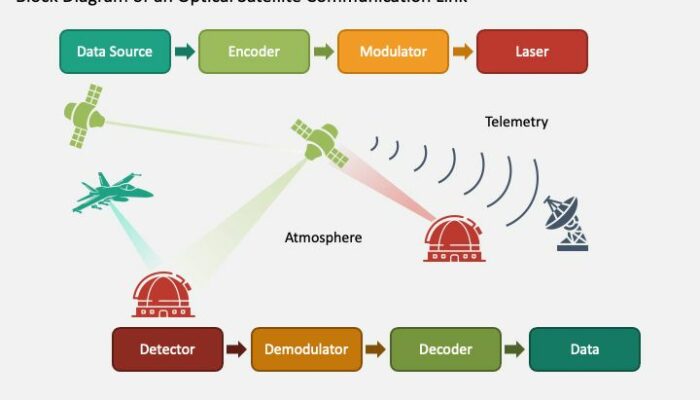
Satellite communication functions by transmitting and receiving signals via artificial satellites orbiting the Earth. This technology excels at overcoming geographical barriers, providing connectivity in remote, rural, or maritime locations where terrestrial networks are impractical or unavailable.
Advantages of Satellite Systems
- Global Coverage:
Satellites enable communication services virtually anywhere on the planet, from dense rainforests to open oceans, making them indispensable for remote connectivity. - Disaster Recovery Support:
In emergency situations where ground infrastructure is damaged or destroyed, satellite communication ensures continuous communication channels for rescue and relief operations. - Reduced Latency with Modern Satellites:
Advances in satellite technology, particularly the deployment of low Earth orbit (LEO) satellites, have significantly decreased communication delays, enabling near real-time applications such as telemedicine and interactive gaming.
Drawbacks and Constraints
Satellite communication is susceptible to atmospheric interference; adverse weather conditions like heavy rain, snow, or dense cloud cover can degrade signal quality. Moreover, the costs associated with manufacturing, launching, and maintaining satellites are substantial. Unlike fiber optic networks, satellite systems require complex logistical planning and regulatory approvals, adding to operational challenges.
Comparative Analysis: Optical Fiber vs. Satellite Communication
When evaluated side by side, optical fiber and satellite communication present complementary solutions tailored to different connectivity needs. Optical fibers are optimal for high-capacity data transmission in urban and densely populated regions, while satellites provide essential coverage in areas where terrestrial infrastructure is limited or non-existent.
Hybrid Communication Models
Integrating fiber optic networks with satellite ground stations can enhance overall communication efficiency. This hybrid approach leverages the vast bandwidth of fiber optics to support satellite data backhaul, creating a robust and scalable global communication framework. Emerging technologies such as photonic integrated circuits promise to further improve the synergy between these two modalities, potentially transforming future telecommunication architectures.
Significance and Impact on Society
The interplay between optical fiber and satellite communication technologies reflects broader trends in technological innovation and societal development. As digital transformation accelerates, these communication methods influence economic growth, social connectivity, and cultural exchange worldwide. Their convergence not only expands access to information but also shapes how communities interact and collaborate on a global scale.
Conclusion: Navigating the Future of Connectivity
The decision to utilize optical fiber or satellite communication depends on specific contextual requirements and operational environments. The sophistication and efficiency of fiber optics contrast with the expansive reach and resilience of satellite systems, illustrating the multifaceted nature of modern telecommunications. Moving forward, the integration and advancement of these technologies will be pivotal in shaping an interconnected future, enabling seamless communication across diverse landscapes and applications.
FAQ
What is optical fiber communication?
Optical fiber communication transmits data as light signals through glass or plastic fibers.
What are the advantages of satellite communication?
Satellite communication offers global coverage and is vital for connectivity in remote areas.
How do optical fiber and satellite communication differ?
Optical fiber is ideal for high-capacity urban data transmission, while satellite covers remote locations.






Leave a Reply