
Short Answer
Definition of the Solar System and Its Diversity
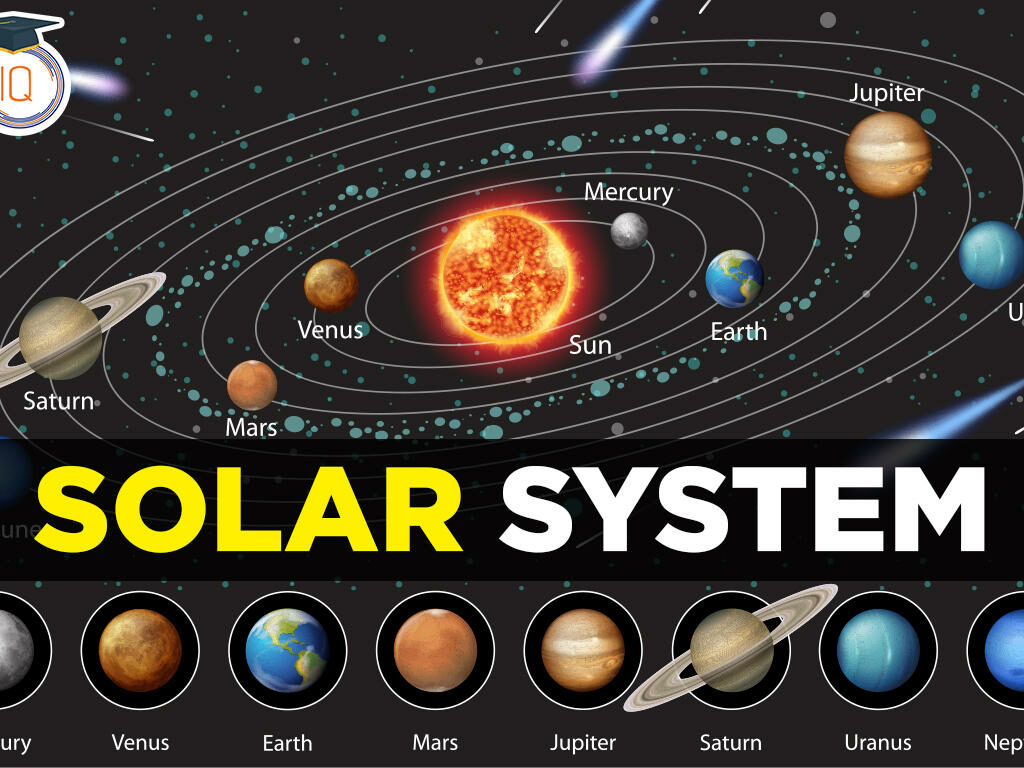
The solar system is an extensive and complex collection of celestial objects orbiting a central star, the Sun. It encompasses a wide array of bodies, including planets, dwarf planets, moons, asteroids, and comets, each exhibiting distinct physical and chemical properties. While many of these objects conform to established planetary models, some display extraordinary features that challenge traditional scientific perspectives on planetary formation and behavior.
Fundamental Principles of Planetary Formation
Understanding the diverse nature of the solar system requires familiarity with the foundational theories explaining how planets originate. The most widely accepted framework is the Nebular Hypothesis, which suggests that planets form from the residual gas and dust surrounding a nascent star. This process generally results in a predictable arrangement of rocky terrestrial planets near the star and gaseous giants farther out, each occupying stable orbits with characteristic compositions. Nevertheless, several planets and dwarf planets within our solar system deviate markedly from these expected patterns.
Unique Planetary Characteristics
Venus: Earth’s Hostile Counterpart
Venus, often dubbed Earth’s “evil twin,” shares a similar size and bulk composition with our planet but diverges dramatically in atmospheric and surface conditions. Its atmosphere is dominated by dense carbon dioxide layers and thick clouds of sulfuric acid, creating a runaway greenhouse effect. This results in surface temperatures exceeding 900 degrees Fahrenheit (475 degrees Celsius), making Venus one of the hottest bodies in the solar system. These extreme conditions raise important questions about atmospheric evolution and the potential for habitability on planets with thick, toxic atmospheres.
Uranus: The Sideways Rotator
Uranus stands out among the gas giants due to its extraordinary axial tilt of approximately 98 degrees, causing it to rotate almost on its side relative to its orbit. This unusual orientation leads to extreme seasonal variations lasting over two decades and influences the planet’s atmospheric circulation patterns. The tilt also affects the orbital dynamics of its moons, which must adapt to the planet’s unique gravitational environment. Uranus’s peculiar rotation challenges conventional models of planetary spin and formation.
Neptune: The Blue Giant with Supersonic Winds
Neptune, the solar system’s eighth planet, is renowned for its vivid deep blue hue, primarily caused by methane absorption of red light in its atmosphere. Beyond its striking color, Neptune exhibits some of the most intense weather phenomena observed, including supersonic winds reaching speeds up to 1,500 miles per hour (2,400 kilometers per hour). These turbulent atmospheric conditions are unparalleled among the planets and provide valuable insights into the dynamics of planetary weather systems under extreme conditions.
Dwarf Planets and Their Distinctive Features
Pluto: The Reclassified World
Once considered the ninth planet, Pluto was redefined as a dwarf planet due to its size and orbital characteristics. Its orbit is notably elliptical, occasionally bringing it closer to the Sun than Neptune for periods exceeding two decades. Pluto’s surface is a mosaic of diverse terrains, including expansive ice plains and towering ice mountains, suggesting ongoing geological processes. These features challenge the traditional boundaries between planets and smaller celestial bodies, enriching our understanding of planetary evolution in varied environments.
Haumea: The Rapidly Spinning Enigma
Haumea is a dwarf planet distinguished by its elongated, ellipsoidal shape, which is believed to result from its rapid rotation. This fast spin not only alters its morphology but also contributes to the presence of a ring system and multiple moons orbiting it. Haumea’s unique characteristics provide a compelling case study in the effects of angular momentum on planetary form and the diversity of celestial body structures within the solar system.
Moons with Astrobiological Significance
Europa: The Icy Ocean World
Europa, one of Jupiter’s largest moons, garners significant scientific interest due to the hypothesized subsurface ocean beneath its icy crust. This hidden ocean is thought to contain the essential chemical ingredients for life, making Europa a prime candidate in the search for extraterrestrial biology. The coexistence of a solid ice shell and a liquid water ocean beneath challenges traditional notions of habitability, suggesting that life could exist in environments far removed from direct solar energy.
Implications for Cosmology and Planetary Science
The diverse and sometimes anomalous characteristics of planets and dwarf planets within our solar system offer a microcosm of the physical processes that govern planetary formation and evolution throughout the universe. These exceptions to classical models prompt scientists to refine theories related to habitability, atmospheric dynamics, and celestial mechanics. By studying these unique bodies, researchers gain deeper insights into the complexities of planetary systems beyond our own.
Significance of Planetary Anomalies
The variety of planetary and dwarf planetary features within the solar system underscores the intricate nature of celestial mechanics and planetary science. From Venus’s extreme greenhouse effect to Europa’s potential for harboring life, these anomalies expand the frontiers of scientific inquiry. They not only enhance our comprehension of planetary diversity but also inspire ongoing exploration and discovery, ultimately enriching our understanding of humanity’s place in the cosmos.
FAQ
What are some unique characteristics of Venus?
Venus has a thick atmosphere dominated by carbon dioxide, resulting in extreme surface temperatures and a runaway greenhouse effect.
What makes Uranus unique compared to other gas giants?
Uranus has an unusual axial tilt of about 98 degrees, causing it to rotate almost on its side, leading to extreme seasonal variations.

Leave a Reply