
Short Answer
Definition of Magnetic Cloaking
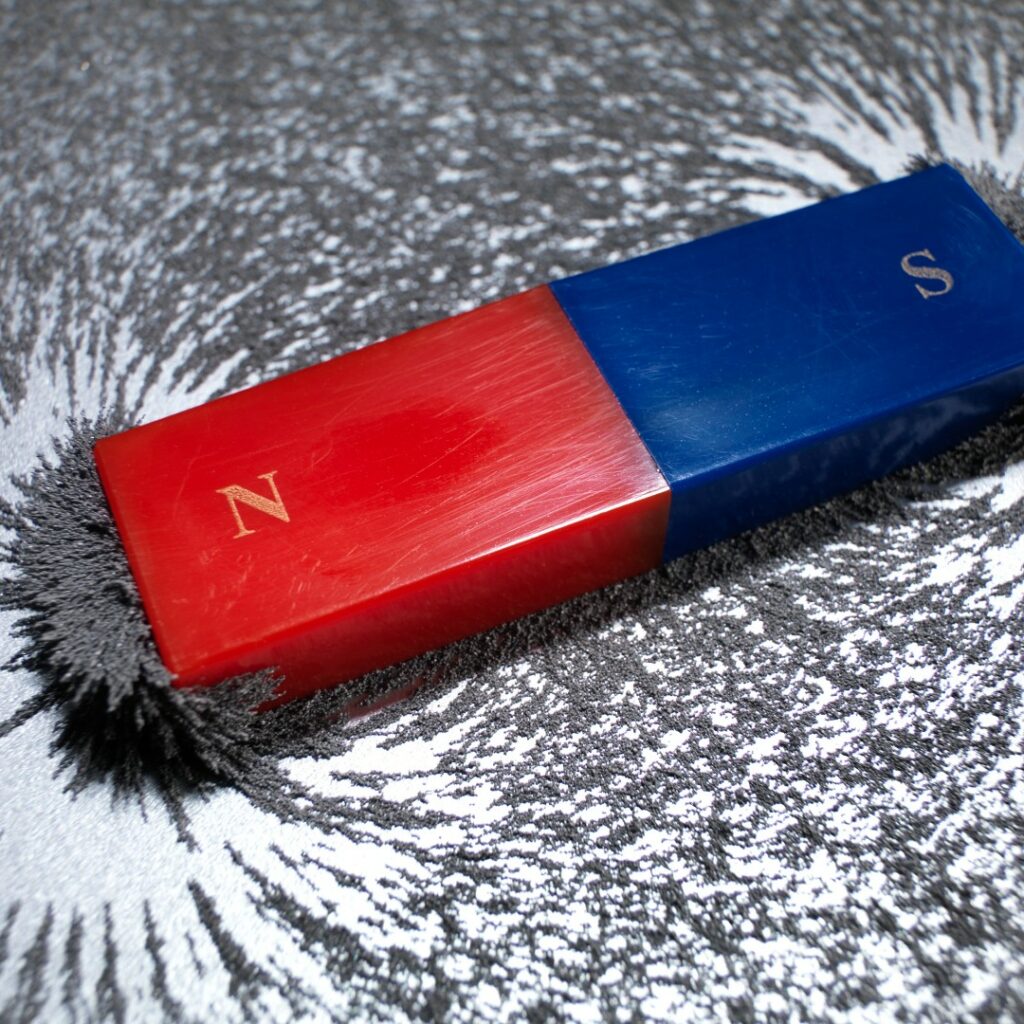
Magnetic cloaking refers to the innovative technique of rendering magnetic fields undetectable or invisible within a designated region. This concept, once purely speculative and confined to science fiction, has evolved into a practical area of study in modern physics. It involves manipulating magnetic fields so that they bypass or surround an object, effectively concealing it from magnetic detection.
- Magnetic Field:
A magnetic field is a vector field generated by magnetic materials or moving electric charges, influencing charged particles in its vicinity. - Magnetic Cloaking:
The process of using engineered materials to redirect magnetic field lines, creating a zone where magnetic influence appears absent.
Fundamentals of Magnetic Fields and Neutron Properties
Magnetic fields are fundamental to understanding magnetic cloaking. Although neutrons carry no electric charge, they possess intrinsic magnetic moments due to their internal composition of quarks and protons. This magnetic moment, albeit subtle, plays a critical role in nuclear interactions and offers insights into the asymmetries present in the Standard Model of particle physics.
- Neutron Magnetic Moment:
Despite being electrically neutral, neutrons have a magnetic moment arising from their subatomic structure. - Significance:
The magnetic properties of neutrons are essential for exploring nuclear forces and fundamental particle physics.
Metamaterials and Their Role in Magnetic Cloaking
Metamaterials are artificially engineered substances designed to exhibit electromagnetic properties not found in natural materials. By precisely structuring these materials at the atomic or molecular level, scientists can control the propagation of electromagnetic waves, including magnetic fields. This capability forms the theoretical basis for magnetic cloaking, enabling the redirection of magnetic field lines around an object to create an illusion of invisibility to magnetic detection.
- Engineered Structure:
Metamaterials are crafted to manipulate electromagnetic waves uniquely. - Magnetic Field Manipulation:
These materials can guide magnetic fields around objects, effectively cloaking them.
Mechanisms Behind Magnetic Cloaking
The principle of magnetic cloaking relies heavily on transformation optics, a method that reformulates Maxwell’s equations governing electromagnetism to design materials capable of steering magnetic fields. By applying this approach, researchers create metamaterials that channel magnetic field lines around an object, preventing detection by magnetic sensors. This technique has evolved from theoretical models to experimental implementations, expanding its potential applications to subatomic particle research, including neutron studies.
Quantum Mechanical Insights into Neutron Behavior
Neutrons are unique nucleons characterized by their spin and magnetic moment, which quantum mechanics helps to describe. Advanced magnetic cloaking techniques open new avenues for probing the neutron’s internal structure, raising questions about possible undiscovered components or dynamic behaviors. Precise magnetic manipulation could reveal these hidden aspects, deepening our understanding of neutron composition and interactions.
Applications and Implications of Magnetic Cloaking in Neutron Research
Exploring the magnetic properties of neutrons through cloaking technologies has far-reaching consequences beyond particle physics. Neutrons are integral to atomic nuclei, influencing nuclear stability and interactions. Insights gained from magnetic cloaking could enhance our understanding of astrophysical phenomena, such as the behavior of neutron stars, where extreme conditions highlight the importance of neutron properties and electromagnetic forces.
- Astrophysics:
Understanding neutron behavior aids in explaining the dynamics within neutron stars. - Materials Science:
Neutrons serve as probes in neutron scattering experiments, and improved magnetic control could refine these techniques, advancing material analysis and engineering.
Challenges in Implementing Magnetic Cloaking
Despite promising progress, practical magnetic cloaking faces significant hurdles. Achieving effective cloaking requires highly precise instrumentation and sophisticated experimental setups capable of managing the complex and dynamic nature of subatomic particles. Current methods are limited by scalability and environmental variability, necessitating further development in both theoretical frameworks and experimental technologies.
Future Prospects and Significance
The convergence of magnetic cloaking and neutron research heralds transformative potential in fundamental physics and applied sciences. Unlocking the neutron’s hidden characteristics could revolutionize our comprehension of matter’s building blocks and cosmic phenomena. Moreover, advancements in this field may lead to breakthroughs in material science, energy technologies, and beyond, underscoring the profound impact of magnetic cloaking on science and technology.
FAQ
What is magnetic cloaking?
Magnetic cloaking is a technique to render magnetic fields undetectable in a specific area by manipulating magnetic field lines.
How do neutrons relate to magnetic cloaking?
Neutrons, despite having no electric charge, possess a magnetic moment that can be studied through magnetic cloaking techniques.
What are metamaterials?
Metamaterials are engineered materials designed to have properties not found in natural substances, enabling the manipulation of electromagnetic waves.




Leave a Reply