
Short Answer
Definition of the Most Distant Galaxy
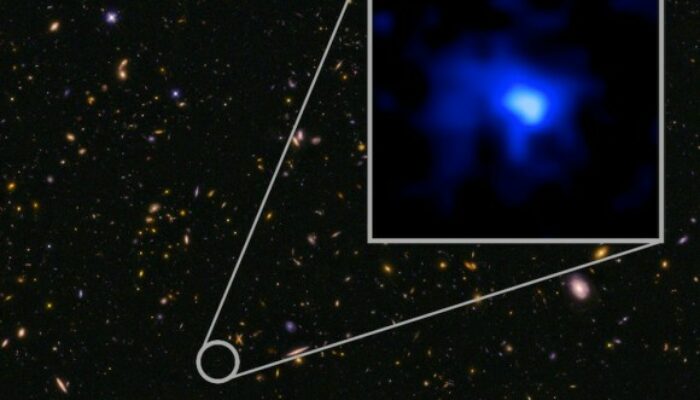
The most distant galaxy refers to the farthest known galaxy observed from Earth, situated at an immense distance that allows astronomers to peer back into the early epochs of the universe. This galaxy’s light has traveled billions of years, offering a snapshot of cosmic conditions shortly after the Big Bang. Its discovery provides a crucial window into the infancy of the cosmos, revealing information about the formation and evolution of galaxies during the universe’s formative stages.
Fundamentals of Cosmic Observation
Observing distant galaxies involves understanding key principles in cosmology and astrophysics. Light emitted by celestial bodies acts as a time capsule, carrying information from the past to present-day observers. Since light travels at a finite speed-approximately 299,792 kilometers per second-the photons reaching us from remote galaxies have journeyed across vast stretches of space for billions of years. Consequently, viewing a galaxy billions of light-years away is equivalent to looking back in time, witnessing the universe as it existed eons ago.
Redshift and Its Role in Measuring Distance
One of the primary tools for determining the distance to faraway galaxies is the redshift phenomenon. Redshift occurs when the wavelength of light emitted by an object is stretched toward the red end of the electromagnetic spectrum due to the expansion of the universe. This shift provides astronomers with a measure of how fast a galaxy is receding from us, which in turn helps calculate its distance and the age of the universe at the time the light was emitted.
- Redshift (z):
A dimensionless number representing the fractional increase in wavelength; higher values correspond to greater distances and earlier cosmic times. - Cosmic Expansion:
The stretching of space itself causes light to elongate, shifting it toward longer wavelengths.
The galaxy in question exhibits an exceptionally high redshift, indicating it existed roughly 13.4 billion years ago, mere hundreds of millions of years after the Big Bang.
Implications for Cosmic Evolution
The identification of such a remote galaxy challenges and enriches our understanding of how galaxies and stars formed in the early universe. Prevailing models suggest that galaxy formation was a gradual process, requiring significant time for gas accumulation and star formation. However, the existence of this ancient galaxy implies that complex structures may have emerged more rapidly than previously thought, prompting a reevaluation of timelines and mechanisms involved in early cosmic development.
- Star Formation:
Insights into how quickly stars could form in primordial galaxies. - Galaxy Assembly:
Understanding the role of mass accretion and dark matter in shaping early galaxies. - Environmental Conditions:
Examining the temperature, density, and chemical composition of the early universe.
Technological Advances in Detection
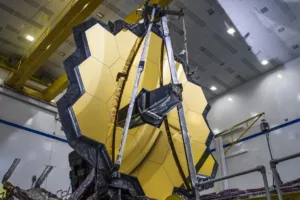
Discovering galaxies at such extreme distances relies heavily on cutting-edge technology and sophisticated observational techniques. Space telescopes equipped with high-resolution imaging and infrared capabilities, such as the Hubble Space Telescope, have been instrumental in capturing faint light signals from the early universe. Infrared observations are particularly vital because the expansion of the universe shifts visible light from distant galaxies into the infrared spectrum.
- Infrared Imaging:
Enables detection of redshifted light from ancient galaxies. - Data Processing:
Utilizes complex algorithms to filter cosmic noise and extract meaningful signals. - High-Resolution Telescopes:
Provide the clarity needed to distinguish distant galaxies from foreground objects.
Galaxy Formation and Dark Matter
The presence of such distant galaxies also informs theories about the role of dark matter in cosmic structure formation. Dark matter halos are believed to act as gravitational scaffolds around which gas accumulates, eventually leading to star and galaxy formation. Studying these early galaxies helps scientists refine models of how dark matter influenced the assembly of the universe’s large-scale structure.
Astrobiological Significance
From an astrobiological perspective, analyzing the elemental composition of early galaxies sheds light on the chemical evolution necessary for life. Stars in these primordial galaxies synthesized heavier elements from primordial hydrogen and helium, enriching the interstellar medium upon their death. Spectral studies of such galaxies can reveal the abundance of these elements, offering clues about the potential for planet formation and the origins of life-supporting environments.
Ongoing Exploration and Philosophical Reflections
The pursuit of understanding the universe’s earliest galaxies is an evolving scientific endeavor that combines observational astronomy, theoretical physics, and computational modeling. Each new discovery not only expands our cosmic knowledge but also invites deeper philosophical contemplation about existence, time, and the conditions that make life possible. As observational tools improve, astronomers anticipate uncovering even more distant galaxies, further illuminating the universe’s mysterious past.
Conclusion: Transforming Our Cosmic Perspective
The revelation of the most distant galaxy marks a significant milestone in cosmology, prompting a reassessment of galaxy formation theories and the timeline of cosmic evolution. This discovery exemplifies the synergy between advanced technology and scientific inquiry, driving forward our comprehension of the universe’s origins. As research progresses, these distant celestial beacons continue to guide humanity’s quest to unravel the profound mysteries of the cosmos.
FAQ
What is the most distant galaxy discovered?
The most distant galaxy, known as GN-z11, is located 13.4 billion light years away.
How do astronomers measure the distance to distant galaxies?
Astronomers use the redshift phenomenon to measure how fast a galaxy is receding and calculate its distance.
What technologies are used to detect distant galaxies?
Space telescopes with high-resolution imaging and infrared capabilities, like the Hubble Space Telescope, are crucial for detecting faint light from these galaxies.



Leave a Reply