
Short Answer
Understanding Big O Notation in Computing
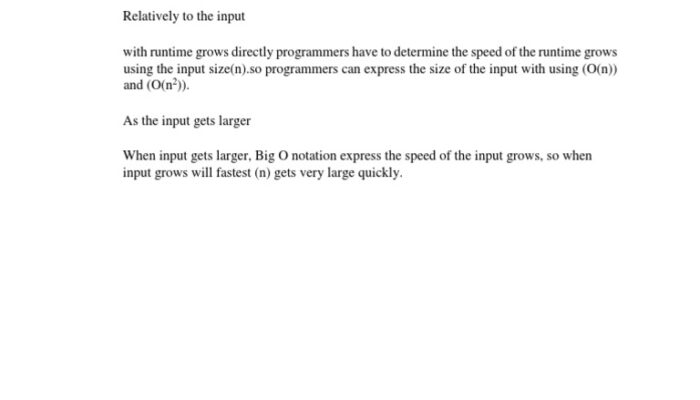
Big O notation is a fundamental concept in computer science used to describe the upper bound of an algorithm’s performance, particularly its time or space requirements as the input size increases. It provides a standardized way to compare the efficiency of different algorithms by expressing their growth rates in terms such as O(n), O(log n), or O(n²). This notation is crucial in classical computing for evaluating how algorithms scale and perform under varying conditions.
Classical vs. Quantum Computing: Core Principles
Classical computing relies on bits, which exist in one of two states: 0 or 1. Algorithms in this domain are analyzed primarily through their time and space complexity using Big O notation. Quantum computing, however, operates on fundamentally different principles derived from quantum mechanics. It uses quantum bits, or qubits, which can exist in multiple states simultaneously due to superposition. Additionally, qubits can become entangled, creating correlations that enable complex computational phenomena not possible in classical systems.
- Bits:
Represent classical information as either 0 or 1. - Qubits:
Quantum units that can represent 0, 1, or both simultaneously through superposition. - Entanglement:
A quantum property linking qubits such that the state of one instantly influences another, regardless of distance.
Evaluating Algorithmic Complexity in Quantum Computing
While Big O notation effectively measures classical algorithm complexity by counting the number of operations relative to input size, quantum algorithms often defy these traditional classifications. For example, Shor’s algorithm, which factors integers, operates in polynomial time O((log n)³), a dramatic improvement over the exponential time required by the best-known classical algorithms. This disparity highlights the limitations of applying classical complexity measures directly to quantum algorithms.
Challenges in Quantum Algorithm Analysis
Quantum computing introduces unique obstacles that complicate complexity assessment. Quantum decoherence, the loss of quantum information due to environmental interference, introduces errors and noise that affect computational accuracy. Addressing these issues requires sophisticated error correction and fault-tolerant techniques, adding layers of complexity beyond mere operation counts. These factors necessitate new frameworks for evaluating quantum algorithm performance that extend beyond classical Big O notation.
Alternative Metrics for Quantum Algorithm Performance
To better capture the nuances of quantum computation, researchers have developed specialized metrics:
- Quantum Query Complexity:
Measures the number of queries a quantum algorithm makes to an oracle or database, providing insight into its efficiency for specific problem types. - Quantum Circuit Complexity:
Assesses the number of quantum gates required to implement an algorithm, analogous to counting operations in classical algorithms, and can be expressed asymptotically.
Quantum Speedup: A Defining Feature
One of the most significant advantages of quantum algorithms is their potential for quantum speedup-the ability to solve certain problems much faster than classical algorithms. This speedup is not just theoretical; it has practical implications in fields such as cryptography, optimization, and complex system simulations. Quantum speedup challenges existing computational paradigms and underscores the need for new analytical tools to evaluate algorithmic efficiency in this domain.
Reassessing Big O Notation in the Quantum Era
Although Big O notation remains a cornerstone for analyzing classical algorithms, its direct application to quantum computing is limited. Quantum algorithms exhibit behaviors and complexities that traditional Big O does not fully capture. Instead, metrics like quantum query complexity and quantum circuit complexity offer more tailored insights. The absence of a universally accepted quantum equivalent to Big O reflects the evolving nature of quantum algorithm research and the ongoing quest to develop comprehensive performance measures.
Significance and Future Directions
The exploration of Big O notation’s relevance to quantum computing highlights a broader transformation in computational theory and practice. As quantum technologies advance, the demand for robust, nuanced metrics to describe quantum algorithm efficiency will grow. This evolution not only deepens our understanding of quantum mechanics in computation but also shapes the future landscape of technology, influencing both theoretical research and practical applications in an increasingly complex digital world.
FAQ
What is Big O notation?
Big O notation is a mathematical notation used to describe the upper bound of an algorithm's running time or space requirements relative to input size.
Is there a direct Big O equivalent for quantum computing?
No, quantum computing often requires alternative metrics like quantum query complexity and quantum circuit complexity to assess algorithm efficiency.
What is quantum query complexity?
Quantum query complexity measures the number of queries a quantum algorithm makes to an oracle or database, providing insights into its efficiency.
What is quantum circuit complexity?
Quantum circuit complexity evaluates the number of quantum gates required to implement a quantum algorithm, offering a way to analyze its computational cost.
Why is quantum speedup important?
Quantum speedup allows certain quantum algorithms to solve problems significantly faster than classical algorithms, opening new possibilities in cryptography, optimization, and simulation.





Leave a Reply