
Short Answer
Understanding Quantum Physics
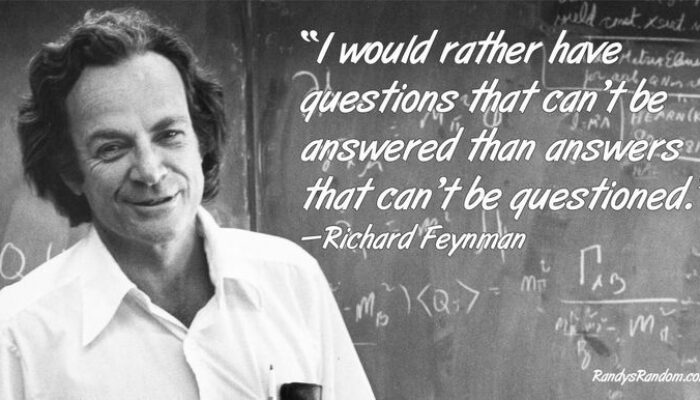
Quantum physics stands as one of the most complex and fascinating branches of modern science, often described as a domain filled with paradoxes and phenomena that defy everyday intuition. The renowned physicist Richard Feynman famously remarked that anyone who claims to fully grasp quantum mechanics likely does not understand it at all. This provocative statement invites us to examine whether quantum physics is truly as bewildering as it appears. To address this, it is essential to explore the fundamental principles and unique characteristics of quantum mechanics, as well as its profound impact on how we perceive reality.
Core Principles of Quantum Mechanics
Superposition
At the foundation of quantum theory lies the principle of superposition, which allows particles to exist simultaneously in multiple states until an observation collapses these possibilities into a single outcome. This concept challenges classical ideas of definite states and is famously illustrated by Schrödinger’s cat thought experiment, where a cat is simultaneously alive and dead until observed. Superposition reveals a universe governed by intrinsic uncertainty rather than fixed certainties.
Entanglement
Entanglement is another fundamental phenomenon in quantum physics, describing a situation where particles become so deeply linked that the state of one instantly influences the state of another, regardless of the distance separating them. Albert Einstein referred to this as “spooky action at a distance,” expressing skepticism because it contradicts classical notions of locality and causality. Entanglement challenges the idea that objects are independent unless directly interacting, raising profound questions about information transfer and the interconnectedness of the universe.
Wave-Particle Duality
Wave-particle duality adds another layer of complexity, revealing that entities such as electrons and photons exhibit both wave-like and particle-like behaviors depending on the experimental setup. The iconic double-slit experiment demonstrates this duality: particles create interference patterns characteristic of waves when unobserved, but behave like discrete particles when measured. This phenomenon highlights the crucial role of observation in defining the properties of quantum systems and sparks philosophical debates about the nature of reality and existence.
Mechanisms Behind Quantum Phenomena
Quantum mechanics operates on principles that diverge significantly from classical physics. Instead of deterministic laws, it embraces probabilistic outcomes and inherent uncertainties. The wave function mathematically represents the probabilities of a particle’s various states, and measurement causes the wave function to collapse into a definite state. Entanglement arises from the quantum correlation of particles’ wave functions, enabling instantaneous state changes across distances. These mechanisms collectively form a framework that defies classical intuition but accurately predicts experimental results.
Mathematical Framework of Quantum Mechanics
The mathematical backbone of quantum physics is the wave function, typically denoted as ψ, which encodes the probability amplitudes of a system’s possible states. The Schrödinger equation governs the evolution of this wave function over time:
iħ ∂ψ/∂t = Ĥψ
- i: Imaginary unit
- ħ: Reduced Planck’s constant
- ∂ψ/∂t: Partial derivative of the wave function with respect to time
- Ĥ: Hamiltonian operator representing the total energy of the system
This equation predicts how quantum states evolve, while the act of measurement causes the wave function to collapse, selecting a specific outcome from the range of probabilities.
Applications and Technological Impact
Beyond theoretical intrigue, quantum mechanics underpins revolutionary technologies. Quantum computing leverages superposition and entanglement to perform complex calculations exponentially faster than classical computers. This advancement holds promise for breakthroughs in cryptography, materials science, and artificial intelligence. The expanding field of quantum technology exemplifies how initially perplexing quantum principles can translate into practical tools that address real-world challenges.
Philosophical and Scientific Significance
Quantum physics compels us to rethink our understanding of reality. Unlike classical physics, which suggests a predictable and deterministic universe, quantum mechanics introduces fundamental randomness and probabilistic events. This shift challenges long-held assumptions about causality and determinism, fostering a dialogue between science and philosophy regarding the nature of existence, consciousness, and knowledge itself.
Common Misconceptions About Quantum Mechanics
Quantum mechanics is completely incomprehensible.
While quantum physics challenges classical intuition, its principles are well-defined mathematically and experimentally verified, allowing for practical applications and conceptual understanding.
Entanglement allows faster-than-light communication.
Although entangled particles influence each other instantaneously, this phenomenon cannot be used to transmit information faster than light, preserving causality.
Observation by a conscious observer causes wave function collapse.
Measurement in quantum mechanics refers to any interaction that extracts information, not necessarily requiring consciousness.
Embracing the Quantum Paradigm
Feynman’s observation about the elusive nature of quantum mechanics highlights the limits of human understanding and the complexity of the universe. Rather than discouraging inquiry, this recognition encourages embracing uncertainty as a driver of curiosity and innovation. Quantum physics teaches us that our everyday experiences may not always provide reliable intuition about the fundamental workings of nature, urging a mindset open to questioning and exploration.
Conclusion
The enigmatic qualities of quantum physics, embodied in superposition, entanglement, and wave-particle duality, profoundly reshape our comprehension of the universe. These principles challenge classical assumptions and invite us to accept uncertainty as an intrinsic feature of reality. Engaging with the strange yet captivating aspects of quantum mechanics not only advances scientific knowledge but also enriches our philosophical perspective, inspiring continued exploration into the mysteries of existence.
FAQ
What is quantum physics?
Quantum physics is a fundamental branch of physics that studies the behavior of matter and energy at the smallest scales, often exhibiting phenomena that challenge classical physical intuitions.
Why is quantum mechanics considered strange?
Quantum mechanics is considered strange due to its principles such as superposition and entanglement, which defy everyday experiences and challenge our understanding of reality.





Leave a Reply