
Short Answer
Definition of Nuclear Physics
Nuclear physics is a specialized branch of physics that focuses on the study of atomic nuclei, their components, and the forces that govern their interactions. It investigates phenomena such as nuclear fusion and fission, which involve the transformation of elements and the release or absorption of energy. This field seeks to understand the fundamental nature of matter and energy at the subatomic level, bridging microscopic particle behavior with broader physical laws.
- Atomic Nucleus:
The dense central core of an atom, composed of protons and neutrons, whose properties and interactions are central to nuclear physics. - Nuclear Reactions:
Processes like fusion and fission that alter the composition of nuclei, releasing or consuming energy. - Energy Transformation:
The conversion of mass into energy and vice versa, governed by principles such as Einstein’s mass-energy equivalence.
Historical Development and Foundational Contributions
The evolution of nuclear physics is deeply intertwined with the broader history of physics, particularly during the early 20th century. The emergence of quantum mechanics and the theory of relativity revolutionized scientific understanding, providing the theoretical framework necessary to explore atomic and subatomic phenomena.
- Ernest Rutherford:
Pioneered the discovery of the atomic nucleus and proposed the nuclear model of the atom. - Niels Bohr:
Developed the Bohr model, explaining electron orbits and energy levels, which laid groundwork for nuclear structure studies. - Quantum Mechanics:
Offered a probabilistic approach to particle behavior, essential for explaining nuclear interactions.
Interdisciplinary Connections: Physics, Engineering, and Environmental Science
Nuclear science extends beyond pure physics, intersecting with engineering disciplines and environmental studies. While physicists focus on theoretical models and experimental validation of nuclear phenomena, nuclear engineers apply these principles to design reactors, manage energy production, and ensure safety protocols. Additionally, environmental scientists assess the ecological impact of nuclear technology, particularly in waste management and radiation effects.
- Nuclear Engineering:
Applies physical laws to develop practical technologies for energy generation and medical applications. - Radioactive Waste Management:
Involves strategies to safely handle and dispose of nuclear byproducts to minimize environmental harm. - Environmental Impact:
Studies the consequences of nuclear energy use on ecosystems and public health.
Scientific Principles Underpinning Nuclear Physics
Nuclear physics relies on fundamental physical laws and experimental techniques to explore the behavior of atomic nuclei. Key principles include conservation of energy, thermodynamics, and quantum mechanics. Experimental tools such as particle accelerators and neutron scattering devices enable scientists to probe nuclear structures and reactions, providing empirical data that refine theoretical models.
- Conservation Laws:
Energy, momentum, and charge conservation govern nuclear reactions. - Quantum Mechanics:
Describes the probabilistic nature of particle interactions within the nucleus. - Experimental Methods:
Particle accelerators and detectors facilitate the study of nuclear phenomena.
Mathematical Framework and Key Formulas
The quantitative study of nuclear physics involves mathematical expressions that describe nuclear binding energy, reaction rates, and particle interactions. One fundamental formula is Einstein’s mass-energy equivalence:
E = mc²
- E: Energy released or absorbed in a nuclear reaction
- m: Mass difference between reactants and products
- c: Speed of light in vacuum (approximately 3 × 10⁸ m/s)
This equation explains how small amounts of mass can be converted into significant energy, a principle central to both nuclear power generation and astrophysical processes.
Applications and Real-World Examples
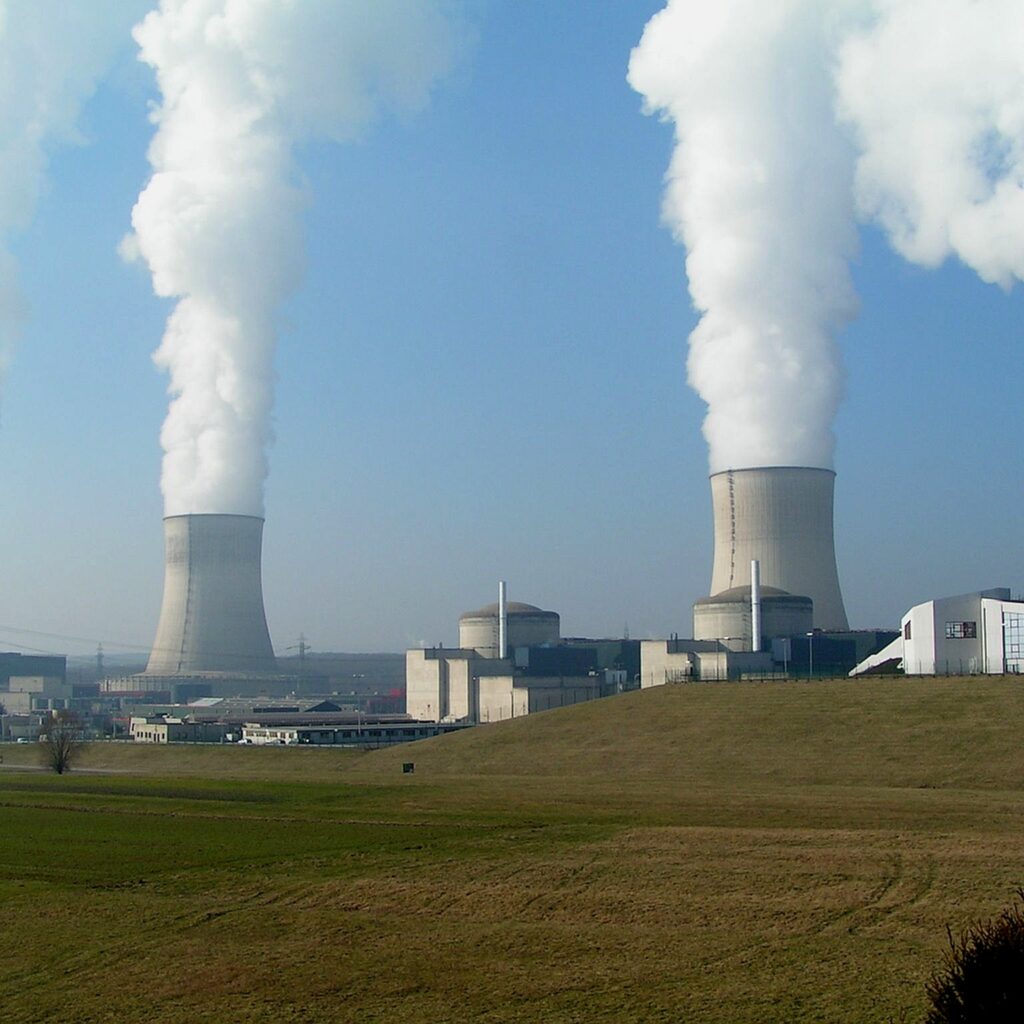
Nuclear physics has profound implications across various domains, from energy production to cosmology. Practical applications include nuclear reactors that provide electricity, medical imaging and cancer treatments using radioactive isotopes, and the study of stellar nucleosynthesis that explains the formation of elements in stars.
- Nuclear Power Plants:
Utilize controlled fission reactions to generate electricity on a large scale. - Medical Uses:
Radioisotopes are employed in diagnostics and radiotherapy. - Astrophysics:
Nuclear fusion in stars creates heavier elements, fueling cosmic evolution.
Common Misunderstandings About Nuclear Physics
- Misconception: Nuclear physics is completely separate from general physics.
Correction: Nuclear physics is a vital subfield of physics, deeply rooted in its fundamental principles and experimental methods. - Misconception: Nuclear energy is inherently unsafe and environmentally destructive.
Correction: While risks exist, advances in technology and regulation have improved safety and reduced environmental impact significantly. - Misconception: Nuclear reactions only occur in laboratories or power plants.
Correction: Nuclear processes naturally occur in stars and radioactive decay in the environment.
Significance of Nuclear Physics in Science and Society
Nuclear physics plays a crucial role in advancing scientific knowledge and addressing practical challenges. It enhances our understanding of the universe’s fundamental structure, contributes to sustainable energy solutions, and supports medical innovations. Moreover, the ethical considerations surrounding nuclear technology highlight the importance of responsible scientific stewardship, ensuring that its benefits are maximized while minimizing potential harms.
By integrating theoretical insights, experimental research, and interdisciplinary collaboration, nuclear physics remains a dynamic and essential field within the broader landscape of physical sciences.
FAQ
What is nuclear physics?
Nuclear physics is the study of atomic nuclei, their components, and the forces that govern their interactions.
What are common applications of nuclear physics?
Applications include nuclear power generation, medical imaging, cancer therapy, and understanding stellar processes.
Is nuclear energy safe?
While there are risks, modern technology and regulations have significantly improved safety in nuclear energy production.






Leave a Reply