
Short Answer
Overview of CERN and Its Scientific Mission
The European Organization for Nuclear Research, widely known as CERN, represents the forefront of contemporary particle physics research. Its primary objective is to deepen our comprehension of the universe’s fundamental constituents through innovative experiments and theoretical advancements. CERN’s groundbreaking work has significantly expanded our knowledge of the cosmos, inspiring both scientific inquiry and philosophical reflection on the nature of existence.
Fundamental Concepts: The Higgs Boson and Mass Generation
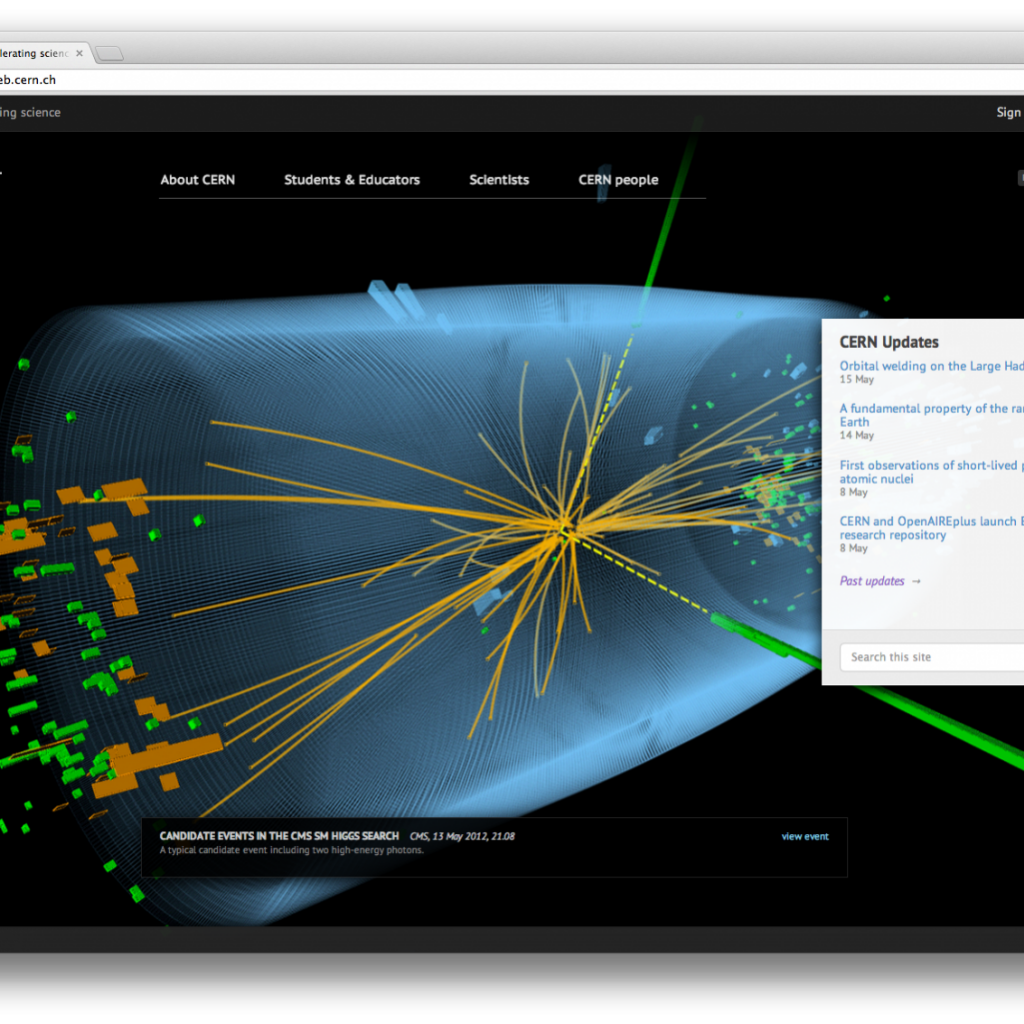
Central to CERN’s research is the discovery of the Higgs boson at the Large Hadron Collider (LHC) in 2012. This particle plays a crucial role in imparting mass to other elementary particles, a process essential for the formation of matter as we know it. Without the Higgs mechanism, the universe’s structure would be fundamentally different, lacking the mass necessary for atoms, molecules, and ultimately life itself.
- Higgs Boson:
A particle associated with the Higgs field, responsible for giving mass to fundamental particles. - Mass Generation:
The process by which particles acquire mass, enabling the existence of matter.
Philosophical Dimensions: Identity, Consciousness, and Existence
The implications of mass generation extend beyond physical phenomena, prompting profound questions about human identity and consciousness. What defines a human being? Is it merely the biological composition, or does it encompass the intangible qualities of awareness and experience? The insights gained from particle physics, particularly the role of the Higgs boson, contribute to ongoing debates about the essence of life and the nature of selfhood.
Interplay Between Particle Physics and Biotechnology
Advances in particle physics have catalyzed progress in related fields such as genetic engineering and biotechnology. Understanding particle interactions informs techniques like CRISPR gene editing, which hold the potential to revolutionize biological development. This convergence raises the possibility of engineering new life forms, including potentially sentient organisms, guided by principles derived from fundamental physics.
Genetic Engineering and Particle Physics
The manipulation of genetic material benefits from insights into particle behavior, enabling precise modifications at the molecular level. This synergy between disciplines suggests a future where the creation of novel biological entities could become feasible.
Ethical Considerations in Creating Life
As scientific capabilities advance, ethical questions become increasingly urgent. The prospect of creating life-whether through genetic manipulation or fundamental particle control-demands careful reflection on moral responsibilities. Issues such as cloning, synthetic biology, and the definition of personhood require a multidisciplinary dialogue involving ethicists, scientists, and philosophers.
The Role of Perception in Defining Sentience
Quantum mechanics introduces the concept that observation influences the state of particles, which invites intriguing parallels in the discussion of consciousness and identity. Could the recognition or acknowledgment of a created entity by observers contribute to its status as a sentient being? This idea challenges traditional boundaries between biological existence and experiential reality.
Collaborative Exploration Across Disciplines
CERN’s research fosters interdisciplinary collaboration, bringing together physicists, biologists, ethicists, and philosophers to explore the nature of life and consciousness. This collective effort aims to clarify what it means to “create” a being-whether it involves assembling biological components or generating new forms of experience and identity.
Implications for Society and Human Understanding
The intersection of particle physics and synthetic biology influences societal values, religious beliefs, and ethical frameworks. Discoveries at CERN not only unravel cosmic mysteries but also prompt a reevaluation of humanity’s place in the universe. This evolving perspective encourages a broader understanding of life’s complexity and the potential for future transformations.
Scientific Progress and the Future of Life Creation
While the question of whether CERN can literally create human beings remains speculative, the organization’s work undeniably shapes our understanding of life, identity, and existence. Scientific advancements continuously redefine these concepts, positioning CERN as a pivotal contributor to this transformative journey.
Summary: The Expanding Horizon of Particle Physics and Life
In summary, CERN’s ongoing quest for knowledge transcends traditional scientific boundaries, intertwining particle physics with philosophical and ethical inquiries about life and consciousness. By embracing an interdisciplinary approach, CERN’s research may one day illuminate not only the universe’s fundamental structure but also the profound essence of humanity itself.
FAQ
Can CERN create humans?
CERN's research focuses on fundamental particles and their interactions, and while it advances our understanding of life, it does not directly create humans.
What is the Higgs boson?
The Higgs boson is a particle that gives mass to other particles, playing a crucial role in the structure of the universe.
What ethical questions arise from creating life?
Creating life involves complex ethical considerations regarding personhood, cloning, and the responsibilities of scientists.






Leave a Reply