
Short Answer
Definition of Dark Matter
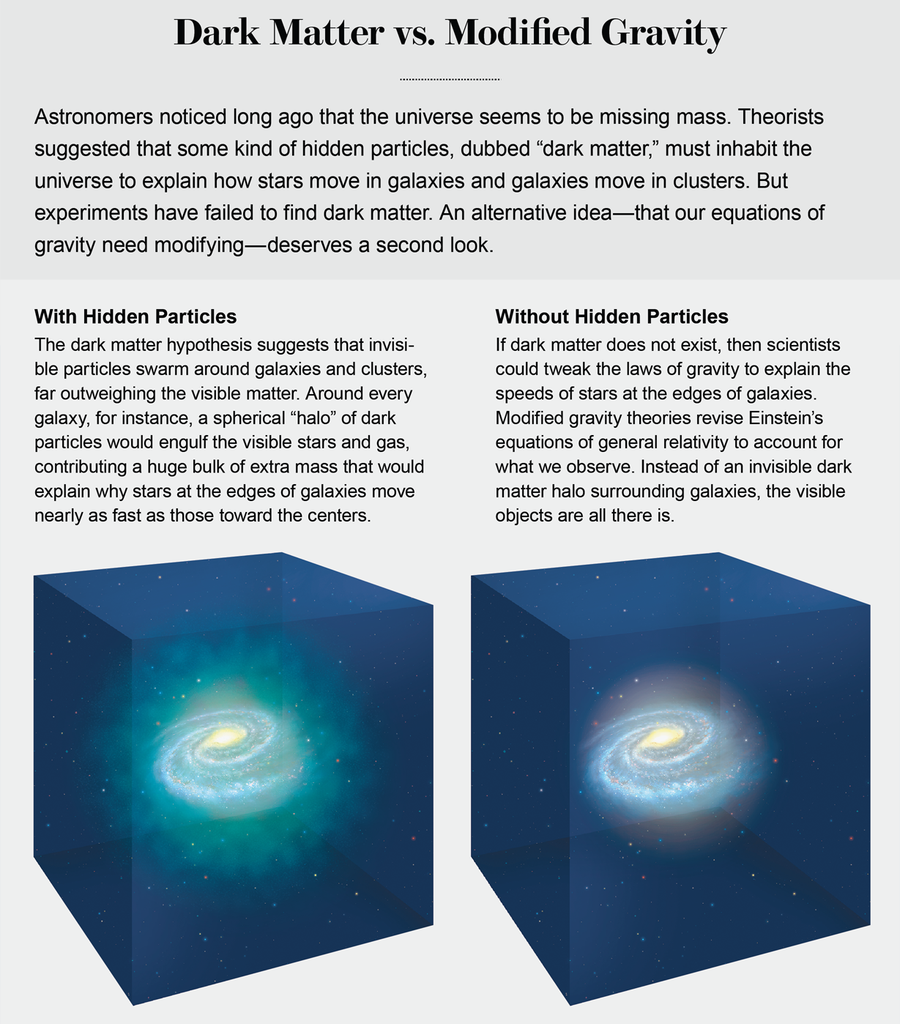
Dark matter refers to a form of matter that does not emit, absorb, or reflect light, making it invisible to current electromagnetic observational methods. Despite its invisibility, it exerts gravitational effects that influence the structure and dynamics of the universe. It is hypothesized to constitute a significant portion of the total matter in the cosmos, shaping the formation and stability of galaxies and larger cosmic structures.
- Invisible Mass:
Dark matter cannot be detected through direct electromagnetic signals, distinguishing it from ordinary, baryonic matter. - Gravitational Influence:
Its presence is inferred from gravitational effects on visible matter, radiation, and the large-scale structure of the universe.
Observational Evidence and Galactic Dynamics
The concept of dark matter emerged from discrepancies observed in the rotational behavior of galaxies. According to classical Newtonian physics, the visible mass within galaxies-comprising stars, gas, and dust-should not generate sufficient gravitational pull to maintain the high rotational speeds observed, which would otherwise cause galaxies to disintegrate or eject stars into space. However, galaxies remain intact, implying the existence of an unseen mass that provides the necessary gravitational binding.
This invisible component acts as a cosmic glue, holding galaxies together and explaining the mismatch between observed rotational velocities and the gravitational forces expected from visible matter alone.
Role in Cosmology and Large-Scale Structure Formation
Dark matter plays a fundamental role in cosmology, the study of the universe’s origin, evolution, and large-scale structure. Observations of the cosmic microwave background radiation-the residual thermal energy from the Big Bang-reveal minute temperature fluctuations that map the early distribution of matter. These patterns indicate that ordinary matter accounts for only a small fraction of the universe’s total matter-energy content.
Instead, dark matter forms the gravitational framework that enabled the aggregation of matter into galaxy clusters, superclusters, and the cosmic web. Without this invisible scaffold, the universe’s large-scale structure would be drastically different or might not have formed at all.
Hypothesized Candidates for Dark Matter
Despite strong indirect evidence, the exact nature of dark matter remains unknown. It does not interact via electromagnetic forces, making it undetectable by conventional telescopes and detectors. Scientists have proposed several theoretical candidates to explain its properties:
- Weakly Interacting Massive Particles (WIMPs):
Hypothetical particles that interact through gravity and the weak nuclear force but evade detection by standard instruments. - Axions:
Extremely light particles that could permeate the universe with subtle effects, potentially detectable through specialized experiments.
Despite extensive searches using underground detectors, particle accelerators, and astrophysical observations, no definitive detection of these particles has yet been achieved.
Alternative Theories Challenging Dark Matter
Some scientists propose modifications to the laws of gravity as an alternative explanation for the phenomena attributed to dark matter. One prominent example is Modified Newtonian Dynamics (MOND), which suggests that Newton’s laws require adjustment at galactic scales to account for observed rotational speeds without invoking unseen matter.
While MOND can explain certain galactic behaviors, it struggles to account for cosmological observations such as the cosmic microwave background and large-scale structure formation, where dark matter models remain more consistent with data. This ongoing debate highlights the complexity of interpreting cosmic phenomena and the interplay between astrophysics and fundamental physics.
Philosophical and Scientific Significance
Dark matter transcends empirical science, touching on philosophical questions about the limits of human perception and knowledge. It reveals that the visible universe is only a fraction of the total cosmic reality, emphasizing the provisional nature of scientific understanding. Similar to dark energy, which drives the accelerated expansion of the universe, dark matter challenges researchers to continually refine and sometimes rethink established theories.
This enigmatic substance embodies the essence of scientific inquiry-a profound mystery that invites persistent investigation and intellectual humility.
The Quest for Discovery and Its Implications
The search for dark matter epitomizes the spirit of exploration in astrophysics and cosmology. Advances in detection technology and observational precision hold the promise of breakthroughs that could revolutionize our understanding of fundamental physics. Confirming the existence of dark matter particles or conclusively disproving them would have far-reaching consequences, influencing theories from quantum mechanics to cosmological models.
This pursuit captivates not only scientists but also the broader public, inspiring curiosity about the hidden complexities and interconnectedness of the universe.
Historical Context and Future Perspectives
The enigmatic nature of dark matter echoes past scientific puzzles, such as the 19th-century concept of the luminiferous ether, once believed to be the medium for light propagation but later discarded. Dark matter may eventually be replaced by new paradigms or remain a fundamental component of cosmic understanding.
This tension between temporary explanations and enduring truths fuels ongoing research and fascination, positioning dark matter as a central topic at the crossroads of knowledge, mystery, and imagination.
Summary and Outlook
In conclusion, dark matter represents a compelling intersection of observation and theory. While its existence is strongly supported by astrophysical and cosmological evidence, its elusive nature defies direct detection. Whether it is a new fundamental particle, a sign of modified gravitational laws, or an indication of physics beyond current models, dark matter challenges humanity to expand the frontiers of scientific inquiry.
Beyond a scientific enigma, it invites reflection on our place within a universe far more complex and mysterious than previously understood. The ongoing endeavor to unravel the reality of dark matter exemplifies both the progress of science and the enduring human drive to illuminate the unknown depths of the cosmos.
FAQ
What is dark matter?
Dark matter is a form of matter that does not emit, absorb, or reflect light, making it invisible, yet it exerts gravitational effects on visible matter.
Why is dark matter important in cosmology?
Dark matter is crucial for understanding the universe's structure and evolution, as it forms the gravitational framework for galaxies and galaxy clusters.
What are some candidates for dark matter?
Candidates include Weakly Interacting Massive Particles (WIMPs) and axions, which are hypothetical particles that do not interact via electromagnetic forces.

Leave a Reply