
Short Answer
Understanding Dark Matter and Cosmic Dust
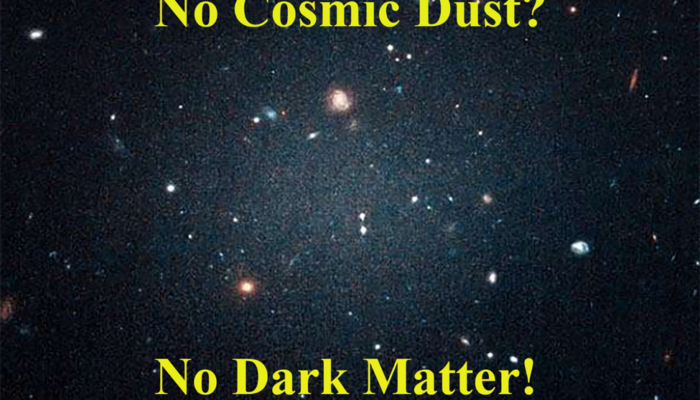
Imagine entering an immense, ancient library where each book narrates the story of the universe. Yet, hidden in the dim corners between the shelves lie countless volumes unseen by the naked eye-much like the mysterious dark matter that continues to baffle astronomers and physicists. A compelling question arises: could this elusive dark matter be not an exotic, invisible particle permeating space, but rather an enormous accumulation of cosmic dust too faint to detect directly? This intriguing idea challenges our conventional understanding of the cosmos, suggesting that tiny, unseen dust particles might play a far more significant role in the universe’s structure than previously thought.
Definition of Dark Matter and Cosmic Dust
Dark Matter:
Dark matter is traditionally defined as a non-luminous form of matter that does not emit, absorb, or reflect electromagnetic radiation, making it invisible to current detection methods. Despite its invisibility, it exerts gravitational effects that influence the rotation of galaxies, gravitational lensing phenomena, and the large-scale structure of the cosmos.
Cosmic Dust:
Cosmic dust consists of tiny particles composed of silicates, carbon-based compounds, and ice-coated grains scattered throughout space. Though often regarded as mere debris, these particles absorb, scatter, and emit electromagnetic radiation, especially in the infrared spectrum, and play essential roles in star formation, molecular chemistry, and the thermal regulation of galaxies.
Reevaluating Dark Matter: The Cosmic Dust Hypothesis
The idea that dark matter might be primarily composed of cosmic dust offers a fresh perspective that challenges long-standing assumptions. Instead of relying on hypothetical particles such as WIMPs (Weakly Interacting Massive Particles) or axions-whose existence remains unconfirmed-this hypothesis grounds the mystery in a well-documented, albeit complex, component of the universe. Cosmic dust, often overlooked, could collectively mimic the gravitational effects attributed to dark matter if distributed widely and cold enough to evade direct detection.
Physical Properties and Role of Cosmic Dust
- Composition and Size:
Cosmic dust particles are microscopic, made up of silicates, carbonaceous materials, and ices. - Interaction with Radiation:
These particles absorb and scatter light, particularly in the infrared range, influencing the thermal balance of galaxies. - Astrophysical Importance:
Dust facilitates star formation by cooling molecular clouds and acts as a catalyst for complex chemical reactions in space.
Challenges to the Dust-Dark Matter Theory
Despite its appeal, the cosmic dust explanation for dark matter faces significant hurdles. The mass and spatial distribution of dust are unlikely to account fully for the gravitational anomalies observed. Infrared surveys and cosmic microwave background measurements impose strict constraints on the density and emission properties of dust. Moreover, the cold, diffuse dust required to replicate dark matter’s gravitational influence would produce detectable infrared signals, which have not been observed.
Exploring the Interstellar and Intergalactic Medium
Between stars and galaxies lies a vast expanse filled with diffuse plasma and dust grains whose properties are less well understood. It is conceivable that ultra-fine dust particles, sometimes referred to as “ghost dust,” exist in these cosmic voids, hidden by their temperature, composition, or distribution. Such dust could subtly affect gravitational measurements while remaining undetectable by current instruments, adding complexity to the dark matter puzzle.
Observational Limitations and Technological Boundaries
The search for dark matter is as much constrained by the limits of our observational tools as by theoretical models. Instruments have finite sensitivity, spectral coverage, and resolution, which may prevent detection of faint infrared emissions or scattered photons from diffuse dust. If dark matter is indeed a manifestation of cosmic dust, advancing detection technologies to capture these subtle signals is essential.
Implications for Cosmic Evolution
If cosmic dust constitutes a significant portion of dark matter, it would imply a dual role for dust in the universe: not only as a catalyst for star and planet formation but also as a fundamental component shaping the gravitational framework of galaxies. This perspective enriches our understanding of matter’s lifecycle, linking microscopic particles to the grand architecture of the cosmos.
Common Misconceptions About Dark Matter and Cosmic Dust
Dark matter must be composed of exotic, undiscovered particles.
While many theories focus on exotic particles, alternative explanations like cosmic dust offer plausible, observable candidates.
Cosmic dust is insignificant in cosmic dynamics.
Dust plays critical roles in star formation, molecular chemistry, and potentially in gravitational effects attributed to dark matter.
Dark matter cannot emit any radiation.
If dark matter includes dust, it may emit faint infrared radiation, though current instruments may not yet detect it.
Why Understanding Dark Matter Matters
Deciphering the nature of dark matter is crucial for comprehending the universe’s composition, evolution, and fate. It influences galaxy formation, cosmic structure, and gravitational interactions on vast scales. Whether dark matter is exotic particles or cosmic dust, unraveling its identity will bridge gaps between theoretical physics and observational astronomy, enhancing our grasp of the cosmos and our place within it.
Future Directions in Research
Addressing the dark matter mystery requires an interdisciplinary approach, combining astrophysics, cosmochemistry, advanced instrumentation, and observational astronomy. Improving detection sensitivity, reexamining dust properties, and developing comprehensive models that integrate gravitational phenomena with dust physics are vital steps forward. This ongoing inquiry exemplifies the dynamic nature of scientific exploration, where familiar cosmic elements may hold the key to profound universal secrets.
FAQ
What is dark matter?
Dark matter is a non-luminous form of matter that does not emit, absorb, or reflect electromagnetic radiation, making it invisible to current detection methods.
How does cosmic dust relate to dark matter?
The hypothesis suggests that cosmic dust could mimic the gravitational effects attributed to dark matter if distributed widely enough.
What are the implications if dark matter is cosmic dust?
It would imply that cosmic dust plays a fundamental role in shaping the gravitational framework of galaxies and influences star formation.

Leave a Reply