
Short Answer
Definition of Fiber Optic Cable Capacity
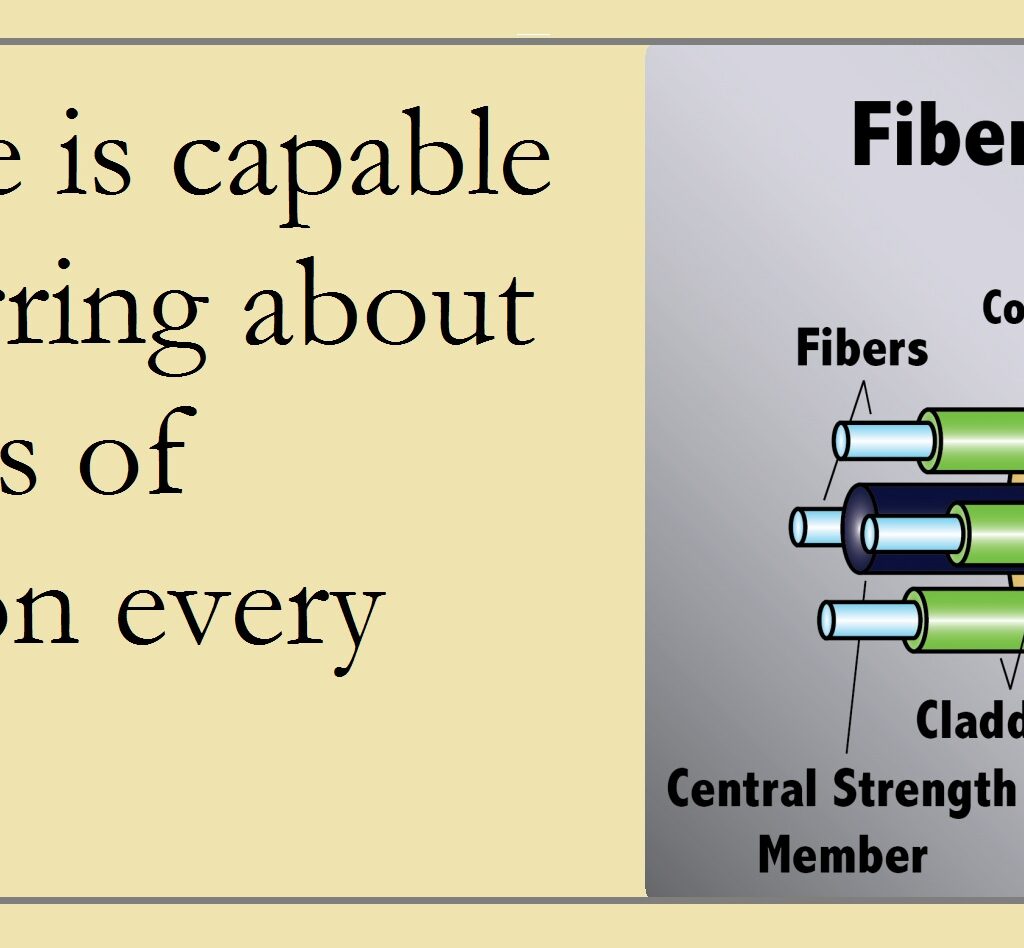
Fiber optic cables are slender strands of glass or plastic designed to transmit data as pulses of light. Their capacity refers to the volume of information these cables can carry over a given period, measured in bits per second. This capacity is influenced by the physical properties of the fiber, the technology used to encode data, and the system architecture that manages signal transmission.
- Fiber Optics:
Technology that uses light to transmit data through thin fibers, enabling high-speed communication. - Data Capacity:
The maximum amount of information that can be transmitted, often expressed in terabits per second (Tbps). - Bandwidth:
The range of frequencies a fiber can support, directly impacting data throughput.
Fundamental Principles of Fiber Optic Transmission
At the core of fiber optic communication lies the principle of total internal reflection. Light signals are confined within the fiber’s core, bouncing along its length with minimal loss. This mechanism allows data to be transmitted as light pulses representing binary information (0s and 1s). Compared to traditional copper cables, fiber optics offer significantly higher bandwidth and lower attenuation, making them ideal for long-distance, high-speed data transfer.
Factors Influencing Data Capacity
The amount of data a fiber optic cable can carry depends on several key factors:
- Bandwidth:
Measured in hertz (Hz), bandwidth defines the frequency range available for data transmission. Optical fibers operate in the terahertz (THz) range, enabling data rates far beyond those achievable with copper wires. - Signal-to-Noise Ratio (SNR):
SNR measures the clarity of the signal relative to background noise. Higher SNR values allow for more reliable data transmission over longer distances. - Modulation Techniques:
Methods of encoding data onto light waves, such as on-off keying (OOK), quadrature amplitude modulation (QAM), and frequency-division multiplexing (FDM), which increase the amount of information sent per signal.
Advanced Modulation and Multiplexing Technologies
Modern fiber optic systems employ sophisticated modulation and multiplexing strategies to maximize data throughput:
- On-Off Keying (OOK):
A basic method where light is switched on or off to represent binary data. - Quadrature Amplitude Modulation (QAM):
Combines amplitude and phase variations to encode multiple bits per symbol, enhancing data density. - Frequency-Division Multiplexing (FDM):
Allows multiple signals at different frequencies to be transmitted simultaneously over a single fiber. - Wavelength Division Multiplexing (WDM):
Enables multiple wavelengths (colors) of light to carry separate data channels concurrently, dramatically increasing total capacity. - Time-Division Multiplexing (TDM):
Divides transmission time into slots, allowing multiple data streams to share the same fiber sequentially.
Mathematical Explanation of Fiber Optic Capacity
The theoretical data capacity of a fiber optic cable can be approximated by the Shannon-Hartley theorem:
C = B × log₂(1 + SNR)
- C: Channel capacity in bits per second (bps)
- B: Bandwidth in hertz (Hz)
- SNR: Signal-to-noise ratio (unitless)
This formula illustrates how increasing bandwidth and improving SNR can exponentially enhance the data transmission rate.
Real-World Applications and Examples
Fiber optic cables are the backbone of global communications, supporting everything from internet connectivity to cloud computing:
- Submarine Cables:
Undersea fiber optic cables span oceans, carrying data at capacities exceeding 200 Tbps, equivalent to hundreds of thousands of home internet connections combined. - 5G Networks and IoT:
Fiber optics provide the high-speed infrastructure necessary to support the massive data demands of 5G wireless networks and the Internet of Things. - High-Definition Streaming:
The vast bandwidth of fiber optics enables seamless streaming of ultra-high-definition video content worldwide.
Challenges and Innovations in Fiber Optic Technology
Despite their impressive capabilities, fiber optic systems face challenges such as signal attenuation, noise, and the ever-increasing demand for bandwidth. Innovations addressing these issues include:
- Advanced Fiber Materials:
Development of photonic crystal fibers and enhanced multimode fibers to increase capacity and reduce losses. - Error Correction and Signal Regeneration:
Techniques to maintain data integrity over long distances by mitigating noise and signal degradation. - Next-Generation Modulation Formats:
Research into new encoding schemes to push data rates beyond current limits. - Artificial Intelligence and Machine Learning:
Utilization of AI to optimize network routing, reduce latency, and improve overall system efficiency.
Common Misconceptions About Fiber Optic Capacity
Fiber optic cables have a fixed data capacity.
Capacity depends on multiple factors including modulation techniques, multiplexing methods, and system design, which continue to evolve.
Fiber optics are only useful for short distances.
Fiber optics excel in long-distance communication due to low attenuation and advanced signal regeneration technologies.
Significance of Fiber Optic Capacity in Modern Society
The extraordinary data-carrying potential of fiber optic cables underpins the digital age, enabling rapid communication, global connectivity, and the proliferation of data-intensive applications. As demands for bandwidth surge with emerging technologies like 5G, IoT, and cloud computing, fiber optics remain essential for sustaining and advancing the infrastructure of modern communication networks. Their continuous development promises to support the expanding digital ecosystem, fostering innovation and economic growth worldwide.
FAQ
What determines the maximum data capacity of a fiber optic cable?
Maximum data capacity is influenced by the fiber's bandwidth, signal-to-noise ratio, and the modulation and multiplexing techniques used.
How does fiber optic technology compare to copper cables?
Fiber optics offer significantly higher bandwidth, lower signal loss, and immunity to electromagnetic interference compared to copper cables.
What is Wavelength Division Multiplexing (WDM)?
WDM is a technique that uses multiple light wavelengths to transmit separate data channels simultaneously over one fiber.
Can fiber optic cables be used for long-distance communication?
Yes, fiber optic cables are ideal for long-distance data transmission due to low attenuation and signal regeneration technologies.
What advancements are improving fiber optic data capacity?
Innovations include advanced fiber materials, new modulation formats, error correction techniques, and AI-based network optimization.



Leave a Reply