

Short Answer
Definition of Photonics and Astrophysics
Photonics is the scientific field focused on the generation, control, and detection of photons, the fundamental particles of light. It encompasses a broad range of technologies that manipulate light for various applications, from communication to sensing.
Astrophysics is the branch of astronomy that studies the physical properties and underlying phenomena of celestial bodies and the universe. It primarily relies on electromagnetic radiation, especially light, to investigate cosmic events and structures.
Interconnection Between Photonics and Astrophysics
The relationship between photonics and astrophysics is deeply intertwined, as astrophysical research depends heavily on the ability to detect and analyze light emitted or reflected by celestial objects. Advances in photonic technologies have significantly enhanced the tools and methods used in astrophysics, enabling more precise and detailed observations of the universe.
Photonics in Astronomical Instrumentation
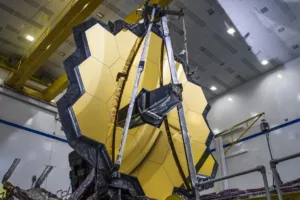
Modern telescopes have evolved beyond traditional optics through the integration of photonic components. These include wavelength-tunable lasers and advanced fiber optic systems that allow for unprecedented control over light. Such innovations have led to the creation of photonic telescopes, which offer superior resolution and sensitivity compared to conventional instruments.
- Photonic Sensors:
Devices that detect photons with high efficiency, improving the clarity and depth of astronomical images. - Fiber Optic Systems:
Enable flexible and precise light transmission within telescopes, enhancing data collection capabilities.
Role of Spectrometry in Astrophysics
Spectrometry, a technique that decomposes light into its component wavelengths, is fundamental in astrophysics for analyzing the properties of celestial bodies. Photonic technologies have refined spectrometers, allowing scientists to determine the chemical makeup, temperature, velocity, and other characteristics of stars, galaxies, and nebulae with remarkable accuracy.
Photonics in Exoplanet Research
Detecting and studying planets beyond our solar system relies heavily on photonic methods such as transit photometry. This technique measures minute changes in a star’s brightness caused by an orbiting planet passing in front of it. The precision of photonic instruments is crucial for identifying these subtle signals and assessing the atmospheric and surface conditions of exoplanets, which is vital for the search for extraterrestrial life.
Molecular Astrophysics and Photonics
The study of molecules in space, including their formation and reactions, benefits greatly from photonic innovations. Lasers and other light-based tools are used in deep-space missions to perform spectroscopy on interstellar molecules, helping scientists understand the chemical processes that occur in extreme cosmic environments and shedding light on the origins of life and matter.
Photonics in Data Transmission for Astrophysics
Astrophysical research generates enormous volumes of data that require rapid and reliable transmission. Optical fiber communication systems, a product of photonics, facilitate high-speed data transfer between observatories and research centers worldwide. This capability supports real-time collaboration and accelerates the analysis of astronomical phenomena.
Photonics and Gravitational Wave Detection
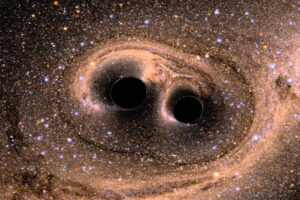
Gravitational waves, ripples in spacetime caused by massive cosmic events, are detected using highly sensitive photonic instruments. Facilities like LIGO employ laser-based interferometry to observe these waves, opening new windows into fundamental physics and the dynamic behavior of the universe.
Emerging Frontiers: Nanophotonics in Astrophysics
Nanophotonics, which involves manipulating light at the nanometer scale, represents a cutting-edge area of research with significant implications for astrophysics. This field promises the development of novel light sources and detectors that meet the stringent demands of space exploration and astronomical observation, potentially revolutionizing our understanding of cosmic processes.
Why the Photonics-Astrophysics Synergy is Crucial
The fusion of photonics and astrophysics is pivotal for advancing our comprehension of the universe. Photonic technologies enhance observational precision, enable the detection of previously inaccessible phenomena, and support the vast data infrastructure necessary for modern astronomy. This synergy drives scientific discovery and fuels humanity’s enduring quest to unravel the mysteries of existence.
FAQ
What is photonics?
Photonics is the science and technology of generating, manipulating, and detecting photons, the fundamental particles of light.
How does photonics benefit astrophysics?
Photonics improves astrophysical research by enabling advanced observational instruments, high-precision spectrometry, and efficient data communication.
What are photonic telescopes?
Photonic telescopes utilize cutting-edge photonic technologies such as fiber optics and tunable lasers to enhance astronomical imaging capabilities.
How is photonics applied in exoplanet detection?
Photonics facilitates transit photometry, detecting slight changes in starlight caused by orbiting planets, aiding in the discovery of exoplanets.
What role do photonic technologies play in gravitational wave astronomy?
They enable precise laser-based interferometry used in detectors like LIGO to observe gravitational waves from cosmic events.



Leave a Reply