
Short Answer
Overview of CERN
The European Organization for Nuclear Research, commonly known as CERN, represents a pinnacle of scientific exploration and technological progress. Founded in 1954, CERN is dedicated to probing the fundamental components and forces of the universe. It has consistently led advancements in high-energy physics, expanding our comprehension of matter and the interactions that govern it. This article explores CERN’s significant contributions, spanning groundbreaking discoveries, technological innovations, global cooperation, societal impacts, and future ambitions.
Definition and Mission
CERN is an international research center focused on particle physics, aiming to uncover the basic building blocks of the universe and the laws that dictate their behavior. It operates some of the most sophisticated scientific instruments in the world, including particle accelerators and detectors, to conduct experiments that test and extend the Standard Model of particle physics.
- Particle Physics Research:
Investigating the fundamental particles and forces that constitute matter and energy. - Technological Innovation:
Developing cutting-edge technologies that have applications beyond physics, including medicine and information technology. - International Collaboration:
Facilitating cooperation among scientists from over 100 countries to foster diverse expertise and innovation.
Key Scientific Achievements
At the heart of CERN’s scientific endeavors is the Large Hadron Collider (LHC), the most powerful particle accelerator ever built. One of its landmark accomplishments was the detection of the Higgs boson in 2012, a particle that explains how other particles gain mass through interaction with the Higgs field. This discovery was a crucial validation of the Standard Model, which describes the electromagnetic, weak, and strong nuclear forces.
In addition to the Higgs boson, CERN has made significant strides in antimatter research. The ALPHA experiment has successfully trapped antihydrogen atoms, enabling detailed studies of antimatter’s properties. These investigations address fundamental questions about the imbalance between matter and antimatter in the universe, a mystery that has profound implications for cosmology and the origins of the cosmos.
Technological Contributions Beyond Physics
CERN’s influence extends well beyond particle physics, notably through its role in the creation of the World Wide Web. In 1989, Tim Berners-Lee, working at CERN, invented the first web browser, revolutionizing global communication and information sharing.
Moreover, CERN has pioneered advancements in detection and imaging technologies that have been adapted for medical and industrial uses. For example, innovations in particle detection have enhanced cancer treatment techniques such as proton therapy, improving the precision and effectiveness of medical interventions.
International Cooperation and Educational Outreach
CERN exemplifies the power of global scientific collaboration, uniting thousands of researchers, engineers, and technicians from more than 100 nations. This diverse community fosters a dynamic environment for innovation and discovery.
Beyond research, CERN actively promotes science education and public engagement through initiatives like the CERN Summer Student Programme and Open Days. These events attract millions of visitors and inspire young people worldwide to pursue careers in science and technology, enhancing public understanding of complex scientific concepts.
Societal Impact and Environmental Responsibility
CERN’s research contributes to addressing some of humanity’s most pressing challenges. Insights gained from particle physics experiments inform our understanding of dark matter and dark energy, which are critical to explaining the universe’s structure and evolution.
In addition, CERN is committed to sustainability through initiatives such as the CERN Green program, which focuses on reducing the organization’s environmental footprint and promoting eco-friendly practices in scientific research and operations.
Future Directions and Scientific Goals
Looking forward, CERN plans to develop the Next Circular Collider (FCC), a proposed accelerator designed to deepen our understanding of the Higgs boson and explore phenomena beyond the Standard Model. This project aims to investigate dark matter, supersymmetry, and gravitational interactions with unprecedented precision.
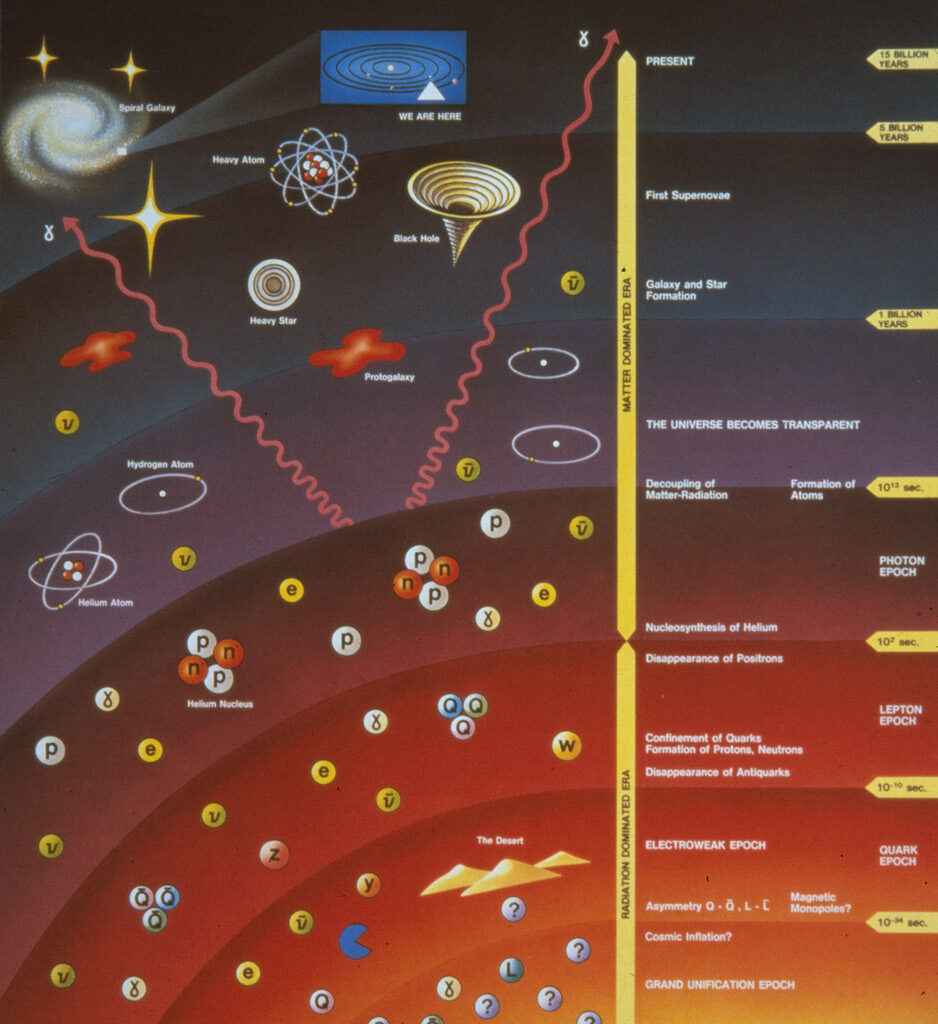
Research at CERN also continues to focus on the conditions of the early universe, particularly moments following the Big Bang. These studies seek to uncover the fundamental nature of reality and provide insights into the universe’s origin and ultimate destiny.
Common Misconceptions About CERN
CERN’s experiments could create black holes that threaten Earth.
The energies produced at CERN are far too low to create dangerous black holes, and any microscopic black holes would evaporate instantly due to quantum effects.
The Higgs boson is the “God particle” because it explains everything.
While the Higgs boson explains how particles acquire mass, it is only one part of the Standard Model and does not account for all phenomena in physics.
Significance of CERN in Science and Society
CERN’s work is vital for advancing fundamental science, driving technological innovation, and fostering international collaboration. Its discoveries enhance our understanding of the universe’s fundamental laws, while its technologies improve healthcare and communication worldwide. By inspiring future generations and promoting sustainable research practices, CERN plays a crucial role in shaping the scientific and technological landscape of the 21st century.
FAQ
What is CERN?
CERN is the European Organization for Nuclear Research, dedicated to particle physics research and technology.
What is the Large Hadron Collider?
The LHC is the world's most powerful particle accelerator, used to explore the fundamental particles of the universe.
What are CERN's major contributions?
CERN has made significant contributions in particle physics, technological advancements, and global scientific collaboration.






Leave a Reply