
Short Answer
Definition of GLAST and Gamma-Ray Astronomy
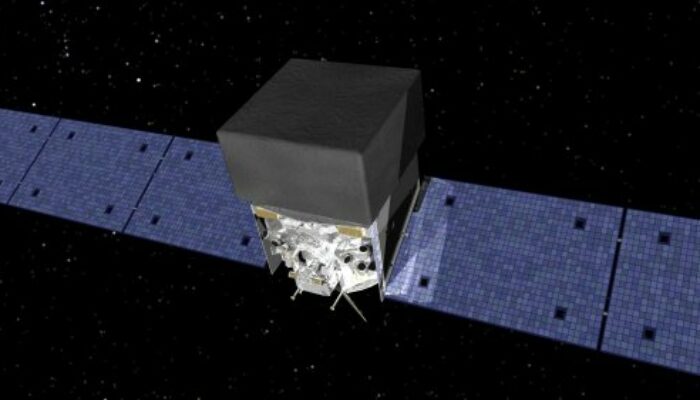
The Gamma-ray Large Area Space Telescope (GLAST) is a cutting-edge space observatory launched to investigate the high-energy universe through the detection of gamma rays. Gamma rays represent the most energetic form of electromagnetic radiation, originating from some of the universe’s most extreme and dynamic events. These photons are produced in phenomena such as supernova explosions, active galactic nuclei, and gamma-ray bursts, all of which provide critical insights into astrophysical processes and fundamental physics.
- Gamma Rays:
Electromagnetic waves with the highest photon energies, often generated by violent cosmic events. - GLAST Mission:
A space-based telescope designed to detect and analyze gamma rays to deepen our understanding of high-energy astrophysics.
Scientific Objectives of GLAST
GLAST’s primary goal is to unravel the origins, behavior, and propagation of gamma rays throughout the cosmos. The universe is abundant with sources emitting these energetic photons, yet many remain enigmatic. By studying these emissions, GLAST aims to shed light on the physical mechanisms behind stellar death, black hole activity, and the most luminous cosmic explosions.
Exploring Stellar Explosions and Supernovae
Supernovae mark the cataclysmic end of massive stars, releasing enormous energy and accelerating particles that emit gamma rays. GLAST’s sensitive instruments capture these emissions, allowing scientists to investigate the processes governing stellar evolution and the recycling of matter in space.
Investigating Active Galactic Nuclei
Active galactic nuclei (AGN) are regions at the centers of galaxies powered by supermassive black holes. As matter accretes onto these black holes, intense gamma radiation is produced. GLAST’s observations help probe the complex interactions between black holes, dark matter, and their surrounding environments, offering potential breakthroughs in understanding cosmic structure and evolution.
Studying Gamma-Ray Bursts
Gamma-ray bursts (GRBs) are among the most energetic and transient phenomena in the universe, often linked to the collapse of massive stars or neutron star mergers. GLAST’s ability to detect and analyze GRBs provides valuable data to refine theoretical models of these extraordinary events.
How GLAST Operates
GLAST is equipped with advanced detectors capable of precisely measuring the energy and direction of incoming gamma rays. This capability enables the classification of gamma-ray sources and the study of their propagation through space. By tracking how gamma rays interact with cosmic particles and magnetic fields, GLAST contributes to understanding the large-scale distribution of matter and energy in the universe.
Mathematical Framework and Detection Principles
The detection of gamma rays involves measuring their energy (E) and arrival direction (θ, φ). The flux of gamma rays (Φ) from a source can be expressed as:
Φ(E) = dN / (dE · dA · dt · dΩ)
- Φ(E): Differential gamma-ray flux as a function of energy
- dN: Number of photons detected
- dE: Energy interval
- dA: Detector area
- dt: Observation time
- dΩ: Solid angle of observation
By analyzing these parameters, GLAST reconstructs the energy spectrum and spatial distribution of gamma-ray sources, facilitating astrophysical interpretations.
Real-World Applications and Discoveries
GLAST’s observations have practical implications for multiple scientific fields. For example, understanding gamma-ray emissions from supernova remnants informs models of cosmic ray acceleration. Insights into AGN activity contribute to knowledge about galaxy formation and evolution. Additionally, studying GRBs enhances our grasp of extreme physics under conditions unattainable on Earth.
Common Misconceptions About Gamma-Ray Astronomy
Gamma rays are harmful only to humans.
While gamma rays are highly energetic and can be harmful in close proximity, cosmic gamma rays studied by GLAST are detected far from Earth and pose no direct threat.
Gamma-ray bursts are continuous events.
GRBs are brief, intense flashes lasting from milliseconds to minutes, not ongoing emissions.
GLAST only observes gamma rays.
While focused on gamma rays, GLAST’s data also provide indirect information about other cosmic phenomena and particles.
Significance of GLAST in Modern Astrophysics
The GLAST mission represents a pivotal advancement in high-energy astrophysics, bridging gaps in our knowledge of the universe’s most energetic processes. By decoding gamma-ray signals, GLAST enhances our understanding of cosmic evolution, particle physics, and the fundamental forces shaping reality. Its findings have the potential to challenge existing theories and inspire new scientific paradigms.
Collaborative and Educational Impact
GLAST exemplifies the interdisciplinary collaboration essential in contemporary space science, involving astrophysicists, particle physicists, cosmologists, and engineers. This teamwork fosters innovation and comprehensive analysis. Moreover, GLAST’s discoveries stimulate public interest and educational initiatives, encouraging the next generation of scientists and promoting scientific literacy worldwide.
Conclusion: GLAST as a Beacon of Cosmic Exploration
Embarking on its mission to chart the gamma-ray universe, GLAST stands as a symbol of humanity’s enduring quest for knowledge. By illuminating the universe’s most energetic and mysterious phenomena, it not only advances scientific understanding but also enriches our philosophical perspective on existence. GLAST’s journey into the high-energy cosmos continues to open new frontiers in astrophysics and inspire wonder across the globe.
FAQ
What is GLAST?
GLAST is a space-based telescope that detects gamma rays to study high-energy astrophysical processes.
What are gamma rays?
Gamma rays are the most energetic form of electromagnetic radiation, emitted by extreme cosmic events.



Leave a Reply