
Short Answer
Definition of Dark Energy and Its Cosmic Significance
Dark energy is a mysterious and pervasive force believed to be responsible for the accelerated expansion of the universe. Accounting for roughly 68% of the total cosmic energy density, it remains undetectable through direct measurement, yet its influence shapes the large-scale structure and evolution of the cosmos. Understanding dark energy is crucial for comprehending the universe’s past, present, and future dynamics.
- Dark Energy:
An unknown form of energy that exerts a repulsive effect, causing the universe’s expansion to speed up. - Cosmic Composition:
The universe consists mainly of dark energy, dark matter, and baryonic matter-the ordinary matter forming stars, planets, and living organisms. - Discovery:
The concept emerged in 1998 when observations of distant supernovae revealed they were dimmer than expected, indicating accelerated cosmic expansion.
Galaxy Formation and Cosmic Structure
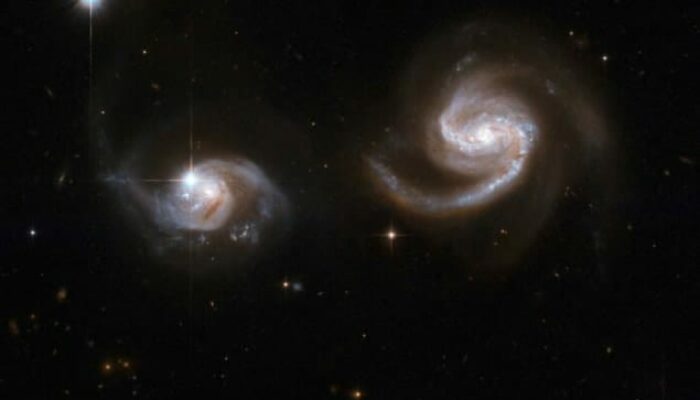
Galaxies are not just isolated luminous entities scattered randomly; they are the fundamental building blocks of cosmic structure, formed through gravitational interactions over billions of years. Their distribution and clustering patterns provide essential clues about the underlying forces shaping the universe, including dark energy.
- Gravitational Assembly:
Galaxies form and evolve by merging and interacting under the influence of gravity, primarily driven by dark matter’s gravitational pull. - Clustering Behavior:
On smaller scales, galaxies tend to cluster tightly due to gravitational attraction, whereas on larger scales, dark energy’s repulsive force causes galaxies to drift apart. - Cosmic Web:
The large-scale structure of the universe resembles a web of galaxy clusters and filaments, shaped by the interplay between dark matter and dark energy.
How Galaxy Clustering Reveals Dark Energy Properties
The spatial distribution of galaxies across vast cosmic distances serves as a powerful probe into the nature of dark energy. By studying how galaxies cluster and how this clustering changes with scale and time, scientists can infer the influence of dark energy on cosmic expansion and geometry.
- Scale Dependence:
Galaxy clustering is stronger at smaller scales due to gravity, but at larger scales, dark energy’s repulsive effect dominates, increasing galaxy separations. - Geometry of the Universe:
The shape of galaxy clusters-whether the universe is flat, open, or closed-affects interpretations of dark energy’s role and the universe’s ultimate fate. - Gravitational Lensing:
The bending of light by massive galaxy clusters helps map the distribution of both visible and dark matter, enhancing models of cosmic evolution.
Measuring Cosmic Expansion: The Hubble Parameter and Surveys
The rate at which the universe expands, quantified by the Hubble parameter, is a cornerstone in understanding dark energy. Observations of galaxy recession speeds provide direct evidence for accelerated expansion, and large-scale surveys aim to refine these measurements.
- Hubble Parameter:
Represents the velocity at which galaxies move away from each other per unit distance, reflecting the universe’s expansion rate. - Dark Energy Survey (DES):
A major observational program designed to map hundreds of millions of galaxies to study dark energy’s effects. - Euclid Mission:
An ESA space telescope project focused on measuring cosmic expansion and galaxy clustering with unprecedented precision.
Alternative Theories and Challenges in Understanding Dark Energy
Despite significant progress, the nature of dark energy remains contentious, with alternative explanations and theoretical challenges complicating the picture.
- Modified Gravity Theories:
Some scientists propose that the observed acceleration might result from changes in gravitational laws at large scales rather than a distinct dark energy component. - Cosmological Constant Problem:
Introduced by Einstein, the cosmological constant represents a constant energy density filling space, but its predicted value from quantum theory vastly exceeds observational estimates, posing a major theoretical puzzle.
Additional Observational Tools: Baryon Acoustic Oscillations and the Cosmic Microwave Background
Beyond galaxy clustering, other cosmological phenomena provide insights into dark energy’s influence on the universe’s expansion history.
- Baryon Acoustic Oscillations (BAO):
These are periodic fluctuations in the density of visible baryonic matter caused by sound waves in the early universe, leaving imprints on galaxy distributions that serve as “standard rulers” for measuring cosmic distances. - Cosmic Microwave Background (CMB):
The relic radiation from the Big Bang offers a snapshot of the early universe, and its detailed measurements help constrain models of dark energy and cosmic geometry.
Why Understanding Dark Energy Is Crucial
Deciphering the nature of dark energy is fundamental to cosmology, as it governs the universe’s expansion and ultimate destiny. It influences the formation and evolution of cosmic structures, impacts theoretical physics, and challenges our understanding of fundamental forces.
- Cosmic Fate:
Dark energy determines whether the universe will continue expanding indefinitely, slow down, or collapse. - Advancing Physics:
Investigating dark energy pushes the boundaries of particle physics, quantum theory, and general relativity. - Technological Progress:
The quest to understand dark energy drives innovation in observational instruments and data analysis techniques.
Future Directions in Dark Energy Research
Ongoing and upcoming observational campaigns, combined with theoretical advancements, promise to deepen our understanding of dark energy. As data accumulates from diverse sources, scientists aim to refine models, test alternative theories, and possibly uncover new physics beyond the current paradigm.
- Multi-Wavelength Surveys:
Observations across the electromagnetic spectrum will provide complementary data on galaxy formation and cosmic expansion. - Improved Theoretical Models:
Enhanced simulations and analytical frameworks will help interpret complex data and explore novel hypotheses. - Interdisciplinary Collaboration:
Combining insights from astrophysics, particle physics, and cosmology will be essential to unraveling dark energy’s mysteries.
FAQ
What is dark energy?
Dark energy is a mysterious force that is believed to be responsible for the accelerated expansion of the universe, accounting for about 68% of the total cosmic energy density.
How do galaxies relate to dark energy?
Galaxies provide essential clues about dark energy through their clustering patterns, which reveal how cosmic structures evolve under its influence.
What are some methods to study dark energy?
Methods include observing galaxy clustering, using the Hubble parameter, and studying phenomena like Baryon Acoustic Oscillations and the Cosmic Microwave Background.



Leave a Reply