

Short Answer
Definition of Cosmic Rays
Cosmic rays are highly energetic particles that travel through outer space at nearly the speed of light. These particles primarily originate from powerful astrophysical sources such as supernova explosions, neutron stars, and active galactic nuclei. Composed mostly of protons and atomic nuclei, cosmic rays interact with the interstellar medium and magnetic fields as they journey across the universe, raising important questions about their movement, confinement, and potential temporary trapping within certain cosmic regions.
Energy and Propagation of Cosmic Rays
The remarkable ability of cosmic rays to traverse vast cosmic distances without significant attenuation stems from their extremely high kinetic energies, often exceeding millions of electron volts (MeV). This immense energy allows them to overcome gravitational and electromagnetic forces encountered in space. While it might seem plausible that these particles could become permanently trapped or “stuck” in space, the reality is more complex. Cosmic rays are subject to various dynamic processes that influence their trajectories but do not result in indefinite confinement.
Influence of Magnetic Fields on Cosmic Rays
Magnetic fields permeate the interstellar medium and play a crucial role in shaping the paths of cosmic rays. These fields, generated by the movement of charged particles within celestial bodies, create a complex network of magnetic lines that guide cosmic ray motion. In regions with intense magnetic activity, such as near pulsars or magnetars, cosmic rays can experience significant deflection or temporary containment. However, this “confinement” is transient, as cosmic rays undergo drift and diffusion processes that eventually enable them to escape these magnetic traps.
Magnetic Field Effects
- Guidance:
Magnetic field lines act as channels directing cosmic ray trajectories. - Temporary Trapping:
Strong magnetic fields can bend particle paths, causing short-term confinement. - Escape Mechanisms:
Diffusion and drift allow cosmic rays to break free from magnetic regions over time.
Interactions with Radiation and Matter
Cosmic rays frequently collide with photons and particles in their environment, leading to various interaction processes such as pair production, electron scattering, and ionization. These interactions cause cosmic rays to lose energy and can generate secondary particles, contributing to the cosmic radiation background. Despite these energy losses, cosmic rays generally retain sufficient momentum to continue traveling through space rather than becoming permanently immobilized.
Cosmic Expansion and Its Effects
The expansion of the universe influences cosmic ray propagation by altering the electromagnetic fields and energy distributions they encounter. As space itself stretches, cosmic rays experience shifts in frequency and energy, complicating their movement and the concept of confinement. This evolving cosmic landscape requires cosmic rays to continuously adapt their trajectories in response to changing conditions.
Gravitational Influences on Cosmic Ray Trajectories
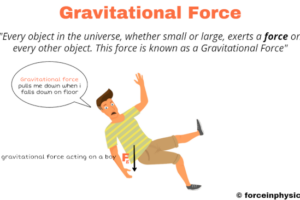
Gravitational fields from celestial bodies, including galaxies and black holes, significantly affect cosmic ray paths. Black holes, in particular, can accelerate particles to extreme energies or capture them beyond their event horizons, effectively removing these particles from the observable universe. This phenomenon introduces a probabilistic aspect to cosmic ray “sticking,” where some particles are lost while others are propelled into intergalactic space.
Gravitational Effects Summary
- Acceleration:
Black holes can boost cosmic ray energies to unprecedented levels. - Capture:
Particles crossing event horizons are permanently lost to observation. - Deflection:
Gravitational fields alter cosmic ray trajectories across galaxies.
Cosmic Rays and Galactic Feedback
Cosmic rays contribute to galactic evolution by interacting with the interstellar medium. Their pressure can compress gas clouds, triggering star formation and influencing the structure of galaxies. This feedback loop highlights the mutual impact between cosmic rays and their environments, demonstrating their role in shaping cosmic phenomena on large scales.
Origins and Journey of Ultra-High-Energy Cosmic Rays
Ultra-high-energy cosmic rays (UHECRs) originate from distant and energetic astrophysical events. These particles can escape the gravitational influence of their sources and travel across intergalactic space. As they move farther from their origins, the decreasing density of matter and energy fields affects their propagation, raising intriguing questions about their ultimate fate and the transient nature of their presence in any given cosmic region.
Common Misconceptions About Cosmic Rays
Cosmic rays become permanently trapped in space.
While cosmic rays can be temporarily influenced or confined by magnetic and gravitational fields, they are not permanently stuck and continue to travel through the universe.
Cosmic rays lose all their energy quickly and stop moving.
Although cosmic rays lose energy through interactions, they generally maintain enough momentum to persist in their cosmic journey.
Significance of Cosmic Rays in Astrophysics
Understanding cosmic rays is vital for comprehending high-energy processes in the universe. Their interactions reveal information about magnetic fields, particle acceleration mechanisms, and the structure of galaxies. Moreover, cosmic rays influence star formation and contribute to the cosmic radiation background, making them essential components in the study of astrophysics and cosmology.
Summary
Cosmic rays are energetic particles that traverse the universe, influenced by magnetic fields, radiation interactions, gravitational forces, and cosmic expansion. Although they may experience temporary confinement or energy loss, they ultimately continue their journey through space. Studying cosmic rays provides valuable insights into the dynamic and interconnected nature of the cosmos, enhancing our understanding of the universe’s energetic phenomena and the pathways these particles follow across the vast cosmic expanse.
FAQ
What are cosmic rays?
Cosmic rays are highly energetic particles, primarily protons and atomic nuclei, originating from astrophysical sources.
Do cosmic rays become permanently trapped in space?
No, cosmic rays can be temporarily influenced by magnetic and gravitational fields but are not permanently immobilized.

Leave a Reply