
Short Answer
Understanding Curved Light
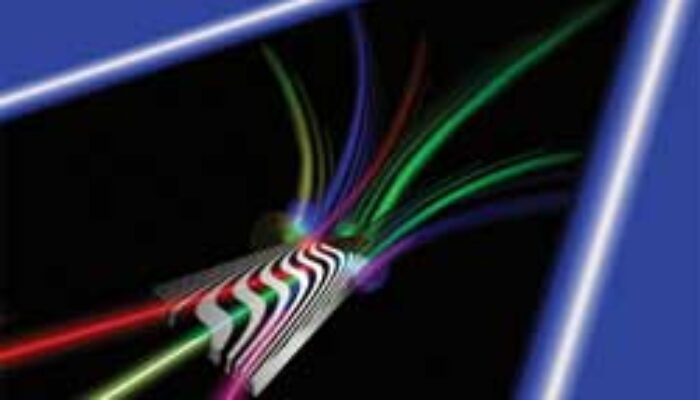
Curved light refers to the phenomenon where light rays deviate from their conventional straight-line paths, challenging the foundational principles of classical optics. This intriguing behavior prompts questions about the limits of traditional optical theories and invites a deeper investigation into how light interacts with various environments and forces.
Historical Context and Classical Optics
Classical optics, rooted in the insights of ancient Greek thinkers and later advanced by scientists like Newton and Huygens, is based on the premise that light travels in straight lines when moving through a uniform medium. This assumption has been fundamental in the development of optical devices such as lenses and mirrors. However, the observation of light bending-whether through diffraction, refraction, or gravitational effects-necessitates a reconsideration of these long-held beliefs.
Mechanisms Behind Curved Light
Diffraction and Wave Behavior
Diffraction occurs when light waves encounter obstacles or apertures, causing the wavefronts to bend and produce interference patterns. Unlike the straightforward ray model, diffraction requires a wave-based explanation to account for the curved trajectories of light. This phenomenon highlights the complex ways in which light interacts with its surroundings, revealing that its path can be influenced by physical barriers.
Refraction and Medium Transitions
Refraction describes the bending of light as it passes between materials with different refractive indices, altering its speed and direction. A familiar example is the apparent bending of a straw submerged in water, caused by light shifting from air to water. This effect underscores how the intrinsic properties of materials dictate the curvature of light’s path, which is critical in designing precise optical instruments.
Gravitational Lensing in Astrophysics
Gravitational lensing, predicted by Einstein’s general relativity, demonstrates how massive celestial bodies warp spacetime, causing light from distant stars or galaxies to curve around them. This results in distorted, magnified, or multiple images of the original light source. Such phenomena extend the concept of curved light beyond classical optics, integrating gravitational effects into our understanding of light propagation.
Metamaterials and Engineered Light Manipulation
Metamaterials are artificially structured substances that exhibit extraordinary optical properties, such as negative refractive indices. These materials enable unprecedented control over light paths, including the creation of invisibility cloaks. The ability to bend and shape light with such precision opens new frontiers in optical technology, impacting fields like telecommunications and advanced imaging.
Nonlinear Optical Effects
In nonlinear optics, intense light interactions within certain media can produce phenomena like self-focusing, solitons, and supercontinuum generation. These effects cause light to follow complex, curved trajectories that classical linear optics cannot predict, challenging traditional theories and expanding our comprehension of light’s dynamic behavior.
Mathematical and Physical Principles
The bending of light can be quantitatively described using Snell’s Law for refraction:
- Snell’s Law:
n₁ sin θ₁ = n₂ sin θ₂
where n₁ and n₂ are the refractive indices of the two media, and θ₁ and θ₂ are the angles of incidence and refraction, respectively. For gravitational lensing, the deflection angle α can be approximated by:
- Gravitational Deflection:
α = (4GM) / (c²b)
where G is the gravitational constant, M is the mass of the lensing object, c is the speed of light, and b is the impact parameter (closest approach distance).
Practical Applications of Curved Light
The ability to manipulate curved light paths has significant implications across various domains:
- Advanced Imaging:
Techniques in microscopy can surpass traditional diffraction limits, enabling higher resolution and more detailed visualization of microscopic structures. - Telecommunications:
Photonic circuits that utilize curved light trajectories can enhance data transmission speeds and improve the integration of optical components. - Astrophysics:
Gravitational lensing serves as a powerful tool for observing distant cosmic phenomena and mapping dark matter distributions.
Common Misunderstandings About Curved Light
- Misconception: Light always travels in straight lines.
Correction: While light generally moves straight in uniform media, it can bend due to wave effects, changes in medium, gravitational fields, or engineered materials. - Misconception: Refraction is merely an optical illusion.
Correction: Refraction is a physical change in light’s direction caused by variations in speed when crossing media boundaries. - Misconception: Gravitational lensing contradicts classical optics.
Correction: Gravitational lensing extends optical principles by incorporating general relativity, showing that light’s path is influenced by spacetime curvature.
Significance of Curved Light in Science and Technology
Exploring the phenomenon of curved light broadens our understanding of fundamental physics and enhances technological innovation. It bridges classical optics with modern physics, including quantum mechanics and general relativity, enriching our grasp of light’s dual nature as both wave and particle. The manipulation of curved light paves the way for breakthroughs in imaging, communication, and materials science, underscoring its vital role in advancing scientific knowledge and practical applications.
FAQ
What causes light to bend?
Light bends due to wave effects, changes in medium, gravitational fields, or engineered materials.
Is refraction an optical illusion?
No, refraction is a real physical change in light's direction caused by speed variations when crossing different media.




Leave a Reply