
Short Answer
Definition of Arsole
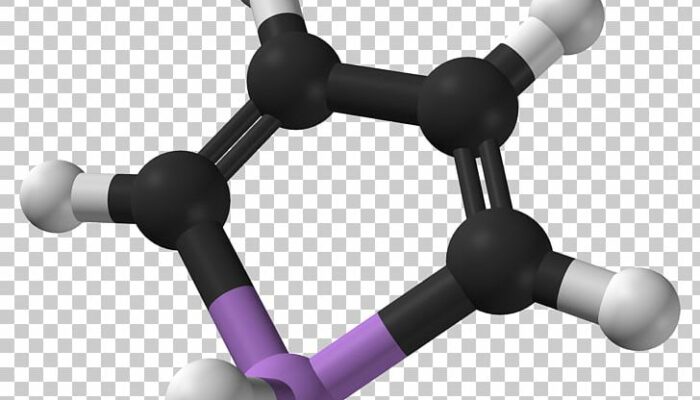
Arsole is an organoarsenic compound characterized by a five-membered aromatic ring in which an arsenic atom replaces one of the carbon atoms typically found in analogous heterocycles like pyrrole. This substitution results in a unique molecular structure that exhibits aromaticity, a key feature influencing its chemical properties and stability. Although less prevalent than its all-carbon counterparts, arsole serves as a fascinating subject in the study of molecular orbitals and organoarsenic chemistry.
Electronic Structure and Hybridization
Understanding the molecular orbitals of arsole requires a review of the arsenic atom’s electronic configuration and hybridization state within the ring. Arsenic, with an atomic number of 33, has the electron configuration [Ar] 3d10 4s2 4p3. In arsole, arsenic adopts an sp2 hybridization, combining one s orbital and two p orbitals to form three planar sp2 hybrid orbitals. This arrangement facilitates bonding with adjacent carbon atoms in the ring, while the remaining unhybridized p orbital participates in π bonding, contributing to the aromatic π-electron system.
Molecular Geometry and Orbital Overlap
The geometry of arsole is best described as a nearly planar pentagonal ring, with bond angles approximating 120°, consistent with the trigonal planar geometry around the sp2-hybridized arsenic center. This spatial configuration allows effective overlap between the arsenic p orbital and the p orbitals of neighboring carbon atoms, creating a continuous conjugated π system. The delocalization of π electrons across the ring enhances the molecule’s aromatic stability and influences its magnetic and spectroscopic properties.
Classification of Molecular Orbitals
Arsole’s molecular orbitals can be categorized into bonding, antibonding, and non-bonding types based on quantum mechanical principles and the Pauli exclusion rule. Bonding orbitals, which are lower in energy, contribute to the molecule’s stability by allowing electron density to be shared constructively between atoms. Antibonding orbitals, higher in energy, are generally unoccupied in the ground state but may become relevant during electronic excitation. Non-bonding orbitals, if present, contain electrons localized on specific atoms without contributing significantly to bonding.
Symmetry Considerations and Group Theory
The symmetry properties of arsole play a crucial role in determining its molecular orbital characteristics. By applying group theory, chemists can assign molecular orbitals to specific symmetry species, which aids in predicting electronic transitions and understanding the molecule’s interaction with electromagnetic radiation. These symmetry-based classifications are essential for interpreting spectroscopic data and rationalizing the reactivity patterns of arsole.
Electronic Effects of Arsenic Substitution
The incorporation of arsenic into the aromatic ring introduces distinctive electronic features that differentiate arsole from purely carbon-based heterocycles. Arsenic’s electronegativity influences the energy levels of molecular orbitals, often lowering or raising them relative to carbon analogs. Additionally, the presence of arsenic’s p orbitals enables unique coordination chemistry possibilities, expanding arsole’s potential applications in catalysis and materials science.
Significance in Chemistry and Applications
Arsole exemplifies the intricate relationship between molecular structure and chemical function. Its unique orbital arrangement and aromatic character make it a valuable model for studying organoarsenic compounds. Insights gained from arsole’s molecular orbitals contribute to broader understanding in organic synthesis, drug design, and the development of novel materials. The compound’s ability to engage in coordination and its altered electronic properties highlight its relevance in advancing chemical research.
Summary and Future Perspectives
The molecular orbital framework of arsole showcases the complexity and elegance of hybridized aromatic systems incorporating heavier main-group elements. By integrating quantum mechanical concepts with classical organic chemistry, the study of arsole reveals distinctive electronic behaviors and reactivity trends. Continued investigation into arsole and related organoarsenic compounds promises to deepen scientific knowledge and inspire innovative applications, challenging traditional views within the chemical sciences.
FAQ
What is arsole?
Arsole is an organoarsenic compound with a five-membered aromatic ring where an arsenic atom replaces one of the carbon atoms.
How does the hybridization of arsenic in arsole affect its properties?
In arsole, arsenic adopts sp2 hybridization, which influences its bonding and contributes to the aromatic stability of the compound.
What are the applications of arsole in chemistry?
Arsole is significant in organic synthesis, drug design, and catalysis due to its unique molecular structure and electronic properties.





Leave a Reply