
Short Answer
Overview of CERN and Its Scientific Mission
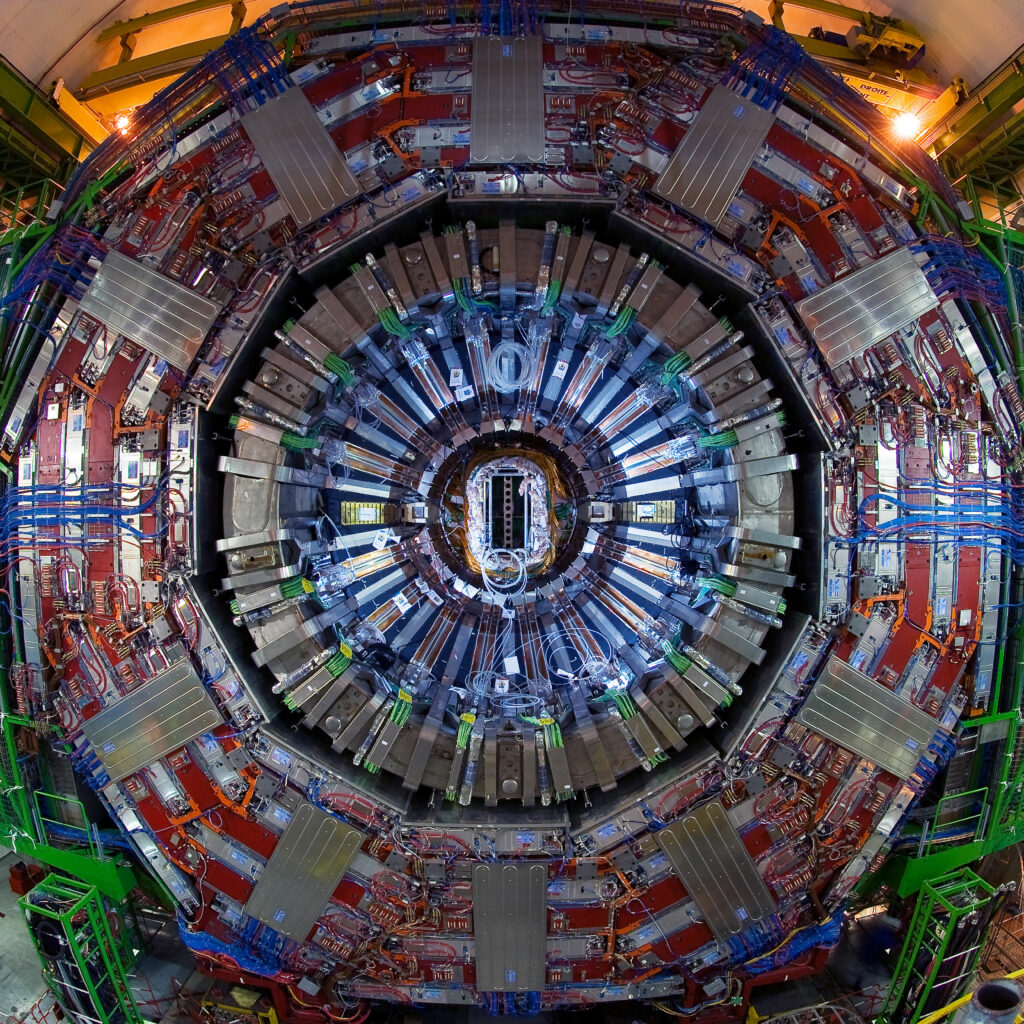
The European Organization for Nuclear Research, widely recognized as CERN, is a leading institution in the field of particle physics. It houses the Large Hadron Collider (LHC), the most extensive and powerful particle accelerator ever constructed. This cutting-edge facility has been instrumental in advancing our understanding of the fundamental components of matter and the universe. Despite its scientific achievements, CERN has also been the subject of numerous conspiracy theories and public misconceptions. This article aims to clarify the scientific principles behind CERN’s work, address safety concerns, and examine the relationship between scientific progress and societal perceptions.
Understanding the Large Hadron Collider
The centerpiece of CERN’s research is the Large Hadron Collider, a sophisticated machine designed to accelerate protons to near-light speeds and collide them at extremely high energies. Since its inauguration in 2008, the LHC has captured global attention for its potential to answer profound questions about the universe’s structure, including the discovery of the Higgs boson particle. However, the ambitious nature of these experiments has sometimes sparked fear and misunderstanding, leading to a divide between legitimate scientific exploration and sensationalized fears.
Scientific Explanation of Black Hole Concerns
One of the most widespread fears involves the possibility that the LHC could generate microscopic black holes capable of threatening Earth’s existence. This claim stems from a fundamental misinterpretation of the physics involved. According to quantum mechanics, any tiny black holes that might form during particle collisions would have an extremely low mass and would evaporate almost instantaneously, a process described by Stephen Hawking’s theoretical work on black hole radiation.
- Quantum Scale:
The black holes potentially created are minuscule and short-lived due to their quantum properties. - Cosmic Ray Comparison:
High-energy cosmic rays constantly bombard Earth with energies surpassing those produced by the LHC, yet no harmful effects have been observed.
These scientific facts collectively refute the notion that CERN’s experiments pose any existential threat.
Safety Protocols and Transparency at CERN
CERN adheres to stringent safety standards, conducting thorough risk assessments before launching any new experiments. These evaluations are based on both theoretical models and empirical data, ensuring that all operations meet rigorous safety criteria. Importantly, CERN maintains transparency by publicly sharing safety reports and explaining the precautions implemented. This openness is vital in building public trust and countering misinformation.
Contributions of CERN Beyond Particle Physics
CERN’s impact extends far beyond fundamental research. The discoveries and technologies developed through its work have had significant practical applications. A notable example is the invention of the World Wide Web, which originated at CERN and revolutionized global communication. The advancements in particle physics also contribute to technological innovation in fields such as medical imaging and materials science, demonstrating the broad societal benefits of CERN’s research.
Societal Reactions and the Spread of Conspiracy Theories
The emergence of conspiracy theories around CERN can be understood within the context of the complex relationship between science and society. Misinformation, fear, and limited scientific literacy often fuel public anxiety. Media coverage during the LHC’s early operations sometimes amplified these fears by presenting speculative scenarios without sufficient scientific context.
- Public Skepticism:
Growing distrust in expert authority has led some individuals to embrace pseudoscientific narratives. - Fear of the Unknown:
Complex scientific concepts can be intimidating, making sensational stories more appealing.
This dynamic creates an environment where conspiracy theories can flourish, challenging the acceptance of scientific advancements.
Educational Outreach and Public Engagement
To bridge the gap between scientific research and public understanding, CERN actively promotes educational initiatives. These include interactive exhibits, workshops, and community dialogues aimed at demystifying particle physics and fostering curiosity. By simplifying complex ideas through analogies and hands-on experiences, CERN helps the public grasp abstract concepts without compromising scientific accuracy. Such efforts are essential in reducing fear and encouraging informed engagement with science.
The Importance of CERN’s Scientific Endeavors
CERN represents a pinnacle of modern scientific investigation, symbolizing humanity’s relentless pursuit of knowledge about the universe. Its work not only advances theoretical physics but also drives technological progress and inspires future generations of scientists. By prioritizing transparent communication and public education, CERN can overcome misconceptions and highlight the value of empirical research. Ultimately, fostering open dialogue helps shift the narrative from unfounded fears to a celebration of scientific discovery.
FAQ
What is CERN?
CERN is the European Organization for Nuclear Research, a leading particle physics laboratory operating the world's largest particle accelerator, the Large Hadron Collider.
What is the Large Hadron Collider used for?
The LHC collides protons at high energies to study fundamental particles and forces, helping to answer key questions about the universe's origins and structure.
Are the experiments at CERN safe?
Yes, CERN follows strict safety protocols and scientific assessments show no risk of catastrophic events from its experiments.
Why do some people believe conspiracy theories about CERN?
Conspiracy theories arise from misunderstandings of complex science, fear, misinformation, and skepticism towards authorities.





Leave a Reply