Meet Harsh Pratap Rana: Unleashing the Power of Qubits

Introduction to Harsh Pratap Rana and Quantum Computing In the dynamic fields of modern physics and computational science, Harsh Pratap Rana has emerged as a prominent figure, bridging theoretical insights with practical innovations. His pioneering work in quantum computing leverages the unique properties of qubits to challenge and expand traditional computational frameworks. This article explores […]

Read More →

What are the main goals of quantum cryptography?

Definition of Quantum Cryptography Quantum cryptography represents a groundbreaking field that merges the principles of quantum mechanics with the science of information security. It aims to redefine traditional cryptographic methods by leveraging the unique properties of quantum physics to ensure communication that is fundamentally secure against eavesdropping and unauthorized access. Core Objectives of Quantum Cryptography […]

Read More →

What role will quantum computing play in the future of AI?

Definition of Quantum Computing in Artificial Intelligence Quantum computing represents a groundbreaking advancement in computational technology, leveraging the principles of quantum mechanics to process information in fundamentally new ways. When integrated with artificial intelligence (AI), quantum computing promises to revolutionize AI capabilities by enabling faster data processing, enhanced algorithmic efficiency, and novel problem-solving approaches. This […]

Read More →

How do Photons have Magnetic and Electric Fields?

Definition of Photons and Their Electromagnetic Nature Photons are the elementary particles that constitute light and other forms of electromagnetic radiation. They are unique in that they simultaneously exhibit properties of both particles and waves, a concept known as wave-particle duality. Central to their nature is the presence of oscillating electric and magnetic fields, which […]

Read More →

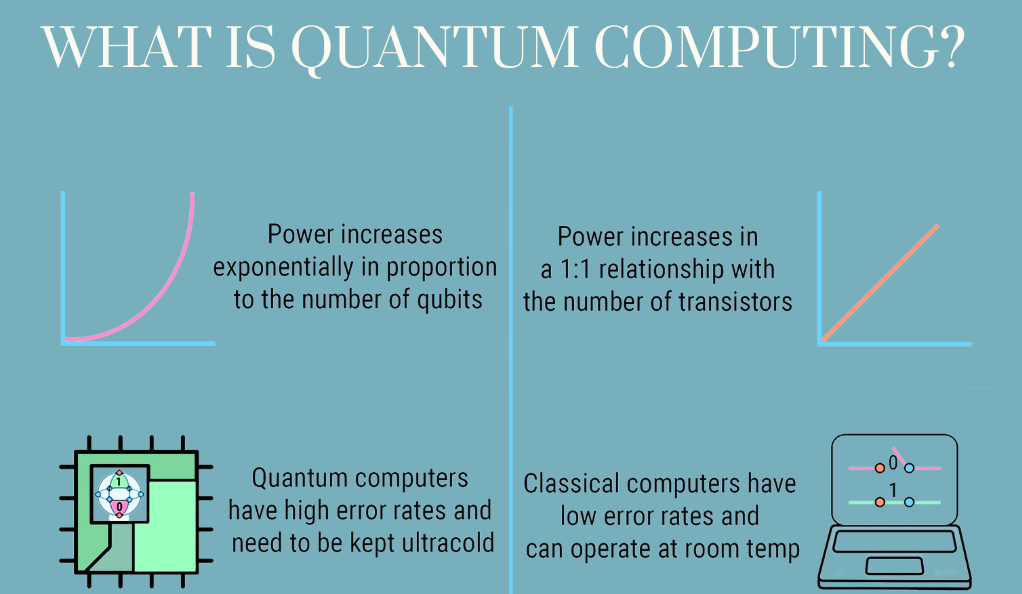
How accurate are current quantum computers?

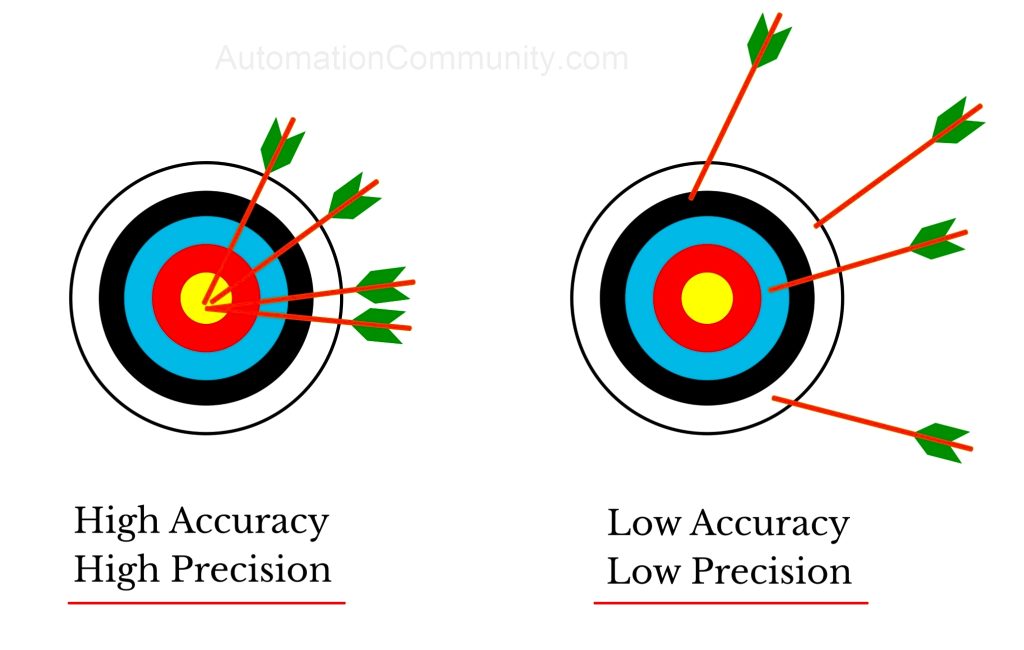
Understanding Accuracy in Quantum Computing As we delve into the fascinating world of quantum computing, a fundamental question arises: how precise are the computations performed by current quantum machines? This inquiry not only highlights the technological progress achieved but also underscores the unique challenges posed by the quantum realm’s inherent uncertainties and distinctive properties. Exploring […]

Read More →

What is a quantum computer? Can anybody describe it?

Understanding Quantum Computing Quantum computing represents a revolutionary shift in the way information is processed, diverging fundamentally from classical computing paradigms. While traditional computers operate using bits that exist strictly as either 0 or 1, quantum computers utilize quantum bits, or qubits, which can simultaneously embody multiple states. This capability arises from the principles of […]

Read More →

Do quantum computers use silicon?

Definition of Quantum Computing and Silicon’s Role Quantum computing represents a revolutionary approach to information processing, harnessing the unique principles of quantum mechanics. Unlike classical computing, which relies on bits existing strictly as 0s or 1s, quantum computing uses quantum bits, or qubits, that can simultaneously occupy multiple states through superposition. This capability enables quantum […]

Read More →

Is all of chemistry computable?

Understanding Computability in Chemistry Chemistry, often regarded as the central science, investigates the complex interactions and behaviors of atoms and molecules. A fundamental question arises within this field: Is every aspect of chemistry amenable to computational analysis? Addressing this inquiry requires examining the theoretical underpinnings, practical implementations, inherent limitations, and emerging computational techniques that shape […]

Read More →

What is the source of the power of quantum computers?

Understanding Quantum Computing Quantum computing represents a groundbreaking advancement in technology and computation, poised to transform numerous disciplines such as cryptography, pharmaceuticals, and materials science. Its extraordinary capabilities arise from the principles of quantum mechanics, which govern the behavior of particles at the smallest scales. To grasp the source of quantum computers’ power, one must […]

Read More →