What is meta-quantum logic?

Definition of Meta-Quantum Logic Meta-quantum logic is an innovative discipline situated at the crossroads of quantum mechanics and formal logic. It aims to deepen our understanding of the unusual behaviors observed in quantum systems while simultaneously reshaping our fundamental concepts of reality as influenced by quantum phenomena. This field captivates interest not only due to […]

Read More →

Quantum computing – Technical guruji’s Space?

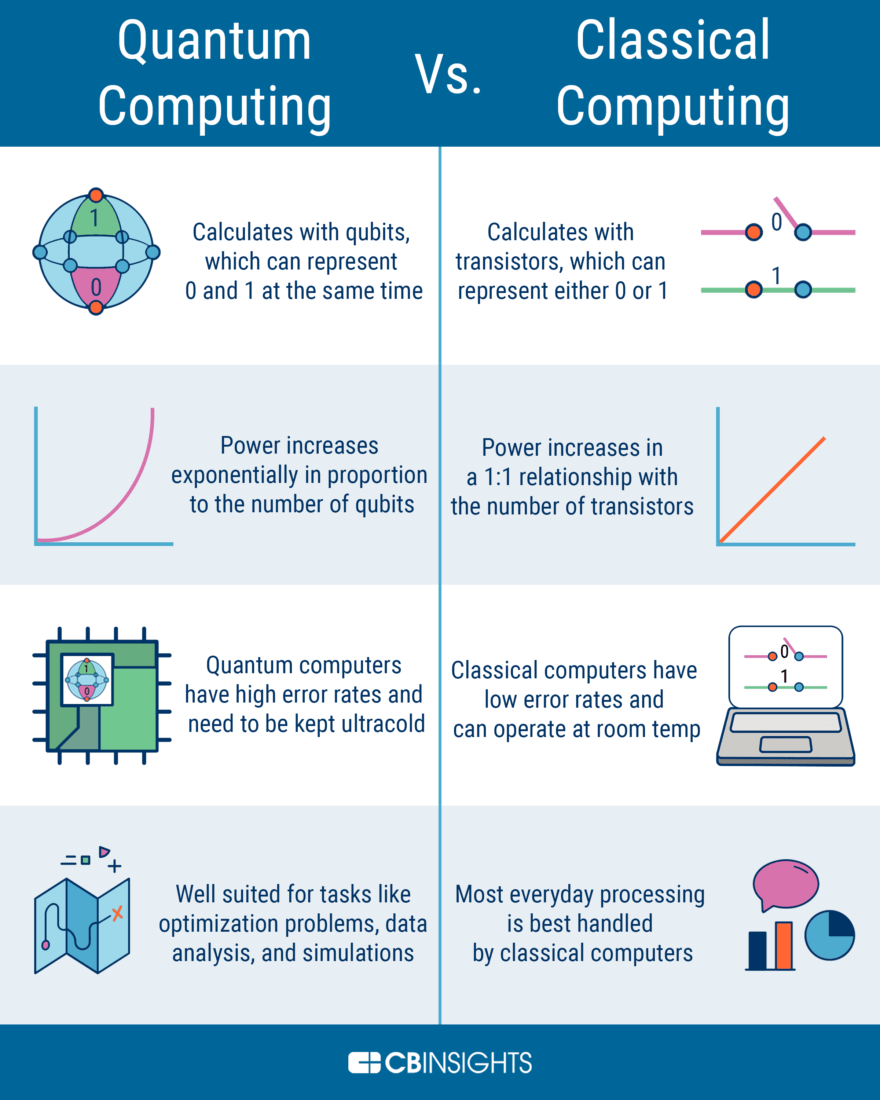
Definition of Quantum Computing Quantum computing is an advanced computational paradigm that integrates principles from physics, mathematics, and computer science to process information in fundamentally new ways. Unlike classical computing, which relies on binary bits representing either 0 or 1, quantum computing utilizes quantum bits, or qubits, that can exist in multiple states simultaneously. This […]

Read More →

Does any physicist truly understand wave function collapse?

Definition of Wave Function Collapse Wave function collapse is a fundamental concept in quantum mechanics describing the sudden transition of a quantum system from a superposition of multiple possible states to a single observed outcome upon measurement. It represents the process by which the probabilistic nature of a quantum system resolves into a definite state, […]

Read More →

Are synapses quantum logic gates?

Definition of Synapses and Quantum Logic Gates Synapses are specialized structures that serve as communication points between neurons, enabling the transmission of signals through chemical or electrical means. Quantum logic gates, on the other hand, are the essential components of quantum computing systems, manipulating quantum bits (qubits) to perform operations that surpass classical binary logic. […]

Read More →

Boson Sampling: A Quantum Shortcut That Could Beat Classical Computers

Definition of Boson Sampling Boson sampling is a specialized quantum computational process that leverages the unique properties of bosons-particles such as photons that obey Bose-Einstein statistics-to perform complex calculations. Unlike classical particles, bosons can occupy the same quantum state simultaneously, enabling quantum systems to explore computational pathways inaccessible to traditional computers. This method involves sending […]

Read More →

Why is quantum computing considered to be the fastest?

Understanding Quantum Computing Quantum computing signifies a revolutionary advancement in computational technology, promising remarkable improvements in efficiency and speed for solving complex problems. Unlike classical computers that rely on bits-binary units of information represented as either 0 or 1-quantum computers utilize quantum bits, or qubits. These qubits harness the unique principles of quantum mechanics, such […]

Read More →

What are the unsolved problems in quantum computing?

Understanding Quantum Computing Quantum computing represents a groundbreaking fusion of theoretical physics, computer science, and engineering disciplines. It promises to transform how information is processed by harnessing the principles of quantum mechanics. Despite its revolutionary potential, numerous fundamental obstacles remain unresolved, posing significant challenges to both our theoretical understanding and practical implementation of quantum technologies. […]

Read More →

Nathan Bullock: Where Quantum Dreams Meet Engineering Reality

Definition The intersection of quantum mechanics and engineering represents a groundbreaking fusion of abstract scientific theory with practical technological innovation. This convergence has sparked transformative advancements, challenging traditional frameworks and opening new horizons for human progress. Central to this dynamic field is Nathan Bullock, whose inventive work exemplifies the harmonious blend of theoretical insight and […]

Read More →

From Bits to Qubits: Computer Logic Reimagined on a Quantum Canvas

Understanding Quantum Computing Quantum computing represents a groundbreaking shift in the way information is processed, moving beyond the traditional binary framework of classical computing. This new paradigm leverages the principles of quantum mechanics to redefine computational logic, promising capabilities far beyond those of conventional systems. Definition and Fundamental Concepts At the heart of classical computing […]

Read More →

Purpose and Benefits of Quantum Field Theory: A Field Guide for Non-Physicists

Definition of Quantum Field Theory Quantum Field Theory (QFT) is a sophisticated theoretical framework that merges the principles of quantum mechanics, special relativity, and classical field theory. Unlike traditional views that treat particles as isolated entities, QFT conceptualizes particles as quantized excitations or disturbances within underlying fields that permeate all of space-time. This perspective provides […]

Read More →