
Short Answer
Definition of Electromagnetic Fields and Matter
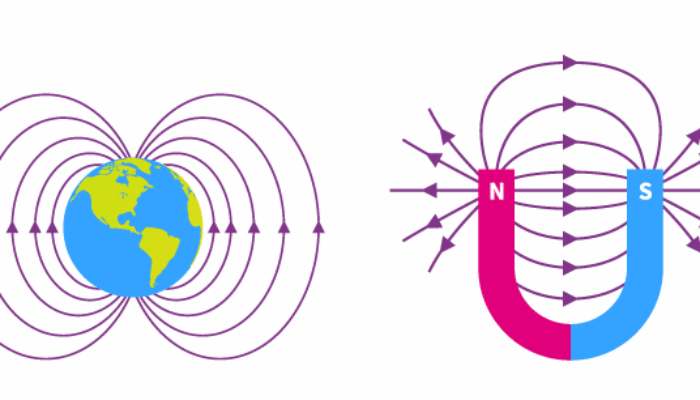
An electromagnetic field (EM field) is a fundamental concept in physics, integral to understanding phenomena in electromagnetism, optics, and quantum mechanics. It consists of intertwined electric and magnetic components that propagate through space. Matter, traditionally defined in classical physics, refers to anything that has mass and occupies volume, including solids, liquids, gases, and plasma. This distinction sets the stage for exploring whether electromagnetic fields can be considered a form of matter.
- Matter:
Substances possessing mass and spatial volume, encompassing all physical objects and states of matter. - Electromagnetic Field:
A physical field produced by electrically charged objects, characterized by electric (E) and magnetic (B) components that vary in space and time.
Fundamental Principles Governing Electromagnetic Fields
Electromagnetic fields are described mathematically by Maxwell’s equations, which reveal the dynamic interplay between electric and magnetic fields. These equations demonstrate that a time-varying electric field generates a magnetic field and vice versa, creating a self-sustaining wave that travels through space. Unlike matter, electromagnetic fields do not consist of discrete particles with mass but exist as continuous fields permeating the universe.
Maxwell’s Equations Overview
- Gauss’s Law for Electricity:
Electric charges produce electric fields. - Gauss’s Law for Magnetism:
There are no magnetic monopoles; magnetic field lines are continuous. - Faraday’s Law of Induction:
Changing magnetic fields induce electric fields. - Ampère’s Law with Maxwell’s Addition:
Electric currents and changing electric fields produce magnetic fields.
Interaction Between Electromagnetic Fields and Matter
Although electromagnetic fields themselves lack mass, they exert forces on charged particles within matter. The Lorentz force law quantifies this interaction, describing how charged particles such as electrons and protons respond to electric and magnetic fields. This interaction underpins numerous technologies and natural phenomena, including the behavior of light when it reflects, refracts, or is absorbed by materials.
- Lorentz Force Law:
The force on a charged particle is the sum of electric and magnetic forces, influencing particle trajectories. - Light-Matter Interaction:
Electromagnetic waves interact with matter, leading to effects like reflection, refraction, and absorption.
Energy Content of Electromagnetic Fields and Its Implications
While electromagnetic fields do not possess rest mass, they carry energy and momentum. According to Einstein’s mass-energy equivalence principle (E=mc²), energy and mass are interchangeable, suggesting a nuanced relationship between fields and matter. The energy density of electromagnetic fields, expressed through the electric and magnetic field strengths, can be stored and utilized in devices such as capacitors, indicating that electromagnetic fields embody a form of “substance” through their energy content.
Energy Density Formula
The energy density (u) of an electromagnetic field is given by:
u = ½ ε₀ E² + ½ (1/μ₀) B²
- u: Energy density (Joules per cubic meter)
- ε₀: Permittivity of free space
- E: Electric field strength
- μ₀: Permeability of free space
- B: Magnetic field strength
Quantum Perspective: Photons and Electromagnetic Fields
Quantum electrodynamics (QED) offers a particle-based interpretation of electromagnetic fields, where the field is quantized into photons. Photons are massless bosons that mediate electromagnetic interactions, carrying discrete packets of energy and momentum. This dual wave-particle nature complicates the classification of electromagnetic fields as matter, since photons, while not matter in the classical sense, possess quantifiable physical properties.
- Photon Characteristics:
Massless, chargeless particles that transmit electromagnetic force. - Wave-Particle Duality:
Photons exhibit both wave-like and particle-like behavior, challenging traditional categorizations.
Practical Applications of Electromagnetic Fields
Electromagnetic fields are foundational to many modern technologies. Wireless communication systems rely on radio waves, a form of electromagnetic radiation, to transmit information. Microwave ovens use electromagnetic waves to heat food by agitating water molecules. Medical imaging techniques such as Magnetic Resonance Imaging (MRI) exploit electromagnetic fields to visualize internal body structures. These applications highlight the essential role of electromagnetic fields in technology and daily life.
Common Misconceptions About Electromagnetic Fields and Matter
Electromagnetic fields are a form of matter because they carry energy.
Although electromagnetic fields carry energy, they lack mass and do not occupy space as matter does.
Photons are matter particles.
Photons are force carriers without rest mass and are not classified as matter particles like electrons or protons.
Significance of Understanding Electromagnetic Fields
Grasping the nature of electromagnetic fields is crucial for advancements in physics, engineering, and technology. Their unique properties enable the transmission of energy and information across vast distances without the need for a material medium. This understanding bridges classical and quantum physics, enriching our comprehension of the universe’s fundamental forces and the intricate relationship between energy and matter.
FAQ
What is an electromagnetic field?
An electromagnetic field is a physical field created by electrically charged objects, encompassing electric and magnetic forces that affect the behavior of charged particles.
Does an electromagnetic field have mass?
No, electromagnetic fields do not have rest mass, although they carry energy and momentum.
How does quantum theory describe electromagnetic fields?
Quantum theory describes electromagnetic fields as quantized entities made up of photons, which are massless particles that mediate electromagnetic interactions.
Can electromagnetic fields be considered matter?
Electromagnetic fields are not considered matter because they lack mass and do not occupy space, but they are fundamental to how matter interacts and behaves.
What practical applications rely on electromagnetic fields?
Technologies such as wireless communication, microwave ovens, and medical imaging (MRI) rely on electromagnetic fields.






Leave a Reply