What can quantum physics help me with?

Definition of Quantum Physics Quantum physics, also known as quantum mechanics, is a branch of science that investigates the behavior and properties of matter and energy at the smallest scales-typically at the level of atoms and subatomic particles. Unlike classical physics, which describes the macroscopic world, quantum physics reveals phenomena that often defy everyday intuition, […]

Read More →

What could we do with quantum entanglement?

Understanding Quantum Entanglement Quantum entanglement is a captivating phenomenon within quantum mechanics where two or more particles become interconnected in such a way that the state of one particle instantaneously influences the state of the other, regardless of the distance separating them. This non-local correlation defies classical physics’ constraints, suggesting a deep, intrinsic link between […]

Read More →

The superconducting quasicharge qubit – The Science Space?

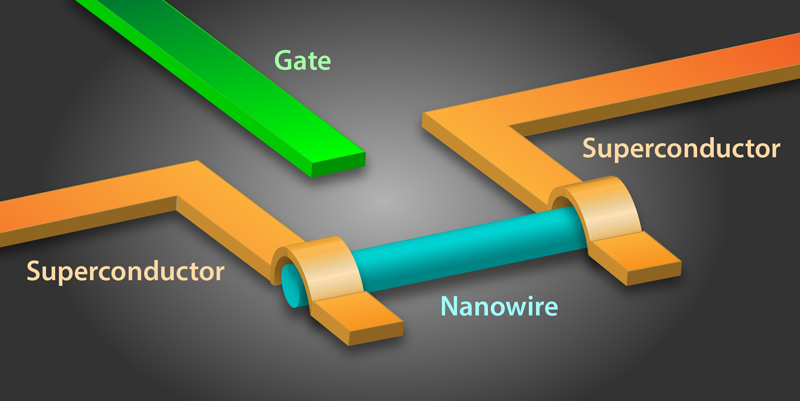
Definition of Superconducting Quasicharge Qubits Superconducting quasicharge qubits represent a crucial innovation in quantum computing, merging the principles of superconductivity with quantum mechanics to create a powerful quantum information processing element. These qubits leverage the unique properties of superconducting materials to encode and manipulate quantum information, distinguishing themselves from classical bits by their ability to […]

Read More →

How does topological quantum computation work?

Definition of Topological Quantum Computation Topological quantum computation is an advanced approach to quantum information processing that harnesses the principles of topology-a mathematical discipline focused on properties of space that remain unchanged under continuous deformations. This method integrates quantum mechanics with topological concepts to create a framework for more stable and error-resistant quantum computing. By […]

Read More →

based quantum information/computation?

Definition of Quantum Information and Computation Quantum information and computation represent a groundbreaking field that extends beyond the limits of traditional classical computing. This domain explores the principles of quantum mechanics, where particles can exist in multiple states simultaneously, and entangled particles exhibit correlations that defy classical intuition. At the heart of this field are […]

Read More →

Can a quantum computer produce a brain?

Understanding the Intersection of Quantum Computing and the Brain The convergence of quantum computing and neuroscience sparks profound intrigue, especially when pondering the question: “Is it possible for a quantum computer to create a brain?” This query transcends a simple thought experiment, touching on deep philosophical and scientific themes related to consciousness, cognition, and computational […]

Read More →

Peter Shor and the Algorithm That Shook Encryption Forever

Definition of Shor’s Algorithm Shor’s Algorithm, introduced by mathematician Peter Shor in 1994, is a groundbreaking quantum algorithm designed to factor large integers efficiently. This algorithm leverages the principles of quantum mechanics to solve the integer factorization problem, which is fundamental to the security of many classical cryptographic systems. By enabling the rapid decomposition of […]

Read More →

How to contribute to the development of quantum computing?

Understanding Quantum Computing Quantum computing represents a groundbreaking advancement in technology, poised to transform numerous fields such as cryptography, materials science, and drug discovery. Unlike classical computers, quantum computers harness the principles of quantum mechanics to tackle problems that are currently unsolvable or would take classical machines an impractical amount of time. The progression of […]

Read More →

How is Quantum University for a diploma in CS?

Overview of Quantum University’s Computer Science Diploma Quantum University offers a distinctive educational experience for students pursuing a diploma in Computer Science (CS), presenting a multidimensional platform rich with opportunities akin to the expansive possibilities found in quantum theory. This institution transcends traditional technical instruction by blending theoretical knowledge with practical application, creating an environment […]

Read More →

Can classical computers run quantum software locally?

Understanding Classical and Quantum Computing Computing technology has undergone significant transformation, highlighting the contrast between classical and quantum computers. Classical computers, which rely on binary digits or bits, have been the backbone of computational tasks ranging from basic calculations to intricate simulations. In contrast, quantum computing introduces a revolutionary approach that harnesses the principles of […]

Read More →