Why do we need quantum optics?

Definition of Quantum Optics Quantum optics is a specialized branch of physics that investigates the behavior of light and its interaction with matter at the quantum level. Unlike classical optics, which treats light as waves or rays, quantum optics explores the dual wave-particle nature of photons and the quantum phenomena that emerge when light is […]

Read More →

Should I study electrodynamics before quantum theory?

Overview of Electrodynamics and Quantum Theory The relationship between electrodynamics and quantum mechanics has long fascinated both scholars and students in the field of physics. This connection raises a pivotal question for those embarking on the study of fundamental physics: is it more beneficial to master electrodynamics before delving into quantum mechanics? Exploring this question […]

Read More →

Is a quantum computer just a fast computer?

Understanding Quantum Computing At first glance, quantum computers might appear to be simply faster versions of traditional classical computers. However, this superficial comparison overlooks the profound differences that define these two computational frameworks. To truly grasp the essence of quantum computing and how it contrasts with classical computing, it is essential to delve into their […]

Read More →

What are the practical applications of quantum computing?

Definition of Quantum Computing Quantum computing represents a revolutionary advancement in computational science, leveraging the fundamental principles of quantum mechanics to process information in ways unattainable by classical computers. Unlike traditional systems that handle data sequentially, quantum computers operate by exploring multiple possibilities simultaneously, akin to having access to an immense library containing every conceivable […]

Read More →

Define Quantum Computing and its types with examples?

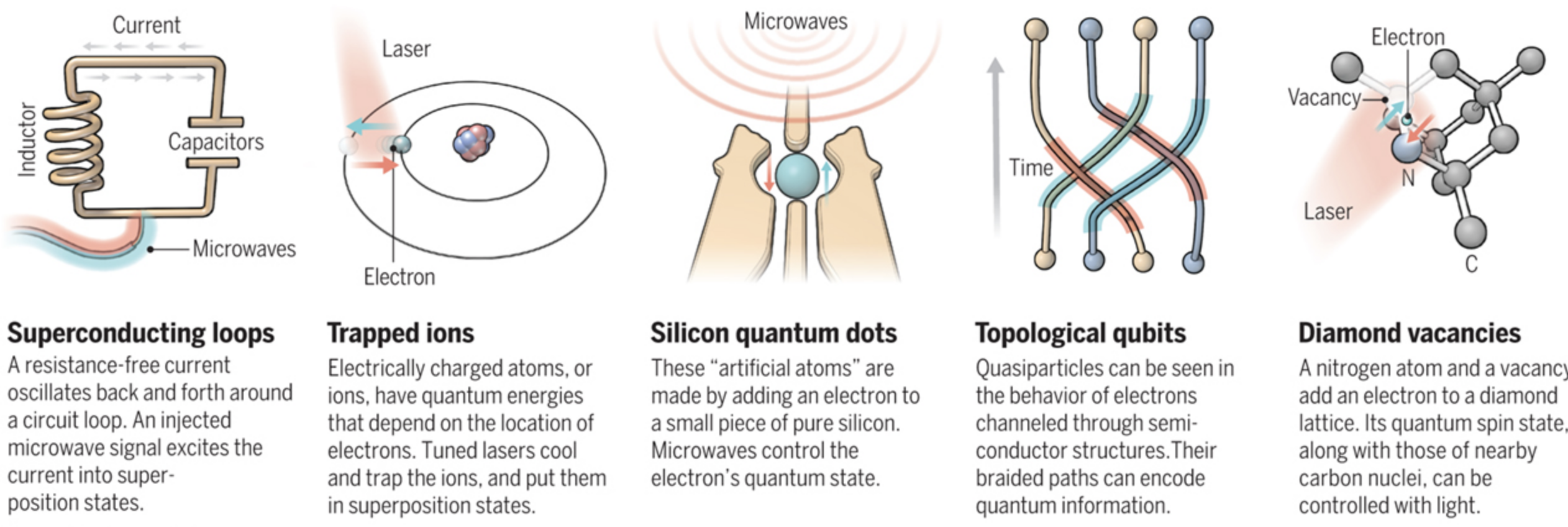
Definition of Quantum Computing Quantum computing is an emerging technological domain that integrates the principles of quantum mechanics with computational processes to create a novel method for solving complex problems. Unlike traditional computing, which relies on binary bits, quantum computing utilizes quantum bits or qubits, enabling fundamentally different ways to process information. Qubits: These are […]

Read More →

What is topological quantum computing?

Definition of Topological Quantum Computing Topological quantum computing is an advanced approach within the field of quantum computation that fundamentally differs from traditional quantum and classical computing models. It harnesses the mathematical framework of topology to encode and manipulate quantum information in a way that is inherently resistant to errors caused by local disturbances. This […]

Read More →

Does consciousness explain quantum mechanics?

Understanding Consciousness and Quantum Mechanics Consciousness has fascinated thinkers from various disciplines for centuries, sparking questions about its origin, essence, and influence on intangible phenomena. Among these phenomena, quantum mechanics-a scientific framework that describes the behavior of matter and energy at the smallest scales-has inspired intriguing theories about the potential role of consciousness. Exploring the […]

Read More →

What are some of the quantum chip projects from Microsoft?

Overview of Microsoft’s Quantum Computing Initiatives Microsoft is a leading force in the rapidly evolving domain of quantum computing, driving innovations that promise to transform traditional computational frameworks. By merging principles of quantum mechanics with computational theory, Microsoft’s projects have far-reaching implications across diverse sectors such as cryptography, material science, and beyond. This article explores […]

Read More →

Why are quantum computers so special?

Understanding Quantum Computing Quantum computing represents a groundbreaking shift in the field of computation, distinguished by its foundation in quantum mechanics rather than classical binary logic. Unlike traditional computers that operate using bits confined to either 0 or 1, quantum computers utilize quantum bits, or qubits, which can exist in multiple states simultaneously. This fundamental […]

Read More →

Is a quantum computer in a Bose-Einstein state (BEC)?

Definition of Bose-Einstein Condensate and Quantum Computing Bose-Einstein condensate (BEC) is a state of matter formed when bosons-particles that follow Bose-Einstein statistics-are cooled to temperatures near absolute zero, causing them to occupy the same quantum state. This phenomenon, first theorized by Satyendra Nath Bose and Albert Einstein, results in macroscopic quantum effects such as superfluidity […]

Read More →