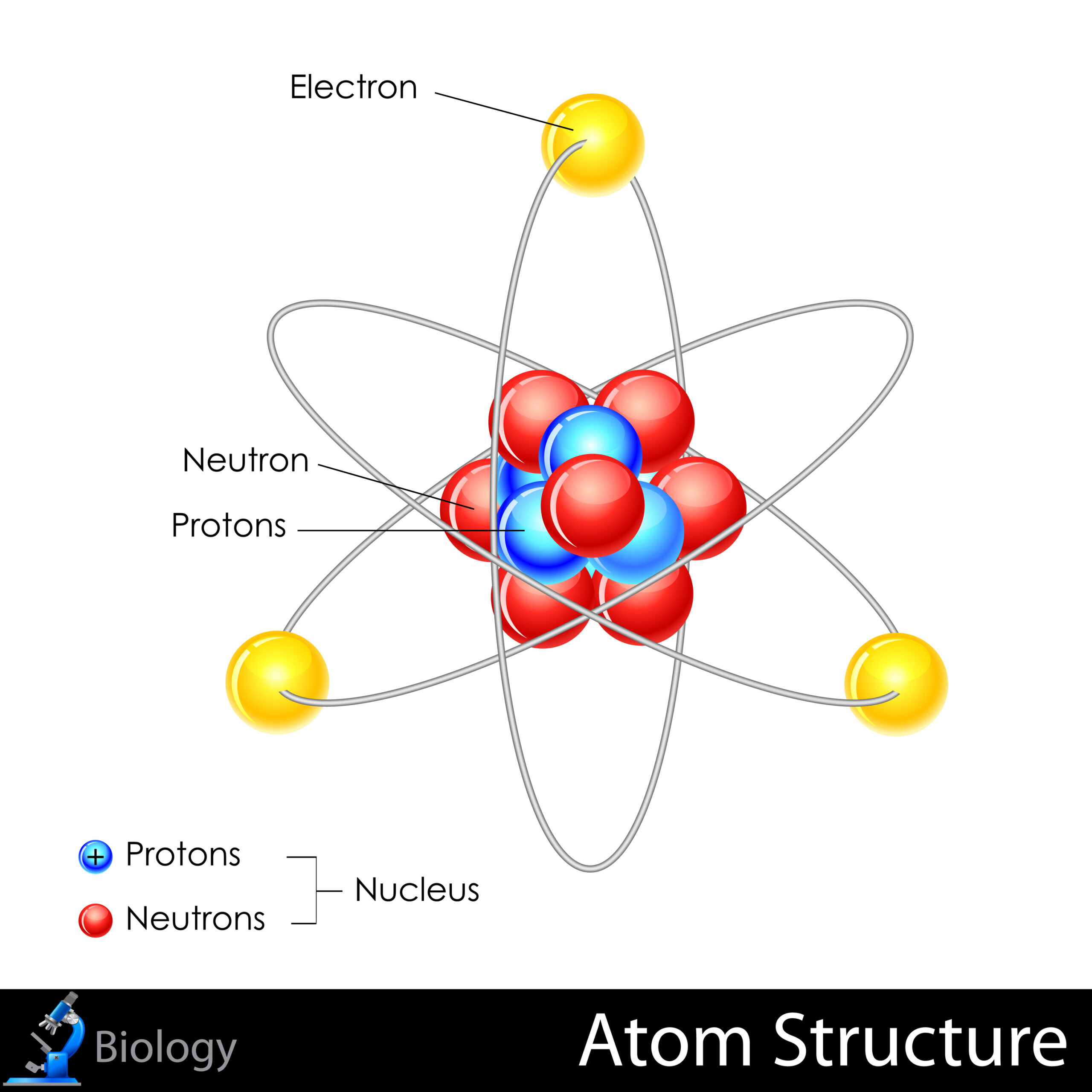
Are atoms made up of particles or waves?

Understanding the Nature of Atoms The fundamental question of whether atoms are composed of particles or waves lies at the core of modern scientific exploration. This inquiry extends beyond physics, captivating thinkers across disciplines by challenging our basic understanding of matter and energy. It invites a profound examination of reality at the microscopic scale, urging […]

Read More →

Bouncing Atoms Weigh In: A New Way to Measure Gravity

Definition of Gravity and Its Measurement Gravity is a fundamental natural force that governs the attraction between masses. It has intrigued scientists and philosophers for centuries due to its universal influence and complex behavior. Measuring gravitational acceleration accurately is essential for advancing our understanding of physics and the universe. Traditional techniques, such as pendulum experiments […]

Read More →

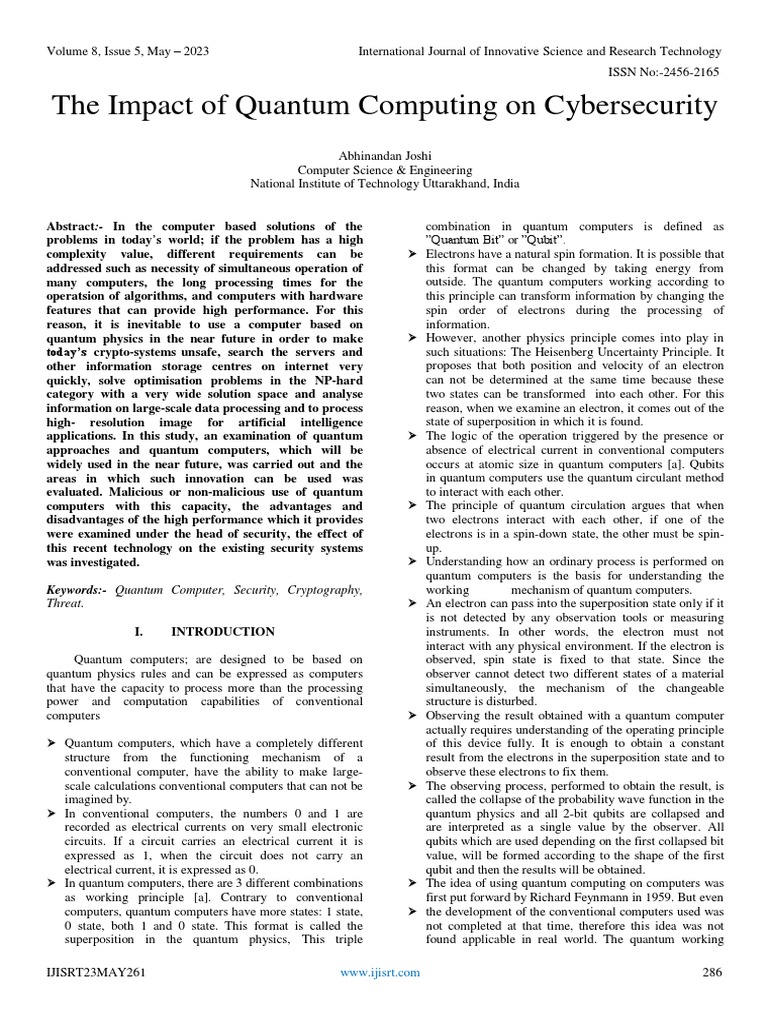
Is there a quantum computer up and running?

Definition of Quantum Computing Quantum computing represents a groundbreaking shift in computational technology, leveraging the principles of quantum mechanics to process information in fundamentally new ways. Unlike classical computers that use bits as the smallest unit of data, quantum computers utilize quantum bits, or qubits, which can exist in multiple states simultaneously. This capability enables […]

Read More →

How will quantum computing affect personal computing?

Understanding Quantum Computing and Its Impact on Personal Computing Quantum computing represents a revolutionary shift in computational technology, poised to transform the landscape of personal computing. Unlike classical computers that rely on bits as the smallest unit of data, quantum computers utilize quantum bits or qubits, which can exist in multiple states simultaneously due to […]

Read More →

What is quantum artificial intelligence?

Definition of Quantum Artificial Intelligence Quantum artificial intelligence (Quantum AI) represents a cutting-edge interdisciplinary field that merges the principles of quantum computing with artificial intelligence techniques. This emerging domain aims to leverage the unique properties of quantum mechanics to enhance the capabilities of AI systems, potentially revolutionizing how complex problems are solved across various industries. […]

Read More →

Why don’t they use quantum computers as the heart of AI?

Understanding Quantum Computing and Artificial Intelligence As technology advances at a rapid pace, the intersection of quantum computing and artificial intelligence (AI) presents a fascinating yet complex challenge. Both fields hold immense promise, but their integration has not yet propelled them to the forefront of computing innovation. This article delves into the reasons behind the […]

Read More →

Do you need physics for quantum computing?

Understanding Quantum Computing Quantum computing represents a revolutionary leap in computational technology, poised to surpass the capabilities of traditional computers. Unlike classical systems that rely on bits as the fundamental unit of information, quantum computers utilize qubits, which exploit the unique phenomena of quantum mechanics such as superposition and entanglement. These properties allow qubits to […]

Read More →

What is the CAP theorem? Can quantum computers solve it?

Understanding the CAP Theorem The CAP theorem, also referred to as Brewer’s theorem, is a foundational concept in the realm of distributed systems and database management. Introduced by Eric Brewer in 2000, it asserts a critical limitation: within a distributed data storage system, it is impossible to simultaneously guarantee all three of the following attributes-Consistency, […]

Read More →

Will quantum computing break SHA-256 encryption?

Understanding SHA-256 Encryption SHA-256, short for Secure Hash Algorithm 256-bit, is a fundamental cryptographic hash function widely employed to ensure data integrity and security. Originating from the National Security Agency (NSA) and standardized under the Federal Information Processing Standards (FIPS), SHA-256 transforms input data of any size into a fixed 256-bit output, known as a […]

Read More →

Can computer engineers work on quantum computers?

Understanding Quantum Computing Quantum computing marks a revolutionary shift in the field of computer engineering, diverging fundamentally from classical computing. While traditional computers operate using bits that represent either a 0 or a 1, quantum computers utilize quantum bits, or qubits, which exploit the principles of quantum mechanics. This allows qubits to exist in multiple […]

Read More →