Tiny but Mighty: Ferroelectricity Discovered at the Nanoscale

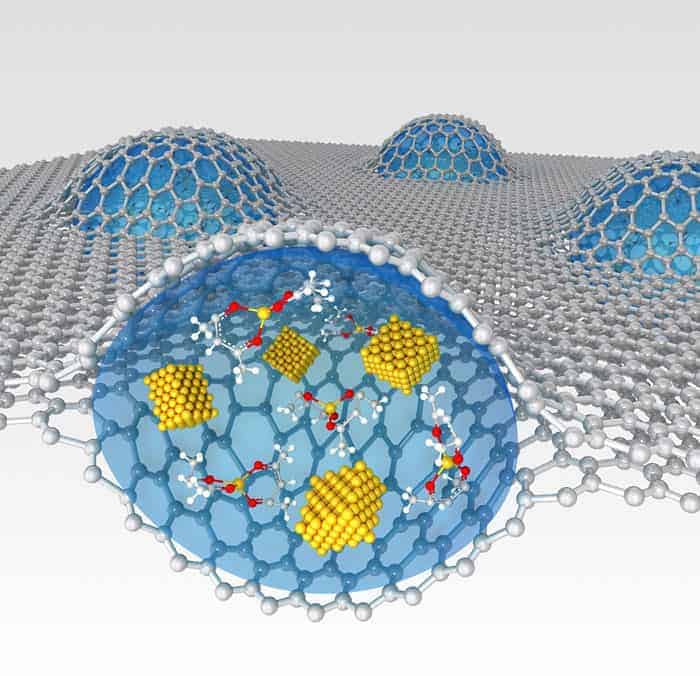
Definition of Ferroelectricity Ferroelectricity refers to the intrinsic property of certain materials to exhibit spontaneous electric polarization, which can be reversed by applying an external electric field. This reversible polarization arises from the asymmetric arrangement of ions within the crystal lattice, typically found in non-centrosymmetric structures. Classic examples of ferroelectric materials include barium titanate (BaTiO3) […]

Read More →

Bound But Not Fluid: Fermions Team Up Without Superfluidity

Definition of Fermionic Pairing Without Superfluidity Fermionic pairing without superfluidity refers to a quantum phenomenon where fermions-particles with half-integer spin-form bound pairs but do not exhibit the frictionless flow characteristic of superfluid states. Unlike bosons, fermions obey the Pauli exclusion principle, which prevents identical particles from occupying the same quantum state simultaneously. This unique behavior […]

Read More →

Exciting Times for Superconductors: Cool Science Heats Up Innovation

Understanding Superconductivity Superconductivity is a remarkable physical phenomenon where certain materials conduct electric current with absolutely no resistance when cooled below a specific critical temperature. This unique state also involves the expulsion of magnetic fields, known as the Meissner effect, which distinguishes superconductors from ordinary conductors. The underlying mechanism involves the pairing of electrons into […]

Read More →

Stretching the Boundaries: Entanglement Reaches New Lengths

Definition of Quantum Entanglement Quantum entanglement is a fundamental phenomenon in quantum physics where two or more particles become interconnected such that the state of one particle instantaneously influences the state of the other, regardless of the distance separating them. This non-classical correlation defies traditional notions of locality and separability, challenging the core principles of […]

Read More →

Gamma-Ray Shaping Could Lead to Nuclear Quantum Computers

Definition of Gamma-Ray Shaping in Quantum Computing Gamma-ray shaping refers to the innovative technique of manipulating the temporal and spatial characteristics of gamma photons to control quantum states with exceptional precision. Originating from nuclear physics and materials science, this emerging technology aims to revolutionize quantum computing by enabling new computational frameworks that surpass the capabilities […]

Read More →

Doctoring the Spin on Venus: A Planetary Mystery Revisited

Definition and Overview of Venus Venus, frequently referred to as Earth’s “sister planet,” captivates scientists due to its close resemblance and proximity to our home planet. This terrestrial planet offers a unique opportunity to deepen our understanding of planetary formation, atmospheric behavior, and geological evolution. The phrase “doctoring the spin” metaphorically captures the evolving scientific […]

Read More →

How an Optical Clock Signal Was Sent Over 1

Definition of Optical Clocks Optical clocks are advanced timekeeping devices that measure time by harnessing the oscillations of light waves within atoms or molecules. Unlike traditional atomic clocks that rely on microwave frequencies, optical clocks operate at much higher frequencies in the optical spectrum, enabling unprecedented precision. These clocks utilize specific atomic species, such as […]

Read More →

Memory Locked in a Knot: First Entangled Memory Achieved

Definition of Entangled Memory Entangled memory is a concept emerging from the intersection of quantum physics, neuroscience, and cognitive science. It refers to the storage and manipulation of information through quantum entanglement, where particles become interconnected such that the state of one instantly influences the state of another, regardless of distance. This phenomenon challenges traditional […]

Read More →

Flipping Spins: A Quantum Look at a Single Proton

Definition of Proton Spin Proton spin refers to an intrinsic form of angular momentum inherent to protons, fundamental particles residing in the nucleus of atoms. Unlike classical spinning objects, proton spin is a quantum mechanical property that manifests as a magnetic moment, enabling protons to behave like tiny magnets. This spin can exist in one […]

Read More →

Sharper Than Ever: Entangled Photons Break the Blur

Definition of Quantum Entanglement Quantum entanglement is a fundamental phenomenon in quantum mechanics where two or more particles become linked in such a way that the state of one particle instantaneously influences the state of the other, regardless of the distance between them. This interconnectedness defies classical physics’ expectations and challenges our conventional understanding of […]

Read More →