What is the formula mass of C12H24O6?

Definition of Molecular Formula C12H24O6 The molecular formula C12H24O6 represents a compound composed of twelve carbon atoms, twenty-four hydrogen atoms, and six oxygen atoms. This formula is commonly linked to biologically significant molecules, particularly certain sugars and their derivatives. Understanding this formula provides insight into the compound’s chemical composition and its role in various scientific […]

Read More →

Why are covalent bonds called molecular bonds?

Definition of Covalent Bonds Covalent bonds, also known as molecular bonds, represent a crucial type of chemical linkage that reveals the intricate architecture of molecules. These bonds are characterized by the sharing of electron pairs between atoms, primarily nonmetals, resulting in the formation of stable molecular entities. The term “molecular bond” highlights the essential role […]

Read More →

Chemistry: What do the molecular orbitals of arsole look like?

Definition of Arsole Arsole is an organoarsenic compound characterized by a five-membered aromatic ring in which an arsenic atom replaces one of the carbon atoms typically found in analogous heterocycles like pyrrole. This substitution results in a unique molecular structure that exhibits aromaticity, a key feature influencing its chemical properties and stability. Although less prevalent […]

Read More →

Is copper an atom or a molecule?

Definition of Copper and Its Atomic Nature Copper is a chemical element found on the periodic table, recognized as a metal with a distinctive atomic configuration and a wide range of physical and chemical properties. To clarify the question, “Is copper an atom or a molecule?” it is essential to first understand the fundamental differences […]

Read More →

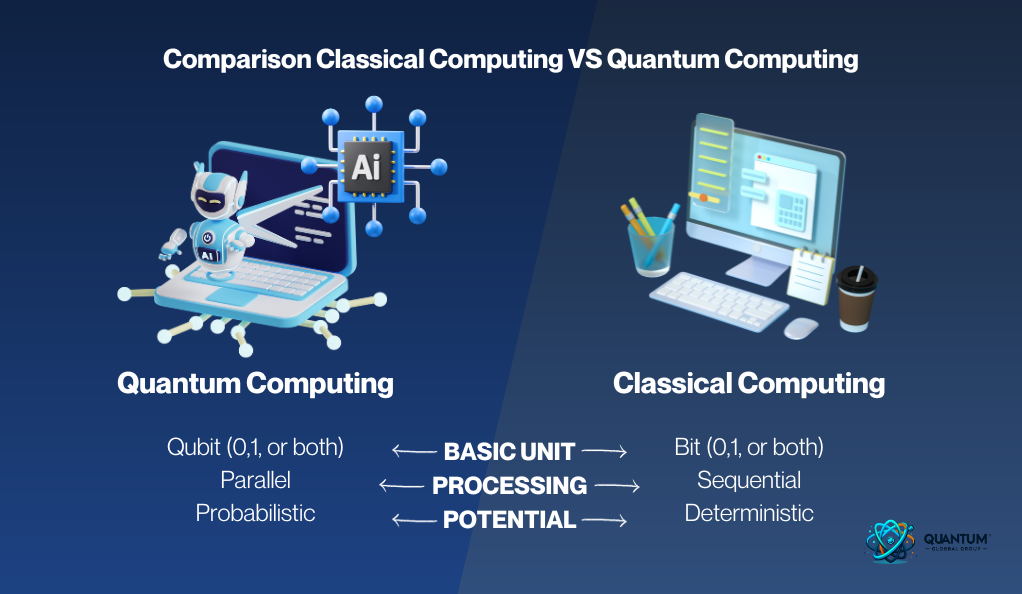
What is a more practical alternative to quantum computing?

Understanding Alternatives to Quantum Computing Quantum computing is often celebrated as a groundbreaking shift in computational technology, promising extraordinary speed and efficiency in solving problems that stump classical computers. Yet, the practical challenges of developing scalable quantum systems prompt an important inquiry: what viable alternatives exist that can tackle complex computational problems without delving into […]

Read More →

How do atoms form chemical bonds?

Definition of Chemical Bonding Chemical bonding refers to the process by which atoms connect to form molecules and compounds, creating the vast variety of materials found in the universe. These bonds arise from interactions involving electrons, which determine the structure, stability, and properties of substances. The primary categories of chemical bonds include ionic, covalent, and […]

Read More →

What are the types of atomic bonding?

Definition of Atomic Bonding Atomic bonding refers to the fundamental interactions that hold atoms together, forming molecules and solid materials. These bonds determine the structural and chemical characteristics of substances, influencing properties such as electrical conductivity, melting and boiling points, and mechanical strength. Understanding atomic bonding is essential for explaining how different materials behave under […]

Read More →

How does light interact with matter?

Definition of Light-Matter Interaction Light-matter interaction refers to the various ways in which electromagnetic radiation, particularly visible light, engages with different materials. This interaction encompasses phenomena such as reflection, refraction, absorption, scattering, and emission, which collectively influence how light behaves when it encounters matter. Understanding these processes is fundamental to fields ranging from optics and […]

Read More →