

Short Answer
Definition of Atomic Simulation
Atomic simulation refers to the computational modeling of atoms and their interactions to understand and predict the behavior of matter at the most fundamental level. This scientific endeavor combines principles from physics, chemistry, and computer science to recreate the complex dynamics of atomic and subatomic particles, providing insights into the structure and properties of materials and molecules.
Fundamental Characteristics of Atoms
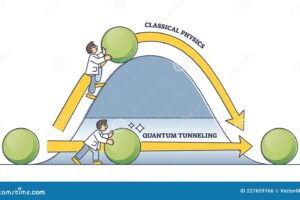
Atoms, the smallest units of matter, consist of protons, neutrons, and electrons. Their behavior is governed by quantum mechanics, which introduces concepts such as wave functions, discrete energy states, and the Pauli exclusion principle. Unlike classical physics, atomic behavior is probabilistic, meaning the exact position and momentum of particles cannot be simultaneously determined with certainty. These quantum properties form the foundation for understanding atomic interactions and are essential for accurate simulations.
Significance and Potential of Atomic Simulations
Simulating atoms offers two major advantages: the ability to forecast atomic behavior with high precision and the capacity to explore chemical processes at scales previously unattainable. Advances in computational technology have enabled researchers to model molecular dynamics, revealing how atoms bond, react, and contribute to the unique characteristics of materials. This capability is crucial for innovations in fields such as materials science, chemistry, and nanotechnology.
Methodologies in Atomic Simulation
Quantum Mechanical Approaches
Quantum mechanical simulations provide a detailed and accurate depiction of electronic interactions within atoms. Techniques like Density Functional Theory (DFT) and wave function-based methods capture the complexities of electron correlation and atomic structure. Although these methods demand significant computational resources, they are indispensable for understanding phenomena at the electronic level.
Classical Force-Field Models
In contrast, classical simulations simplify atomic interactions by treating atoms as spheres influenced by predefined potential energy functions. These force-field models are less precise but computationally efficient, making them suitable for studying large systems and long-term dynamics. This approach balances accuracy with feasibility, especially in applications involving complex molecular assemblies.
Computational Resources and Their Impact
The evolution of computational power has been pivotal in expanding the scope of atomic simulations. Modern technologies such as GPU acceleration and parallel processing allow for the simulation of thousands of atoms over extended periods, enabling real-time analysis of dynamic systems. However, as the number of atoms increases, the complexity and computational demands grow exponentially, necessitating advanced algorithms and optimization techniques to maintain performance and accuracy.
Applications Across Scientific Disciplines
Materials Science
Atomic simulations empower scientists to design new materials with tailored properties by manipulating atomic arrangements. This predictive capability facilitates the development of advanced photovoltaics, catalysts, and nanomaterials, driving innovation in energy, manufacturing, and electronics.
Biological Sciences
In biology, simulating atomic interactions helps elucidate the structures and functions of biomolecules such as proteins and nucleic acids. Understanding these interactions is critical for drug design, enzyme activity analysis, and the advancement of biotechnology.
Challenges and Limitations in Atomic Simulation
- Computational Complexity:
Quantum mechanical methods require immense computational power, limiting their application to smaller systems or shorter timescales. - Approximation Errors:
Classical force-field models, while efficient, may oversimplify interactions, leading to inaccuracies in predicting certain material properties or chemical reactions. - The Many-Body Problem:
Accurately modeling interactions among numerous particles remains a significant challenge, often resulting in discrepancies between simulations and experimental data.
To overcome these obstacles, researchers are integrating machine learning and artificial intelligence techniques to enhance model accuracy and predictive power.
Transformative Impact on Scientific Understanding
Effective atomic simulation represents a transformative leap in our comprehension of matter. By bridging quantum physics, computational science, and material engineering, it fosters interdisciplinary collaboration and reshapes how we manipulate matter at the atomic scale. This paradigm shift challenges traditional views on the predictability of atomic behavior and underscores the essential role of computational modeling in contemporary science.
Future Directions and Innovations
The future of atomic simulation is poised for remarkable advancements. Emerging technologies such as quantum computing promise to revolutionize the field by enabling faster and more precise calculations. Additionally, the development of interactive, real-time simulations integrated with experimental setups could provide unprecedented insights into atomic and molecular dynamics. These innovations will continue to deepen our understanding of the atomic world and expand the possibilities for scientific and technological breakthroughs.
FAQ
What is atomic simulation?
Atomic simulation refers to the computational modeling of atoms and their interactions to study their behavior and properties.
What are quantum mechanical simulations?
Quantum mechanical simulations use principles of quantum mechanics to model electronic structures and interactions in atoms accurately.
How do classical force-field methods differ?
Classical force-field methods approximate atomic interactions using predefined potentials, simplifying calculations for larger systems at the cost of accuracy.
Why is computational power important in atomic simulations?
Because simulating atomic systems involves complex calculations, especially quantum mechanical ones, significant computational power is required to run these simulations efficiently.




Leave a Reply