

Short Answer
Definition of Bow Shocks in Astrophysics
In astrophysical contexts, a bow shock is a distinct boundary formed when a star moves through the interstellar medium at supersonic speeds. The stellar wind-streams of charged particles emitted by the star-collides with the surrounding gas, creating a shock front that resembles the bow wave produced by a ship cutting through water. This shock delineates the region where the stellar wind pressure balances the pressure of the ambient interstellar gas, resulting in a compressed, heated zone with unique observational signatures.
- Stellar Wind:
High-velocity outflows of plasma from a star’s outer layers. - Interstellar Medium (ISM):
The diffuse gas and dust filling the space between stars. - Shock Front:
The boundary where supersonic stellar wind abruptly slows and compresses the ISM.
Mechanism Behind Bow Shock Formation
When a star travels faster than the local sound speed in the interstellar medium, its stellar wind interacts dynamically with the surrounding gas. The kinetic energy of the star’s motion and the momentum of the stellar wind combine to compress and heat the ISM ahead of the star, generating a bow-shaped shock wave. This process is governed by the balance of pressures: the ram pressure of the stellar wind pushing outward and the opposing pressure of the interstellar gas resisting compression.
Mathematical Description of Bow Shock Dynamics
The formation and structure of a bow shock can be described by the pressure equilibrium condition:
Pwind = PISM
where:
- Pwind = ρwind vwind2
Ram pressure of the stellar wind, with ρwind as the wind density and vwind as the wind velocity. - PISM = ρISM vstar2
Ram pressure of the interstellar medium, where ρISM is the ISM density and vstar is the star’s velocity relative to the ISM.
The standoff distance (R0) from the star to the bow shock can be approximated by:
R0 = sqrt{frac{dot{M} v_{wind}}{4 pi rho_{ISM} v_{star}^2}}
where dot{M} is the mass-loss rate of the star.
Observational Significance and the “Bow Shock No-Show” Phenomenon
Bow shocks serve as critical indicators of stellar motion and wind properties, offering insights into the interaction between stars and their environments. However, astronomers have encountered cases where expected bow shocks are conspicuously absent, a phenomenon termed the “Bow Shock No-Show.” This absence challenges prevailing models and suggests that the interaction between stellar winds and the interstellar medium is more complex than previously understood.
Factors Contributing to the Absence of Bow Shocks
Several astrophysical conditions can explain why bow shocks might not be detected despite favorable stellar velocities:
- Inhomogeneous Interstellar Medium:
The ISM is often clumpy and irregular, with variations in density, temperature, and composition that can prevent the formation or visibility of a bow shock. - Variable Stellar Winds:
Changes in the intensity or velocity of stellar winds over time can disrupt the steady-state conditions needed for a stable bow shock. - Stellar Evolutionary Stage:
Rapidly evolving massive stars may create large stellar bubbles that alter the local environment, displacing the ISM and modifying shock formation dynamics. - Environmental Interactions:
In dense star clusters, interactions between winds of neighboring stars can dominate over the star-ISM interaction, complicating or suppressing bow shock signatures.
Influence of Stellar Lifecycle and Environment
The evolutionary phase of a star significantly impacts its wind characteristics and the surrounding medium. For example, massive stars nearing supernova stages often exhibit intense mass loss, generating expansive bubbles that reshape the local ISM. Additionally, stars embedded within gravitationally bound clusters experience altered relative velocities and angular momenta, which affect how their winds interact with both the ISM and neighboring stellar winds. These factors collectively influence whether a bow shock forms and how it manifests observationally.
Advancements in Observational Techniques
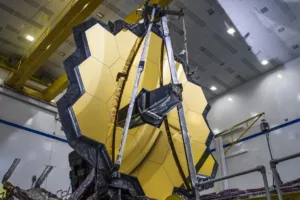
Recent technological progress, including instruments like the James Webb Space Telescope, has enhanced astronomers’ ability to detect subtle and distant astrophysical phenomena. Improved sensitivity and resolution allow for deeper exploration of regions where bow shocks might be faint or obscured. As observational capabilities continue to evolve, previously undetected bow shocks or related phenomena may come to light, refining our understanding of stellar wind interactions.
Common Misconceptions About Bow Shocks
Bow shocks always form around stars moving supersonically.
While supersonic motion is necessary, local ISM conditions and stellar wind variability can prevent bow shock formation or make it undetectable.
The absence of a bow shock indicates a lack of stellar wind.
Stellar winds may be present but insufficiently strong or interacting with an environment that inhibits shock formation.
Importance of Studying Bow Shocks
Understanding bow shocks is vital for comprehending stellar evolution, the structure of the interstellar medium, and the dynamics within galaxies. These shock fronts reveal how stars influence their surroundings, contribute to the redistribution of matter and energy, and affect star formation processes. Investigating phenomena like the “Bow Shock No-Show” pushes the boundaries of astrophysical theory, encouraging refinement of models that describe cosmic interactions and the lifecycle of stars.
FAQ
What is a bow shock?
A bow shock is a boundary formed when a star moves through the interstellar medium at supersonic speeds, creating a shock front.
Why might a bow shock be absent?
Absence of a bow shock can be due to factors like an inhomogeneous interstellar medium, variable stellar winds, or environmental interactions.
How does the James Webb Space Telescope contribute to this field?
It provides improved sensitivity and resolution, allowing for detection of faint or obscured astrophysical phenomena.


Leave a Reply