

Short Answer
Definition of Black Holes and the Sun
Black holes are mysterious cosmic objects defined by their intense gravitational pull, so strong that nothing, not even light, can escape once it crosses the event horizon. They form when massive stars deplete their nuclear fuel and collapse under their own gravity, resulting in an extremely dense singularity. In contrast, the sun is a luminous star that sustains life on Earth by producing energy through nuclear fusion in its core, emitting light and heat.
- Black Holes:
Regions of spacetime exhibiting gravitational forces so powerful that escape velocity exceeds the speed of light, formed from the remnants of massive stars. - The Sun:
A G-type main-sequence star generating energy via nuclear fusion, providing warmth and light essential for life on Earth.
Gravitational Influence and Environmental Impact
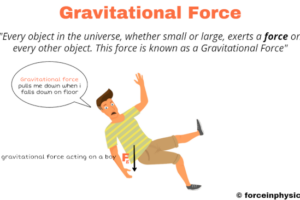
Despite their fundamental differences, both black holes and the sun exert profound gravitational effects on their surroundings. The sun’s gravity governs the orbits of planets, comets, and asteroids within the solar system, maintaining cosmic order. Similarly, black holes manipulate the paths of nearby stars and interstellar gas, often creating spectacular phenomena such as gravitational lensing, where light bends around the black hole’s immense gravity.
Both entities also play pivotal roles in shaping their cosmic neighborhoods. The sun influences Earth’s climate and sustains ecosystems, while black holes affect nearby matter by forming accretion disks-rotating structures of gas and dust heated to extreme temperatures. These disks emit powerful radiation, including X-rays and energetic jets, observable across vast distances.
Electromagnetic Emissions: Comparing Spectra
Although black holes themselves do not emit light, the energetic processes in their vicinity produce a broad spectrum of electromagnetic radiation. The accretion disks and relativistic jets surrounding black holes generate emissions ranging from radio waves to X-rays. The sun, on the other hand, emits a wide array of electromagnetic radiation, including visible light, ultraviolet, and infrared waves. This overlap in emission types invites intriguing comparisons between the energetic phenomena near black holes and the solar radiation produced by nuclear fusion.
Life Cycles and Evolutionary Parallels
The life cycles of black holes and stars like the sun reveal fascinating parallels. Stars evolve through stages-from main sequence to red giant and eventually to endpoints such as white dwarfs or supernovae. Black holes originate from the collapse of massive stars but continue to interact dynamically with their environment by consuming nearby matter. This accretion can trigger new star formation in surrounding regions, suggesting a cyclical relationship between black holes and stellar birth. Such processes echo the sun’s lifecycle, where stellar remnants contribute to the genesis of new stars under favorable conditions.
Scientific Debates and Challenges
While these similarities are compelling, traditional astrophysical views emphasize the fundamental differences between black holes and the sun. The sun’s energy production through nuclear fusion contrasts sharply with the gravitational collapse that defines black holes. Critics argue that any resemblance is superficial, rooted in observational coincidences rather than shared mechanisms. However, advances in observational technology continue to reveal nuanced behaviors that challenge these distinctions, prompting ongoing scientific debate.
Implications for Astrophysics and Beyond
Exploring the notion that black holes might mimic certain aspects of the sun has significant ramifications for our understanding of cosmic evolution. If black holes can influence their surroundings in ways analogous to stellar processes, this could reshape models of star formation and energy distribution in the universe. Such insights encourage astrophysicists to reconsider the roles black holes play in the broader cosmic ecosystem.
Beyond astrophysics, these parallels inspire interdisciplinary dialogue, bridging fields such as theoretical physics and philosophy. Recognizing shared characteristics between seemingly disparate celestial bodies fosters a holistic approach to studying the universe and deepens our appreciation of its interconnected nature.
Conclusion: Rethinking Cosmic Phenomena
The proposition that black holes may emulate certain behaviors of the sun invites a fresh perspective on astrophysical phenomena. While their core natures differ fundamentally, uncovering these similarities challenges existing paradigms and encourages a more integrated understanding of celestial mechanics. This evolving viewpoint underscores the importance of asking bold questions and embracing complexity in the quest to comprehend the cosmos.
FAQ
What is the main difference between black holes and the sun?
The sun generates energy through nuclear fusion, while black holes form from gravitational collapse and do not emit light themselves.
Why do black holes mimic the sun?
They exhibit similar gravitational effects and produce electromagnetic emissions via accretion disks and jets, paralleling some processes of the sun.
How do these similarities affect astrophysics?
They challenge traditional views and suggest new avenues for understanding cosmic evolution and the interplay between different celestial bodies.

Leave a Reply