And Then There Were Ten: Redefining the Periodic Puzzle

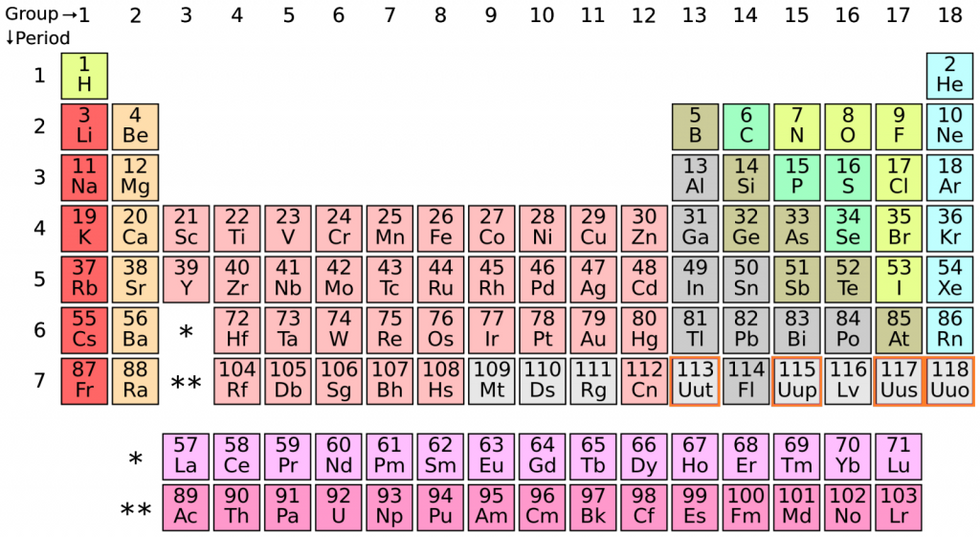
The periodic table of elements, a foundational construct in chemistry, has undergone numerous revisions since its inception. Perhaps you have considered the following paradox: if we are to redefine elements based on current scientific knowledge and technological advancements, how might we reconstruct this iconic table? Could we ultimately arrive at a new configuration, perhaps envisioning […]

Read More →

What is your prediction for the future U.S. military’s weapons?

The evolution of military weaponry is a perennial topic of intrigue and concern, spurred by advancements in technology, geopolitical shifts, and a continuous arms race among nations. As we gaze into the crystal ball of future U.S. military capabilities, one can categorize the trajectory of weapons development into several key domains: automation and robotics, directed […]

Read More →

How would it help if we found free quarks?

In the realm of particle physics, the quark is an indispensable subject of study. Despite being one of the fundamental building blocks of matter, quarks have eluded isolation for decades. The concept of isolating free quarks invites not only scientific curiosity but also the tantalizing prospect of unraveling the mysteries of the universe. This article […]

Read More →

Quantum gates-1:- (Single Qubit Gates) – Code with Qiskit?

In the realm of quantum computing, gates emerge as the fundamental building blocks, akin to the vibrant brushstrokes on a canvas. Each quantum gate manipulates qubits—quantum bits—that serve as the basic unit of information, much like classical bits in traditional computing. However, the properties of qubits introduce a new dimension, inviting a captivating narrative that […]

Read More →

What makes a quantum computer special?

Quantum computing represents a paradigm shift in computational capabilities, fundamentally altering how we approach problem-solving in various disciplines. Drawing upon the principles of quantum mechanics, these sophisticated machines harness the unique properties of quantum bits, or qubits, to perform operations at unprecedented speeds. This article elucidates the distinctive attributes that render quantum computers exceptional, examining […]

Read More →

Chemical Chatter: Bacteria Use Chemistry to Coordinate

The realm of microbiology has witnessed a remarkable shift in understanding the intricate communication networks of bacteria, a phenomenon often described as “chemical chatter.” Bacteria, often characterized by their simplicity and microscopic size, possess a sophisticated method of chemical communication that allows them to synchronize behaviors, coordinate actions, and even manipulate their surrounding environments. This […]

Read More →

Can a medical physicist study radiology at Ph.D level?

The intersection of medical physics and radiology has been a topic of considerable interest and inquiry within the academic and clinical communities. A question arises: Can a medical physicist study radiology at the Ph.D. level? This inquiry, while seemingly straightforward, unravels a complex tapestry of interrelated disciplines, each contributing a unique perspective to the overarching […]

Read More →

Could quantum computing save the planet?

The advent of quantum computing heralds a significant paradigm shift in computational capacity, potentially unlocking solutions to some of the most intractable problems facing humanity today. Could quantum computing save the planet? This tantalizing question invites both optimism and skepticism, particularly amidst the pressing challenges of climate change, resource depletion, and inefficiencies in global systems. […]

Read More →

Carbons Hoyle State Finally Calculated: Life’s Origin Equation Solved?

In the intricate web of nuclear physics, few concepts capture the imagination like the Hoyle state of carbon, a vital resonance that underpins our very existence. The recent advancements in calculating this elusive state herald profound implications for our understanding of stellar nucleosynthesis and the genesis of life itself. Herein, we delve into the significance […]

Read More →

What are particle accelerators used for?

Particle accelerators are quintessential instruments in modern physics, enabling the exploration of fundamental questions about the universe. These sophisticated machines propel charged particles to high velocities, facilitating collisions at energies that replicate conditions just after the Big Bang. The utility of particle accelerators transcends mere academic inquiry, impacting diverse fields such as medicine, industry, and […]

Read More →