
Short Answer
Understanding Eclipses in Astronomy
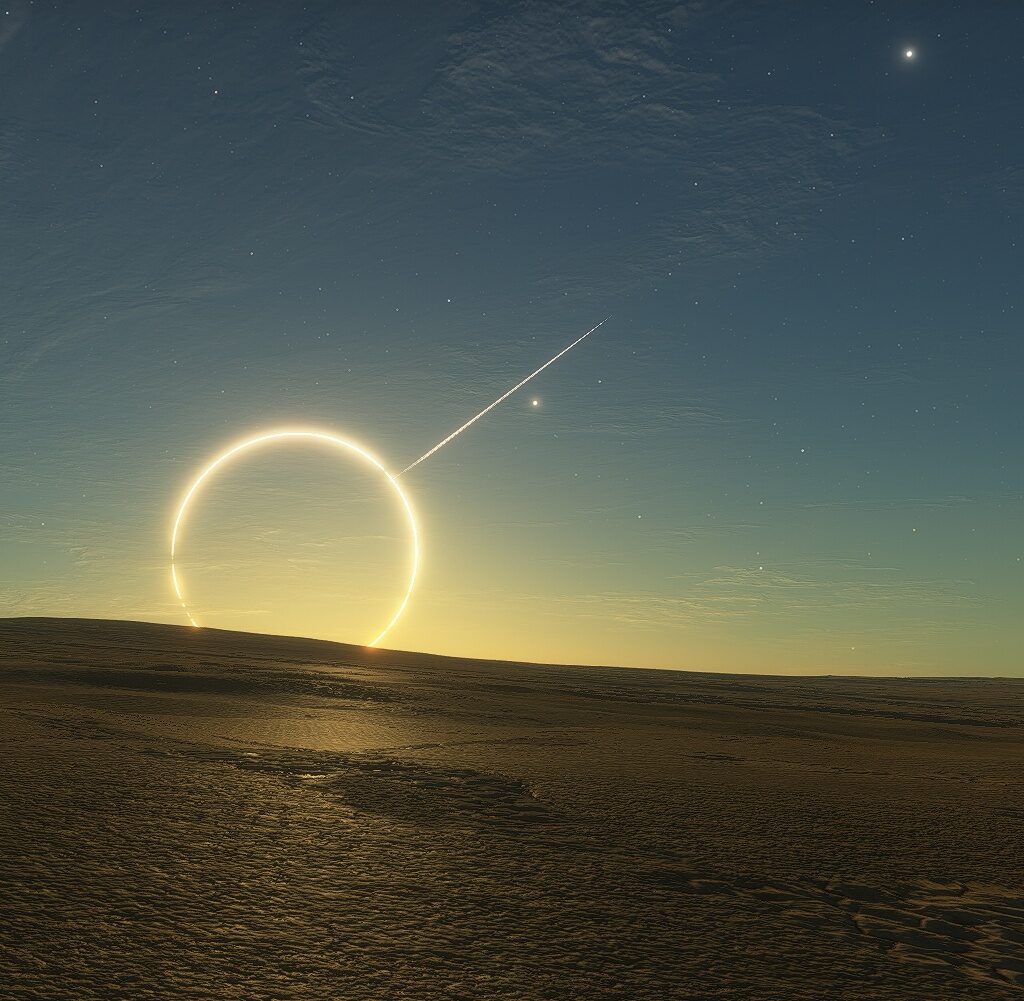
An eclipse is a celestial event where one astronomical body moves directly between an observer and another object, causing a temporary blockage or dimming of light. This phenomenon is not only a captivating spectacle but also a vital observational tool in astrophysics. When applied to the study of extrasolar planets-planets orbiting stars beyond our solar system-eclipses often manifest as transits. During a transit, a planet crosses in front of its host star from our vantage point, leading to a subtle but measurable decrease in the star’s brightness. This dimming provides astronomers with critical information about the planet’s physical and orbital properties.
Historical Development and Technological Advances
The exploration of eclipses related to extrasolar planets gained momentum in the late 20th century, driven by advancements in telescope technology and detection methods. A pivotal moment came with the launch of the Kepler Space Telescope in 2009, which revolutionized the field by enabling precise monitoring of stellar brightness fluctuations caused by planetary transits. This mission led to the identification of numerous planetary candidates, many of which were later confirmed through detailed follow-up observations, firmly establishing the existence of worlds beyond our solar system.
Scientific Insights from Extrasolar Eclipses
Eclipses involving extrasolar planets offer more than just confirmation of their presence; they open windows into the planets’ atmospheric and environmental characteristics. By analyzing the starlight that passes through a planet’s atmosphere during transit, scientists can detect specific chemical signatures. This spectral analysis reveals the presence of molecules such as water vapor, methane, and oxygen-key indicators in the search for potentially habitable environments and astrobiological interest.
Gravitational Effects and System Dynamics
Beyond atmospheric studies, eclipses can also shed light on the gravitational interactions within planetary systems. Variations in the timing of eclipses may indicate the influence of additional celestial bodies, such as companion planets or moons. These perturbations provide valuable data on orbital mechanics and the evolutionary history of the system, enhancing our understanding of complex gravitational relationships.
Cultural and Philosophical Significance of Eclipses
While eclipses serve as important scientific phenomena, they also captivate human imagination and cultural narratives. Historically, eclipses have been interpreted as omens or divine signs across various civilizations. Today, although viewed through a scientific lens, these events continue to inspire awe and philosophical reflection about humanity’s place in the cosmos. The realization that countless distant worlds exist within the vast universe encourages contemplation about the origins of life and our connection to the broader cosmic environment.
Common Misconceptions About Eclipses and Extrasolar Planets
Eclipses only occur within our solar system.
Eclipses can happen anywhere in the universe where one celestial body passes in front of another, including extrasolar planetary systems.
The dimming of a star during a transit is always large and easily visible.
The decrease in brightness caused by a planet transiting its star is often very subtle and requires sensitive instruments to detect.
Why Studying Extrasolar Eclipses Is Crucial
The investigation of eclipses involving extrasolar planets is fundamental to expanding our knowledge of planetary formation, atmospheric composition, and the potential for life beyond Earth. Each transit event provides empirical data that helps scientists characterize distant worlds, compare them to our own planet, and refine models of planetary system evolution. This research not only advances astrophysics but also fuels humanity’s enduring quest to understand the universe and our place within it.
Future Prospects and Expanding Horizons
As observational techniques continue to improve, the discovery of planets in a variety of environments becomes increasingly feasible. From gas giants located within habitable zones to rocky terrestrial planets with conditions conducive to life, each new finding enriches our comprehension of the cosmos. The ongoing study of eclipses and transits promises to unveil further secrets about the diversity and complexity of planetary systems, marking a new chapter in astronomical exploration.
Summary: The Intersection of Science and Wonder
The detection of extrasolar planets through eclipses represents a remarkable blend of rigorous scientific inquiry and profound human curiosity. The fleeting dimming of a star during a transit encodes a wealth of information about distant worlds, while simultaneously inspiring philosophical and existential reflection. As celestial bodies continue their cosmic dance, the synergy between scientific discovery and the human spirit of wonder will drive future advancements in our understanding of the universe.
FAQ
What is an eclipse?
An eclipse occurs when one astronomical body moves directly between an observer and another object, causing temporary blockage or dimming of light.
How do eclipses help in discovering extrasolar planets?
Eclipses, particularly transits, allow astronomers to observe the dimming of a star's light as a planet passes in front of it, providing critical data about the planet.
Why are eclipses significant in astrophysics?
They provide insights into the physical and orbital properties of extrasolar planets and their atmospheres, which is essential for understanding planetary formation and habitability.





Leave a Reply