How can you improve the accuracy of your measurements?

Definition of Measurement Accuracy Measurement accuracy refers to the degree to which a measured value aligns with the true or accepted standard. It is a fundamental aspect of scientific research and experimentation, as the precision of measurements directly impacts the credibility and validity of data and conclusions. Achieving high accuracy involves minimizing errors and uncertainties […]

Read More →

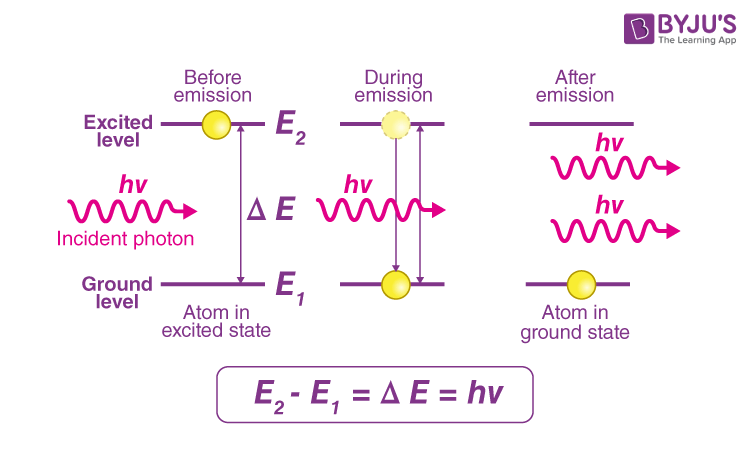
Why do we not have 2-level lasers?

Definition of Laser Systems Lasers are devices that convert energy into a highly organized and coherent beam of light, profoundly impacting fields such as telecommunications, healthcare, and industrial manufacturing. The term “laser” stands for Light Amplification by Stimulated Emission of Radiation, describing the fundamental process by which lasers operate. Central to this process is a […]

Read More →

What is meant in particle physics by the term hermeticity?

Definition of Hermeticity in Particle Physics Hermeticity is a fundamental concept in particle physics that pertains to the mathematical and physical properties of quantum systems. It primarily refers to the hermitian nature of operators that represent physical observables in quantum mechanics. These operators, which correspond to measurable quantities such as energy, momentum, and position, must […]

Read More →

Physics in Biomedical Science: Why Newton Still Belongs in the Hospital

Definition of Newtonian Physics in Biomedical Science Newtonian physics, rooted in the classical mechanics formulated by Sir Isaac Newton, encompasses the fundamental laws of motion, force, and energy. In the context of biomedical science, these principles provide a critical framework for understanding the mechanical and physical processes that govern the human body and medical technologies. […]

Read More →

Why are the shells of a hydrogen atom degenerate?

Definition of Degeneracy in Hydrogen Atom Shells Degeneracy in the context of the hydrogen atom refers to the phenomenon where multiple electron states share the same energy level. Despite the atom’s simplicity-consisting of a single proton and one electron-its electron shells exhibit this intriguing property, which is fundamental to understanding quantum mechanics and atomic structure. […]

Read More →

Is the future of Nuclear Physics Research dead?

Definition and Historical Background of Nuclear Physics Nuclear physics is a branch of science dedicated to studying the components, structure, and interactions of atomic nuclei. It has played a crucial role in expanding our comprehension of atomic behavior and fundamental forces. Emerging prominently after World War II, nuclear physics was propelled by landmark discoveries such […]

Read More →

What is the purpose and the benefits of quantum field theory?

Definition of Quantum Field Theory Quantum Field Theory (QFT) is a fundamental framework in contemporary theoretical physics that merges the principles of quantum mechanics with those of special relativity. It provides a unified description of the behavior and interactions of subatomic particles by treating them as excitations of underlying fields that permeate all of spacetime. […]

Read More →

What

Understanding the Concept of “What” in Education The inquiry “What” plays a crucial role in education as a fundamental question that opens the door to deeper insight into any subject matter. Exploring the different types of content centered around “What” enables learners to move beyond basic knowledge and develop a comprehensive understanding. This exploration spans […]

Read More →

Will China beat the US in quantum computing in the future?

Understanding the Quantum Computing Race Quantum computing represents a revolutionary leap in computational power, poised to redefine the limits of classical computing. At the forefront of this technological contest are two global powerhouses: the United States and China. Both nations are channeling extensive resources and intellectual capital into quantum research, sparking a compelling debate about […]

Read More →

Why Do We Study Condensed Matter? Because It’s Literally Everywhere

Definition of Condensed Matter Physics Condensed matter physics is a fundamental branch of physical science focused on studying the properties and behaviors of matter in its solid and liquid phases. It investigates both macroscopic and microscopic characteristics, aiming to understand how atoms and molecules interact within various materials. This field provides critical insights into the […]

Read More →