What is the introductory state of matter in chemistry?

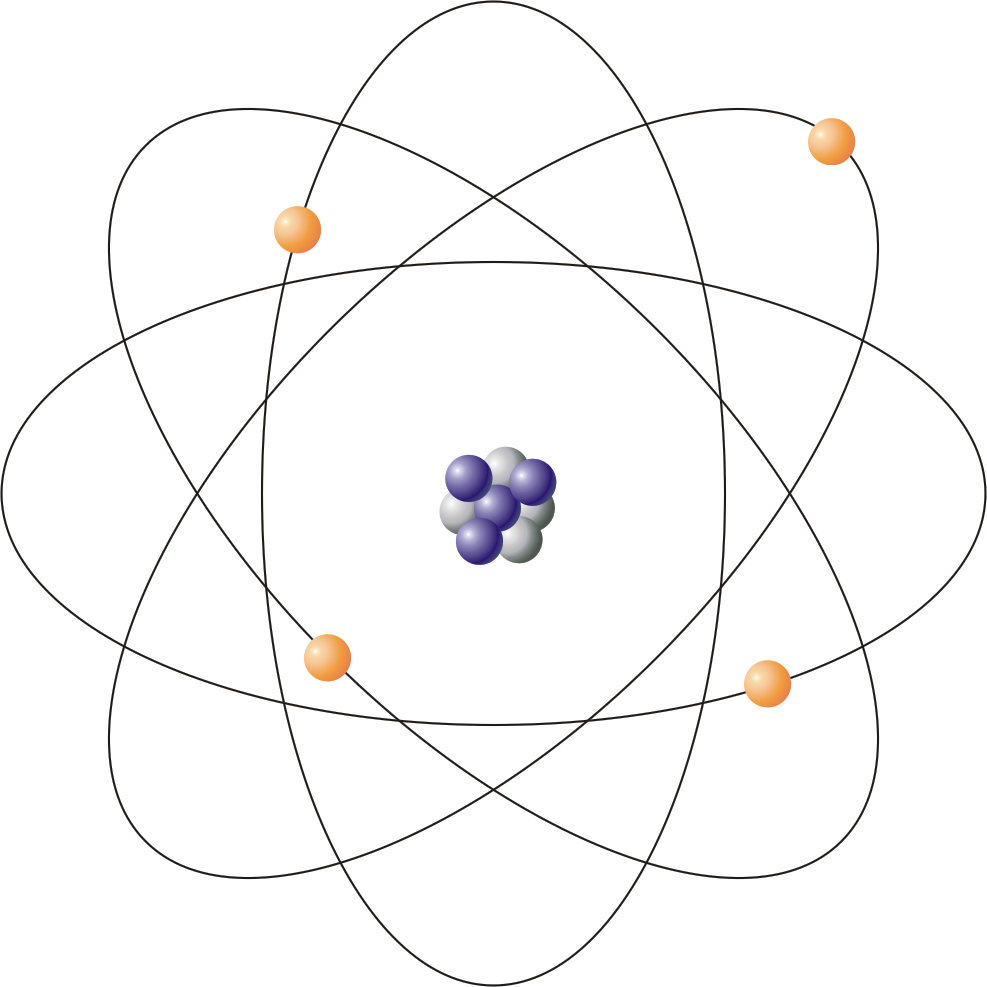
Definition of Matter and Its States Matter, a fundamental concept in chemistry, refers to any substance that occupies space and has mass. The study of matter involves understanding its various states, each distinguished by unique physical properties and behaviors. Traditionally, matter is classified into four primary states: solid, liquid, gas, and plasma. These states form […]

Read More →

What are all the possible branches of Particle Physics?

Definition of Particle Physics Particle physics is the scientific discipline dedicated to studying the most basic building blocks of matter and the fundamental forces that govern their interactions. This field seeks to uncover the underlying principles that shape the universe by examining the smallest known particles and their behaviors. Through this exploration, particle physics provides […]

Read More →

Are quantum effects due to finite precision of the universe?

Understanding Quantum Effects and Finite Precision The relationship between quantum mechanics and our comprehension of the cosmos presents a profound enigma, reminiscent of a cosmic symphony where each element is imbued with the peculiarities of uncertainty. The hypothesis that quantum phenomena might stem from the universe’s inherent finite precision carries significant consequences across physics, metaphysics, […]

Read More →

What will replace semiconductor chips?

Definition of Semiconductor Chip Alternatives Semiconductor chips are fundamental components in modern electronics, enabling the operation of devices ranging from smartphones to advanced artificial intelligence systems. As the miniaturization and energy efficiency of current semiconductor technology approach physical and practical limits, the search for viable replacements has intensified. This exploration involves investigating new materials, computing […]

Read More →

What is the state of the art in graphene-based electronics?

Definition of Graphene-Based Electronics Graphene-based electronics refer to electronic devices and systems that utilize graphene-a single layer of carbon atoms arranged in a two-dimensional hexagonal lattice-as a fundamental material. This innovative class of electronics leverages graphene’s extraordinary electrical, mechanical, and thermal properties to enhance device performance beyond the capabilities of traditional materials like silicon. Graphene […]

Read More →

What is atomic hydrogen?

Definition of Atomic Hydrogen Atomic hydrogen is the simplest atom in the universe, composed of just one proton and one electron. It represents the most fundamental element on the periodic table, with an atomic number of one. Despite its apparent simplicity, atomic hydrogen holds immense significance in both physics and chemistry, serving as a cornerstone […]

Read More →

Why doesn’t cosmic radiation do physical damage?

Definition of Cosmic Radiation Cosmic radiation refers to high-energy particles and electromagnetic radiation originating from outer space that continuously bombard the Earth. These particles, primarily charged nuclei such as protons and alpha particles, travel vast distances through the cosmos before interacting with the Earth’s atmosphere and surface. Primary Cosmic Rays: These are high-energy particles emitted […]

Read More →

Mohammad Yameen: Exploring Physics from the Quantum Edge

Understanding Quantum Mechanics Quantum mechanics is a fundamental branch of physics that explores the behavior of matter and energy at the smallest scales-typically at the level of atoms and subatomic particles. Unlike classical physics, which treats particles as distinct, localized objects, quantum theory reveals a world where particles exhibit wave-like properties and exist in multiple […]

Read More →