
Short Answer
Understanding Black Holes and Dark Energy
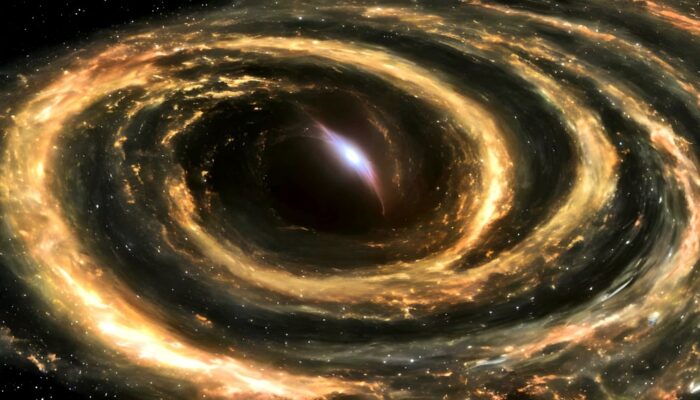
Black holes, often described as the universe’s gravitational powerhouses, and dark energy, the mysterious force accelerating cosmic expansion, represent two of the most profound enigmas in modern astrophysics. The intriguing possibility that black holes might be connected to dark energy challenges traditional views and opens new avenues for exploring the universe’s accelerating growth. Dark energy, which constitutes roughly 68% of the universe’s total energy, exerts a repulsive effect that drives galaxies apart at an ever-increasing rate. Meanwhile, black holes are regions where gravity is so intense that nothing, including light, can escape beyond their event horizons. At first glance, these phenomena seem fundamentally opposed-one pulls matter inward, the other pushes the cosmos outward.
Definition and Characteristics
What is Dark Energy?
Dark energy is an invisible form of energy that permeates all of space and is responsible for the observed acceleration in the universe’s expansion. It does not emit, absorb, or reflect light, making it undetectable by conventional means, and interacts very weakly with ordinary matter.
- Energy Composition:
Accounts for approximately 68% of the universe’s total energy content. - Effect on the Universe:
Causes an antigravitational force that accelerates the separation of galaxies.
What are Black Holes?
Black holes are regions in spacetime exhibiting gravitational fields so strong that nothing can escape once it crosses the event horizon. They form from the collapse of massive stars or through the merging of smaller black holes, and vary in size from stellar-mass to supermassive black holes at galactic centers.
- Event Horizon:
The boundary beyond which escape is impossible. - Types:
Include stellar, intermediate, and supermassive black holes.
Interconnection Between Black Holes and Dark Energy
Despite their apparent opposition, recent theoretical developments suggest a possible link between black holes and dark energy through their interaction with vacuum energy-the fluctuating energy present even in empty space as described by quantum field theory. This vacuum energy is thought to contribute to the cosmological constant, a parameter closely associated with dark energy’s repulsive force.
Vacuum Energy and the Cosmological Constant
Quantum mechanics predicts that even a perfect vacuum is filled with transient energy fluctuations. Black holes may influence these vacuum fluctuations, potentially modifying the effective cosmological constant and thus impacting the universe’s expansion rate.
Black Hole Thermodynamics and Quantum Effects
The thermodynamic properties of black holes, including Hawking radiation-the theoretical emission of particles from black holes due to quantum effects near the event horizon-could collectively affect spacetime on large scales. The evaporation of primordial black holes or the immense mass-energy of supermassive black holes might contribute energy that mimics or enhances dark energy’s effects.
Theoretical Frameworks Linking Black Holes and Dark Energy
Quantum Gravity and Information Paradox
Black holes are central to unresolved questions in quantum gravity, particularly the information paradox concerning the fate of information swallowed by black holes. Some hypotheses propose that black holes could act as sources or modulators of vacuum energy fields, indirectly influencing dark energy through their quantum properties.
Emergent Gravity Paradigm
This approach reinterprets gravity as a thermodynamic phenomenon arising from the statistical behavior of microscopic degrees of freedom in spacetime. Within this framework, black holes are seen as entropic entities whose collective behavior might give rise to dark energy as a macroscopic emergent effect, linking microscopic quantum processes to cosmic acceleration.
Challenges and Limitations
One of the main difficulties in connecting black holes to dark energy lies in the vast difference in scale: dark energy operates over billions of light-years, while black holes influence relatively localized regions. Bridging this gap requires sophisticated mathematical models that unify quantum mechanics and cosmology, a task still in progress. Additionally, detecting observational evidence for such interactions is challenging due to the subtlety of the effects and the limitations of current instruments.
Observational and Experimental Efforts
Modern astrophysical observatories contribute valuable data that may support or refute theories linking black holes and dark energy. Instruments detecting gravitational waves, gamma-ray bursts, and the cosmic microwave background provide insights into black hole behavior and the large-scale structure of the universe, refining theoretical models and guiding future research.
Significance in Cosmology and Physics
Exploring the potential relationship between black holes and dark energy is crucial for advancing our understanding of the universe’s fundamental workings. It challenges existing paradigms, encourages interdisciplinary collaboration, and may ultimately lead to a unified theory that explains both the microcosmic nature of black holes and the macrocosmic phenomenon of cosmic acceleration.
Common Misconceptions
Black holes only consume matter and have no outward influence.
While black holes do trap matter, their quantum and thermodynamic properties may have subtle effects on spacetime and vacuum energy, potentially influencing cosmic expansion.
Dark energy is a force similar to gravity.
Dark energy is better described as a property of space itself, causing repulsive effects that differ fundamentally from gravitational attraction.
Conclusion: The Cosmic Dance of Gravity and Expansion
The hypothesis that black holes contribute to or interact with dark energy invites a profound reevaluation of cosmic dynamics. It suggests that these enigmatic objects are not merely endpoints of stellar evolution but active participants in shaping the universe’s fate. As research progresses, unraveling this connection could illuminate the intricate balance between gravity’s pull and dark energy’s push, deepening our comprehension of the cosmos and our place within it.
FAQ
What are black holes?
Black holes are regions in spacetime with gravitational fields so strong that nothing can escape once it crosses the event horizon.
What is dark energy?
Dark energy is an invisible form of energy that permeates space and is responsible for the universe's accelerating expansion.
How are black holes and dark energy connected?
Recent theories suggest that black holes may influence vacuum energy, which is related to dark energy and cosmic acceleration.


Leave a Reply