
Short Answer
Understanding Red Giant Stars
A red giant represents a late evolutionary stage of a star similar to our sun. After depleting the hydrogen fuel in its core, the star undergoes dramatic expansion, swelling to enormous proportions and emitting a distinctive reddish glow. This phase marks a significant transformation in the star’s structure and energy output, profoundly affecting its surrounding planetary system.
- Stellar Expansion:
The star’s radius increases substantially, potentially engulfing inner planets such as Mercury and Venus. - Surface Cooling:
Despite the star’s increased size, its surface temperature drops, giving it a characteristic red hue. - Increased Luminosity:
The star shines far more brightly than during its main-sequence phase, sometimes hundreds or thousands of times more luminous.
Shifting Habitable Zones Around Red Giants
The expansion and enhanced brightness of a red giant cause the habitable zone-the region where conditions allow liquid water to exist-to move outward. This shift can transform previously frozen worlds into potentially life-supporting environments, while planets closer to the star may face destruction or severe heating.
- Outward Migration of Habitable Zone:
Planets once too cold may warm sufficiently to support liquid water and possibly life. - Threat to Inner Planets:
Planets near the star risk being swallowed or scorched due to the star’s enlarged radius and intense radiation.
Environmental Conditions on Planets Orbiting Red Giants
Planets situated within the new habitable zone of a red giant would experience a dramatically altered environment. The star’s enormous red disk would dominate the sky, emitting radiation with a spectral profile rich in infrared light. This would influence biological processes and atmospheric dynamics in unique ways.
- Altered Radiation Spectrum:
Increased infrared radiation could drive the evolution of novel photosynthetic pigments adapted to harness this energy. - Extended Day-Night Cycles:
Planets may have longer rotational periods or be tidally locked, resulting in prolonged periods of light and darkness. - Atmospheric Phenomena:
Intense stellar radiation and stellar winds could create exotic atmospheric chemistry, including acidic clouds, auroras, and persistent storms.
Impact of Stellar Winds and Magnetic Fields
Red giants emit powerful stellar winds that expel large amounts of mass and charged particles into space. These winds can erode planetary atmospheres unless protected by strong magnetic fields, posing challenges for the survival of life.
- Atmospheric Erosion:
Charged particles from stellar winds can strip away atmospheres over time. - Magnetic Shielding:
Planets with robust magnetic fields may retain their atmospheres and protect surface life. - Subsurface Habitats:
Life might adapt by seeking refuge underground to avoid harsh radiation.
Orbital Dynamics and Gravitational Effects
The mass loss from a red giant weakens its gravitational pull, causing planetary orbits to expand and shift. This orbital evolution can lead to complex interactions within the planetary system, influencing geological and biological activity.
- Orbital Migration:
Planets and smaller bodies move outward, altering the system’s architecture. - Collisions and Material Exchange:
Inward-moving asteroids or comets may collide with planets, delivering essential volatiles or causing destruction. - Tidal Heating:
Changes in gravitational forces can generate internal heating in moons or planets, potentially sustaining subsurface oceans and life.
Temporal Scale and Cultural Implications
The red giant phase, lasting hundreds of millions of years, is brief on cosmic timescales but significant for planetary civilizations. The transient nature of this phase could shape the cultural and philosophical outlook of any intelligent life evolving under such a star.
- Awareness of Change:
Civilizations might develop a heightened sense of impermanence and urgency due to the star’s evolving state. - Mythology and Science:
Cultural expressions could reflect the star’s transformation, influencing art, religion, and scientific inquiry.
End Stages and Survival Strategies
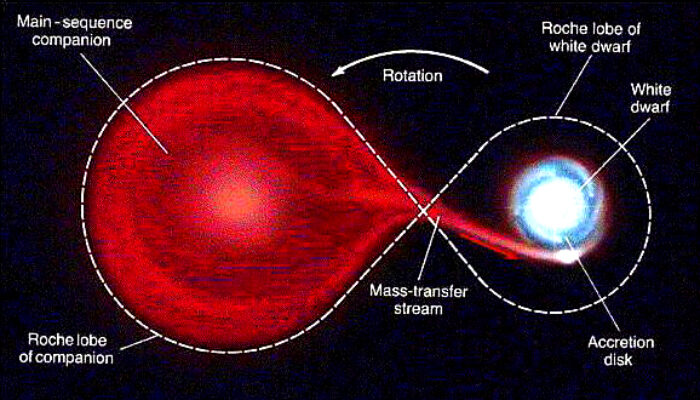
As the red giant exhausts its fuel, it sheds its outer layers, forming a planetary nebula and leaving behind a white dwarf. Life enduring these final stages would face extreme challenges, potentially requiring advanced adaptation or migration.
- Planetary Nebula Formation:
The star expels its outer envelope, creating a glowing shell of gas and dust. - White Dwarf Remnant:
The dense core remains, emitting residual heat but no longer supporting a habitable zone. - Adaptation and Migration:
Life forms might relocate to moons, asteroid belts, or develop technology to survive or escape the system.
Significance of Life Around Red Giants
Exploring the possibility of life in red giant systems broadens our understanding of habitability beyond Earth-like conditions. It challenges conventional ideas about where life can exist and highlights the resilience and adaptability of living organisms in extreme environments.
- Expanding Habitability Concepts:
Life may thrive under different radiation spectra and atmospheric conditions than those on Earth. - Astrobiological Insights:
Studying such environments informs the search for extraterrestrial life and the diversity of possible biospheres. - Cosmic Perspective:
The red giant phase exemplifies the dynamic and evolving nature of stellar systems, emphasizing the interconnectedness of life and cosmic processes.
FAQ
What happens to planets as a red giant expands?
As a red giant expands, inner planets may be engulfed or scorched, while outer planets may become habitable.
What are the risks for life around a red giant?
Life faces threats from stellar winds, atmospheric erosion, and extreme radiation.



Leave a Reply