
Short Answer
Definition
The interaction between gravity and the expanding universe represents a fundamental cosmic phenomenon where two opposing forces shape the structure and evolution of the cosmos. Gravity, the attractive force pulling matter together, competes with the universe’s expansion, which stretches spacetime and drives galaxies apart. This dynamic interplay governs the formation of celestial bodies and the large-scale architecture of the universe.
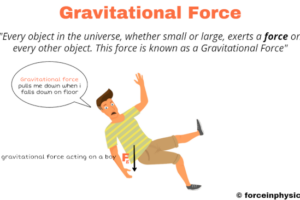
- Gravity:
A fundamental force that attracts matter, causing stars, planets, and galaxies to cluster and orbit. - Expanding Universe:
The continuous stretching of spacetime, causing galaxies to move away from each other, driven primarily by dark energy.
Historical Context and Discovery
The concept of an expanding universe was first brought to light by Edwin Hubble in the early 20th century, who observed that distant galaxies are receding from us, indicating that space itself is stretching. This discovery revolutionized cosmology, challenging the previously held notion of a static universe. Since then, scientists have sought to understand how this expansion interacts with gravity, which tends to pull matter together, creating a cosmic tension that shapes the universe’s destiny.
How Gravity and Expansion Interact
While the universe expands on a grand scale, gravity acts locally to counter this stretching by pulling matter into dense formations. In regions where matter density is sufficiently high, gravitational attraction overcomes the expansion, leading to the formation of stars, galaxies, and clusters. Conversely, on vast intergalactic scales, the expansion driven by dark energy dominates, causing galaxies to drift apart at accelerating speeds.
- Local Scale:
Gravity binds matter into complex structures, resisting the expansion of space within these regions. - Cosmic Scale:
Dark energy accelerates the expansion, reducing gravity’s influence over immense distances.
Mechanism Behind Cosmic Expansion
The expansion of the universe is not a force in the traditional sense but a manifestation of spacetime itself stretching. This phenomenon is propelled by dark energy, a mysterious form of energy that constitutes approximately 70% of the universe’s total energy density. Dark energy causes the rate of expansion to accelerate, effectively pushing galaxies apart and diminishing the gravitational pull between them over time.
Mathematical Framework
The dynamics of the universe’s expansion and gravitational interaction are described by the Friedmann equations, derived from Einstein’s General Relativity. These equations relate the expansion rate (Hubble parameter, H), matter density (ρ), dark energy density (Λ), and curvature of spacetime.
Key formula:
H² = (8πG/3)ρ – (kc²/a²) + (Λc²/3)
- H: Hubble parameter, rate of expansion
- G: Gravitational constant
- ρ: Matter density
- k: Curvature parameter
- a: Scale factor of the universe
- Λ: Cosmological constant representing dark energy
- c: Speed of light
This equation encapsulates how matter, curvature, and dark energy influence the expansion rate and gravitational effects.
Real-World Examples of the Cosmic Tug-of-War
The observable universe provides numerous instances where gravity and expansion interplay:
- Galaxy Clusters:
These massive structures remain gravitationally bound despite the universe’s expansion, illustrating gravity’s local dominance. - Black Holes and Neutron Stars:
Formed from gravitational collapse, these objects represent regions where gravity overwhelms expansion completely. - Intergalactic Voids:
Vast expanses where expansion outpaces gravity, causing galaxies to recede beyond observable limits.
Common Misconceptions
The universe’s expansion is like an explosion pushing galaxies through space.
Expansion is the stretching of space itself, not objects moving through a static medium.
Gravity and expansion are forces of equal nature.
Gravity is a force attracting matter, while expansion is a geometric property of spacetime influenced by dark energy.
Expansion causes galaxies to fly apart within clusters.
Gravity within clusters is strong enough to hold galaxies together despite cosmic expansion.
Significance in Cosmology and Beyond
The contest between gravity and cosmic expansion is central to understanding the universe’s past, present, and future. It explains the formation of complex structures from an initially uniform cosmos and informs predictions about the universe’s ultimate fate-whether it will expand forever, leading to a cold, isolated cosmos, or eventually contract in a “Big Crunch.” This interplay also challenges and extends classical physics, requiring relativistic models and introducing concepts like dark energy, which remain at the forefront of scientific research.
Philosophical and Cultural Reflections
Beyond scientific implications, the tension between gravitational cohesion and universal expansion resonates with broader themes of order versus chaos, unity versus dispersal. This cosmic duality inspires philosophical inquiry and artistic expression, symbolizing humanity’s quest to find meaning within the vast and dynamic universe. The visible dance of celestial bodies against the backdrop of an expanding cosmos serves as a metaphor for balance, struggle, and emergence in the natural world and human experience.
Conclusion
The ongoing interaction between gravity and the expanding universe creates a complex and dynamic cosmic landscape. This fundamental relationship shapes the formation of all celestial structures, governs the evolution of spacetime, and frames our understanding of the cosmos. The delicate balance between these opposing forces highlights the universe’s intricate harmony and underscores the profound mysteries that continue to captivate scientists and thinkers alike.
FAQ
What happens when gravity fights the expanding universe?
Gravity and cosmic expansion create a balance that influences the formation of structures in the universe, with gravity dominating locally and expansion prevailing on cosmic scales.
What is the significance of dark energy?
Dark energy constitutes about 70% of the universe's energy density and causes the accelerated expansion of the universe.

Leave a Reply