
Short Answer
Understanding the Vastness of Space
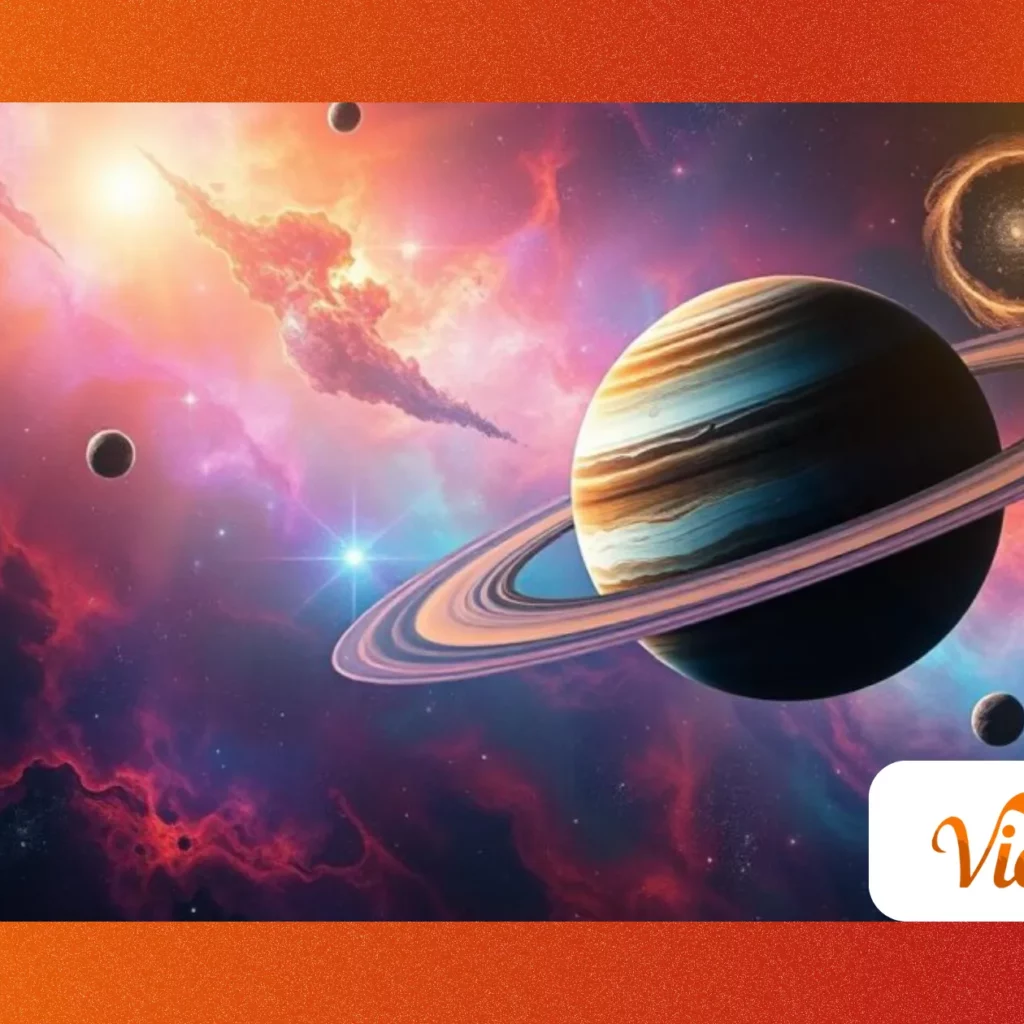
Space, often described as the cosmic ocean, extends far beyond the limits of human imagination. It is an enigmatic expanse where conventional natural laws frequently transform into extraordinary phenomena. This infinite realm is a complex mosaic of mysteries so profound that they challenge our very perception of reality. Exploring the cosmos unveils astonishing facts that highlight the universe’s immense intricacy and breathtaking splendor, evoking a sense of wonder akin to gazing through a kaleidoscope that reveals the universe in surreal and magnificent hues.
Scale and Distance in the Universe
The enormity of space is one of its most awe-inspiring features. The universe’s size is not just vast; it surpasses human comprehension. Distances in space are measured in light-years-the distance light travels in one year, roughly 5.88 trillion miles. For example, the closest star to our sun, Proxima Centauri, is approximately 4.24 light-years away. This immense separation likens space to a colossal ocean, where even the nearest celestial bodies are separated by vast, seemingly endless voids.
Time and Gravity: The Cosmic Dance
Time behaves uniquely in the cosmic environment. According to Einstein’s theory of relativity, time slows down in the presence of strong gravitational fields. Near supermassive black holes, time dilation becomes extreme, causing time to pass much slower compared to Earth. Standing near such a gravitational giant would mean experiencing moments that stretch indefinitely, while years on Earth would seem to pass in the blink of an eye. This phenomenon illustrates that time is not an absolute constant but a flexible dimension intertwined with the fabric of spacetime.
Black Holes: Cosmic Mysteries
Black holes are among the most fascinating and mysterious objects in space. These regions of intense gravity consume everything nearby, including light, making them invisible and enigmatic. The event horizon marks the boundary beyond which nothing can escape, resembling a cosmic waterfall plunging into the unknown. Beyond their destructive nature, some theories propose that black holes might contain wormholes-hypothetical tunnels through spacetime that could potentially allow faster-than-light travel, opening intriguing possibilities for interstellar journeys.
The Life Cycle of Stars
Stars are colossal nuclear reactors where lighter elements fuse to form heavier ones, releasing vast amounts of energy. The death of massive stars in supernova explosions disperses essential elements such as iron, gold, and calcium across the cosmos. These elements are fundamental to the formation of planets and life itself. In essence, humans and Earth are composed of stardust, forged in the fiery crucibles of ancient stellar explosions.
Cosmic Expansion and Dark Components
The universe is continuously expanding, and this expansion is accelerating due to a mysterious force known as dark energy, which constitutes nearly 70% of the universe’s total energy content. Alongside dark energy, dark matter-an invisible substance-plays a crucial role in shaping galaxies by exerting gravitational influence. Together, dark matter and dark energy reveal that much of the universe remains hidden from direct observation, driving ongoing scientific efforts to unravel these cosmic enigmas.
Extreme Phenomena in Space
Space hosts phenomena that defy everyday understanding. Neutron stars, the dense remnants of massive stars, pack more mass than the sun into a sphere the size of a city. A tiny amount of neutron star material would weigh billions of tons on Earth. Additionally, cosmic rays-high-energy particles traveling near light speed-continuously bombard Earth’s atmosphere with energies far beyond those produced in human-made accelerators.
The Nature of Interstellar Space
Contrary to the notion of a perfect vacuum, interstellar space contains sparse gases, microscopic dust particles, magnetic fields, and radiation. This cold, near-empty expanse forms the backdrop against which the fiery activity of stars unfolds. The vast emptiness of space evokes a profound sense of solitude and highlights the silent grandeur of the cosmos.
Gravitational Waves: Ripples in Spacetime
Gravitational waves are distortions in spacetime caused by massive cosmic events such as the collision of black holes or neutron stars. First detected in 2015, these waves carry information from billions of light-years away, offering insights into the universe’s earliest moments. Gravitational wave astronomy provides a revolutionary method to observe cosmic phenomena that were previously inaccessible through traditional telescopes.
Exoplanets and the Search for Life
Planets orbiting stars beyond our solar system, known as exoplanets, add another layer of fascination to the cosmos. Thousands of these worlds have been discovered, some residing in habitable zones where conditions might support life. Exoplanets vary widely, from scorching “hot Jupiters” close to their stars to cold, rogue planets drifting through space alone. Each system offers clues about planetary formation and the potential for life beyond Earth.
The Significance of Cosmic Exploration
Space serves as a grand stage where the fundamental laws of existence are magnified and transformed. It challenges our understanding of reality through immense distances, exotic matter, and fundamental forces. Gazing into the cosmos invites us to expand our horizons beyond Earth, embracing the sublime and alien beauty of the universe. The ongoing quest to explore and comprehend space reflects humanity’s enduring spirit of curiosity and discovery, making the cosmos the ultimate frontier for knowledge and wonder.
FAQ
What are black holes?
Black holes are regions in space where gravity is so strong that nothing, not even light, can escape from them. They are formed when massive stars collapse under their own gravity.
What is dark matter?
Dark matter is a type of matter that does not emit light or energy, making it invisible and detectable only through its gravitational effects on visible matter.
How do we know the universe is expanding?
The universe’s expansion is evidenced by the redshift of light from distant galaxies, indicating that they are moving away from us.



Leave a Reply