
Short Answer
Definition of Gravity on Mars
Gravity is a fundamental force that influences the motion of celestial bodies and the experience of movement on planetary surfaces. When comparing planets within our solar system, gravity serves as a crucial factor that highlights the differences between worlds. Mars, often called the Red Planet, presents a fascinating case study in gravitational contrast to Earth, offering insights into how gravity shapes environments, biology, and human activity beyond our home planet.
Fundamental Principles of Planetary Gravity
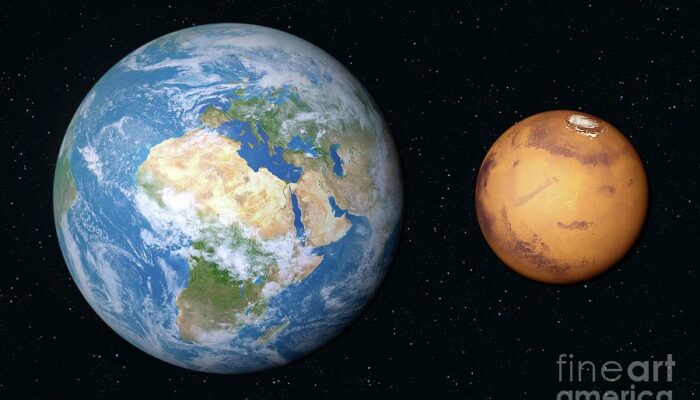
The gravitational force exerted by any planet depends primarily on two key attributes: its mass and its radius. Earth, with its substantial mass and size, generates a gravitational acceleration of approximately 9.81 meters per second squared (m/s²). Mars, by contrast, has a mass roughly one-tenth that of Earth and a radius about 53% as large. These differences result in Mars having a surface gravity near 3.71 m/s², which is about 38% of Earth’s gravitational pull.
- Mass:
The total amount of matter contained within a planet directly influences its gravitational strength. - Radius:
The distance from the planet’s center to its surface affects the intensity of gravity experienced at the surface.
How Martian Gravity Influences Movement and Physiology
The reduced gravity on Mars profoundly alters the way living beings would move and function. At just over a third of Earth’s gravity, the sensation of weight is significantly diminished. This means that physical activities such as walking, jumping, and lifting would require less effort, resulting in more buoyant and less taxing movements. However, this also raises important questions about the long-term effects on human muscle strength, bone density, and overall health, as the body adapts to a lower gravitational environment.
Internal Composition and Its Role in Gravity
Mars’ weaker gravitational pull is not solely due to its smaller size and mass but also its internal makeup. Unlike Earth, which has a dense iron-nickel core contributing to its strong gravity, Mars consists of lighter materials and possesses a smaller core. This lower density further reduces the planet’s gravitational force, creating an environment that is both scientifically intriguing and challenging for future exploration and habitation.
Impact of Gravity on Mars’ Atmosphere and Surface Conditions
The planet’s gravity also plays a critical role in shaping its atmosphere and surface environment. Mars’ lower gravity contributes to its thin atmosphere, which is less than 1% as dense as Earth’s. This weak gravitational hold allows solar winds to strip away atmospheric particles more easily, leading to harsh surface conditions that complicate the potential for sustaining life.
Implications for Space Exploration and Colonization
Mars’ gravitational environment presents a unique set of advantages and challenges for human exploration. The lower gravity means that launching spacecraft from the Martian surface requires less energy compared to Earth, facilitating easier travel within the solar system. Conversely, prolonged exposure to reduced gravity poses health risks such as muscle atrophy, bone loss, and cardiovascular issues, as observed in microgravity environments like the International Space Station. Understanding how Martian gravity affects human physiology is essential for planning long-term missions and settlements.
Adaptations in Human Activity and Technology
Daily activities on Mars would be transformed by the planet’s gravity. Movements would be less strenuous but require greater balance and coordination due to the lighter weight. This shift affects muscle use and neurological control. Additionally, robotic systems and machinery designed for Mars must be engineered to operate efficiently under lower gravity while coping with the planet’s rugged terrain and thin atmosphere.
Gravity’s Influence on Biological Evolution and Habitability
Gravity has been a driving force in the evolution of life on Earth, shaping the structure and function of organisms over billions of years. Mars’ reduced gravity raises intriguing questions about the potential for life to adapt or evolve differently under such conditions. Hypothetically, organisms might develop distinct skeletal frameworks or rely on alternative support mechanisms, highlighting gravity’s fundamental role in biology and ecology.
Geological Effects of Martian Gravity
The weaker gravitational force on Mars also affects geological processes and landscape formation. The planet’s gravity is insufficient to retain dense atmospheres or large bodies of liquid water, resulting in vast deserts and frequent dust storms. Geological phenomena such as landslides and erosion occur differently than on Earth, producing unique surface features. Studying these effects helps scientists understand Mars’ climatic history and resource distribution, which are vital for future human habitation.
Philosophical and Scientific Significance
The contrast in gravity between Earth and Mars invites a broader reflection on humanity’s place in the universe. It underscores the diversity of planetary environments and how universal physical laws manifest in varied ways. Recognizing Earth’s gravity as both a nurturing force and a limitation encourages a deeper appreciation of the challenges and opportunities presented by other worlds.
Summary: The Importance of Mars’ Gravity
With gravity at just 38% of Earth’s, Mars offers more than a numerical comparison; it represents a gateway to new experiences and scientific challenges. This difference redefines movement, health considerations, atmospheric dynamics, geological activity, and the potential for life. By exploring Mars through the lens of gravity, humanity gains critical insights into the adaptability of life and technology beyond Earth, advancing our cosmic journey and expanding our understanding of planetary uniqueness.

Leave a Reply