
Short Answer
Definition of Neutron Stars and Their Mass Limits
Neutron stars are among the universe’s most mysterious and extreme celestial bodies. They form from the remnants of massive stars that have ended their lives in supernova explosions. These compact objects cram stellar masses into spheres approximately 20 kilometers in diameter, roughly the size of a city. The extraordinary density of neutron stars-where a mere teaspoon of their material would weigh billions of tons on Earth-stems from their cores being composed mainly of neutrons compressed beyond atomic nuclei. Understanding the maximum mass these stars can sustain before collapsing into black holes is a fundamental question bridging astrophysics, nuclear physics, and general relativity.
Internal Structure and Composition
The core of a neutron star is an astrophysical laboratory for exotic states of matter that cannot be replicated on Earth. While traditionally thought to consist mostly of neutrons with some protons and electrons, modern theories propose more complex interiors. These may include hyperons (particles containing strange quarks), Bose-Einstein condensates, or even deconfined quark matter phases. The exact composition significantly influences the star’s physical properties, particularly the equation of state (EoS), which describes how matter behaves under extreme pressure and density.
Equation of State and Its Impact
- Stiff Equation of State:
A model where matter resists compression strongly, allowing neutron stars to support higher masses without collapsing. - Soft Equation of State:
A model where matter is more easily compressed, resulting in lower maximum mass thresholds for neutron stars.
Balancing Forces: Gravity vs. Internal Pressure
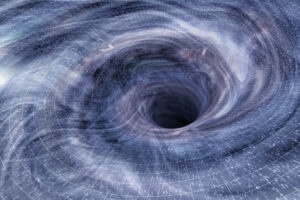
The maximum mass of a neutron star is governed by the competition between gravitational forces pulling matter inward and internal pressures pushing outward. The primary source of this pressure is neutron degeneracy pressure, a quantum mechanical effect arising from the Pauli exclusion principle, which prevents identical neutrons from occupying the same quantum state. Nuclear interactions among particles also contribute to this outward pressure. When the star’s mass exceeds a critical limit, these pressures can no longer counterbalance gravity, leading to gravitational collapse into a black hole.
The Tolman-Oppenheimer-Volkoff Limit
The critical mass boundary separating neutron stars from black holes is known as the Tolman-Oppenheimer-Volkoff (TOV) limit, analogous to the Chandrasekhar limit for white dwarfs. The exact value of the TOV limit depends heavily on the neutron star’s equation of state, which remains uncertain due to the complexities of ultra-dense matter physics. Current theoretical and observational estimates place this limit between approximately 2.1 and 2.3 solar masses (M☉).
Observational Evidence and Constraints
Empirical data from radio pulsar timing and gravitational wave astronomy have been instrumental in refining neutron star mass limits. Pulsars-rapidly spinning neutron stars emitting periodic radio waves-serve as precise cosmic clocks. By analyzing pulsars in binary systems, astronomers can measure their masses with high accuracy. For instance, PSR J0740+6620, one of the most massive known neutron stars, has a mass near 2.1 M☉, supporting models with stiffer equations of state.
Gravitational wave observations, particularly from neutron star mergers like GW170817 detected in 2017, provide additional insights. The gravitational wave signals encode information about the deformability and size of neutron stars, while the fate of the merger remnant-whether it remains a neutron star or collapses into a black hole-depends on the combined mass and internal structure. These observations help tighten constraints on the maximum mass neutron stars can sustain.
Influence of Rotation and Magnetic Fields
Rotation significantly affects the maximum mass a neutron star can support. Rapidly spinning neutron stars experience centrifugal forces that counteract gravity, allowing them to sustain up to 20-25% more mass than their non-rotating counterparts. However, such extreme rotational speeds are uncommon and tend to decrease over time due to mechanisms like magnetic braking and gravitational wave emission.
Magnetic fields, especially in magnetars-neutron stars with magnetic fields trillions of times stronger than Earth’s-also impact the star’s structure. These intense fields can introduce anisotropies and additional pressure components, subtly modifying the equilibrium state. Nonetheless, their effect on the maximum mass limit is generally less significant compared to nuclear physics and rotational dynamics.
Challenges and Future Directions
Pinpointing the exact maximum mass of neutron stars remains challenging due to uncertainties in nuclear interaction models at extreme densities. Experimental efforts to recreate such conditions and advanced computational simulations continue to improve our understanding. Future observations with next-generation gravitational wave detectors and X-ray telescopes promise to further refine these mass limits, enhancing our knowledge of fundamental physics and the life cycles of stars.
Significance of Neutron Star Mass Limits
Determining the upper mass boundary of neutron stars is crucial for multiple reasons. It defines the threshold between neutron stars and black holes, informs models of stellar evolution, and provides a unique window into the behavior of matter under the most extreme conditions known. This knowledge not only advances astrophysics but also deepens our grasp of quantum mechanics and general relativity in regimes inaccessible on Earth.
FAQ
What is a neutron star?
A neutron star is a dense remnant of a massive star that has undergone a supernova explosion, primarily composed of neutrons.
What factors determine the maximum mass of a neutron star?
The maximum mass is influenced by the equation of state, gravitational forces, internal pressures, and effects of rotation and magnetic fields.
What is the Tolman-Oppenheimer-Volkoff limit?
The Tolman-Oppenheimer-Volkoff limit defines the maximum mass for a neutron star, beyond which it will collapse into a black hole.

Leave a Reply