
Short Answer
Definition of Gravity and Its Variability
Gravity is the fundamental force that attracts objects with mass toward one another. While commonly understood as a constant force that keeps us anchored to Earth, gravity actually varies significantly across different celestial bodies. This variation depends primarily on the mass and size of planets, stars, and other astronomical objects, resulting in a diverse range of gravitational strengths throughout the universe.
- Gravity:
The attractive force between masses, responsible for the orbits of planets and the structure of stars. - Variability:
Gravity changes depending on the mass and radius of the celestial body, influencing surface gravity and atmospheric retention.
Fundamental Principles Governing Gravity
The strength of gravity on the surface of any celestial object is governed by the relationship between its mass and radius. This relationship is mathematically expressed by the formula:
g = GM / R²
- g: Surface gravity (acceleration due to gravity)
- G: Universal gravitational constant
- M: Mass of the celestial body
- R: Radius of the celestial body
This equation reveals that gravity intensifies with greater mass and diminishes with increasing radius squared, highlighting the delicate balance between size and density in determining gravitational pull.
Gravity Across Different Planets
Planets within our solar system exhibit a wide range of gravitational forces, shaped by their unique masses and sizes.
- Earth:
With a surface gravity of approximately 9.8 m/s², Earth provides a familiar gravitational environment that supports life and maintains a stable atmosphere. - Jupiter:
As the largest planet, Jupiter’s mass exceeds Earth’s by over 300 times, and its radius is about 11 times larger. This results in a surface gravity roughly 2.5 times stronger than Earth’s, although its gaseous composition means the “surface” is defined by atmospheric pressure rather than solid ground. - Mars:
Mars has about 10% of Earth’s mass and half its radius, leading to a surface gravity around 38% that of Earth. This reduced gravity contributes to its thin atmosphere and presents challenges for sustaining human life.
Gravitational Characteristics of Stars
Stars demonstrate even more extreme variations in gravity due to their immense masses and diverse sizes.
- Red Dwarfs:
These smaller stars can have surface gravities several times that of the Sun because their mass is concentrated in a relatively compact volume. - Supergiants:
Despite their enormous masses-tens or hundreds of times that of the Sun-their vast radii cause surface gravity to be surprisingly low. Their extended, tenuous outer layers reduce the gravitational pull experienced at their surfaces. - White Dwarfs and Neutron Stars:
These stellar remnants exhibit some of the most intense gravitational fields in the universe. A white dwarf, similar in size to Earth but with half the Sun’s mass, has surface gravity over 100,000 times stronger than Earth’s. Neutron stars, with masses greater than the Sun compressed into a sphere about 20 kilometers in diameter, possess gravity so extreme it distorts space-time itself.
Impact of Gravity on Planetary and Stellar Environments
Gravity plays a crucial role in shaping the atmospheres, geological activity, and potential habitability of celestial bodies.
- Atmospheric Retention:
Stronger gravity helps planets hold onto thicker atmospheres, which influence climate and surface conditions. - Geological Processes:
Gravity affects tectonic activity and the behavior of liquids, such as oceans, which are vital for sustaining life. - Habitability:
Planets like Mars, with lower gravity, struggle to maintain dense atmospheres and liquid water, posing challenges for human colonization.
Gravity’s Role in Cosmic Evolution
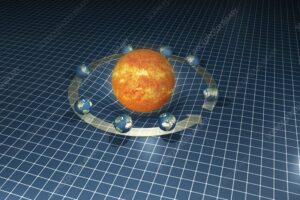
Beyond individual planets and stars, gravity is the architect of cosmic structure and evolution. It governs the formation of stars by balancing inward collapse with outward radiation pressure, orchestrates planetary orbits, and influences the aggregation of matter over billions of years. Without the variability of gravity, the universe would lack the dynamic complexity that gives rise to galaxies, solar systems, and ultimately, life.
Common Misconceptions About Gravity
Gravity is the same everywhere in the universe.
Gravity varies widely depending on the mass and radius of celestial bodies, resulting in different surface gravities.
Larger stars always have stronger surface gravity.
Some massive stars, like supergiants, have lower surface gravity due to their enormous size and diffuse outer layers.
Gravity only affects objects on Earth.
Gravity is a universal force influencing all matter, from planets and stars to galaxies and black holes.
Significance of Understanding Gravity Variations
Grasping how gravity differs across celestial bodies is essential for multiple scientific and practical reasons. It informs space exploration, helps predict planetary atmospheres and climates, and deepens our comprehension of stellar life cycles. Moreover, it enriches our appreciation of the universe’s complexity, revealing how a single force can manifest in myriad ways to shape the cosmos.
Conclusion: Gravity as the Universe’s Dynamic Force
Gravity is far more than a simple pull; it is a dynamic and variable force that sculpts the universe’s architecture. From the gentle tug on a distant dwarf planet to the overwhelming crush on a neutron star, gravity defines the character and fate of celestial bodies. Each planet and star carries a unique gravitational signature, inviting us to explore and understand the diverse cosmic stories written in the language of this invisible yet omnipresent force.
Leave a Reply