

Short Answer
Understanding the Laws of Physics
The laws of physics serve as the fundamental principles that govern the behavior of matter, energy, and the forces that shape the universe. These laws, ranging from Newtonian mechanics to quantum theory, form the backbone of our scientific comprehension of reality. They are often viewed as fixed, universal truths that dictate the interactions of particles, waves, and energy throughout the cosmos.
Distinguishing Laws from Constants
It is crucial to differentiate between the laws of physics and the constants of nature. The laws are conceptual frameworks that describe how physical phenomena behave, such as the inverse-square law of gravity or the laws of thermodynamics. In contrast, constants are specific numerical values embedded within these laws, like the speed of light (c), Planck’s constant (h), and the gravitational constant (G). These constants appear to be invariant and universal, providing the precise parameters that shape the universe’s structure and evolution.
- Gravitational Constant (G):
A slight variation in G would drastically alter stellar processes-an increase could accelerate star lifecycles, while a decrease might inhibit star formation entirely. - Speed of Light (c):
This constant governs the maximum speed at which information and matter can travel, influencing causality and the structure of spacetime.
Could Physical Laws Change Over Time?
The possibility that the laws of physics themselves might evolve is a profound and speculative question. Some theoretical frameworks propose that the laws we observe are local manifestations within a broader multiverse, where different universes may operate under distinct physical rules and constants. This perspective suggests that our universe’s laws might be stable only within our cosmic domain but could vary elsewhere or even shift over cosmic timescales.
Phase Transitions and Symmetry Breaking
Early in the universe’s history, phenomena such as spontaneous symmetry breaking transformed unified forces into the distinct interactions we observe today. This process implies that physical laws can emerge from more fundamental states, hinting that what we consider immutable laws might be emergent rather than absolute.
Quantum Mechanics and Dynamic Spacetime
At the quantum scale, uncertainty and probabilistic behavior challenge classical determinism. Advanced theories like quantum gravity and string theory propose that spacetime itself may be dynamic and discrete, suggesting that constants and laws could be effective averages of deeper, fluctuating realities.
The Role of Entropy and the Arrow of Time
The second law of thermodynamics, which dictates the increase of entropy or disorder, is a cornerstone of physical law related to time’s directionality. If fundamental laws were mutable, it raises questions about whether entropy’s inexorable rise could be altered, potentially affecting causality and the universe’s temporal evolution.
The Anthropic Principle and Fine-Tuning
The anthropic principle observes that the universe’s physical parameters appear finely tuned to allow the existence of life. If laws or constants were subject to change, the delicate balance enabling complexity and consciousness might be disrupted, making life a rare or transient phenomenon. This principle underscores the significance of stable physical laws in sustaining the conditions necessary for observers like us to exist.
Current Scientific Perspectives and Evidence
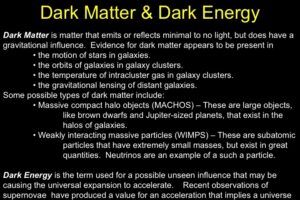
To date, no definitive experimental data confirm that the laws of physics have altered or will alter. However, ongoing research into dark energy, dark matter, and the early universe continues to uncover anomalies that challenge existing models. Some hypotheses suggest that constants such as the fine-structure constant might vary subtly over cosmological timescales, implying that the universe’s fundamental blueprint could be more fluid than previously thought.
Philosophical Implications
The debate over whether physical laws are descriptive summaries of observed phenomena or prescriptive mandates of nature touches on the philosophical foundations of science. If laws are descriptive, they represent provisional knowledge subject to refinement. If prescriptive, they imply an unchanging cosmic order that even the universe itself must obey.
Conclusion: The Cosmic Tapestry of Physical Laws
Envision the laws of physics as threads woven into the vast tapestry of reality, each constant and principle interlacing to form the patterns we perceive. Whether these threads are permanently fixed or capable of reweaving remains an open question-one that continues to inspire physicists and philosophers alike. This enduring mystery fuels the quest to understand not only the mechanics of the universe but also the nature of the rules that govern its eternal dance.


Leave a Reply