
Short Answer
Understanding Gravitational Waves
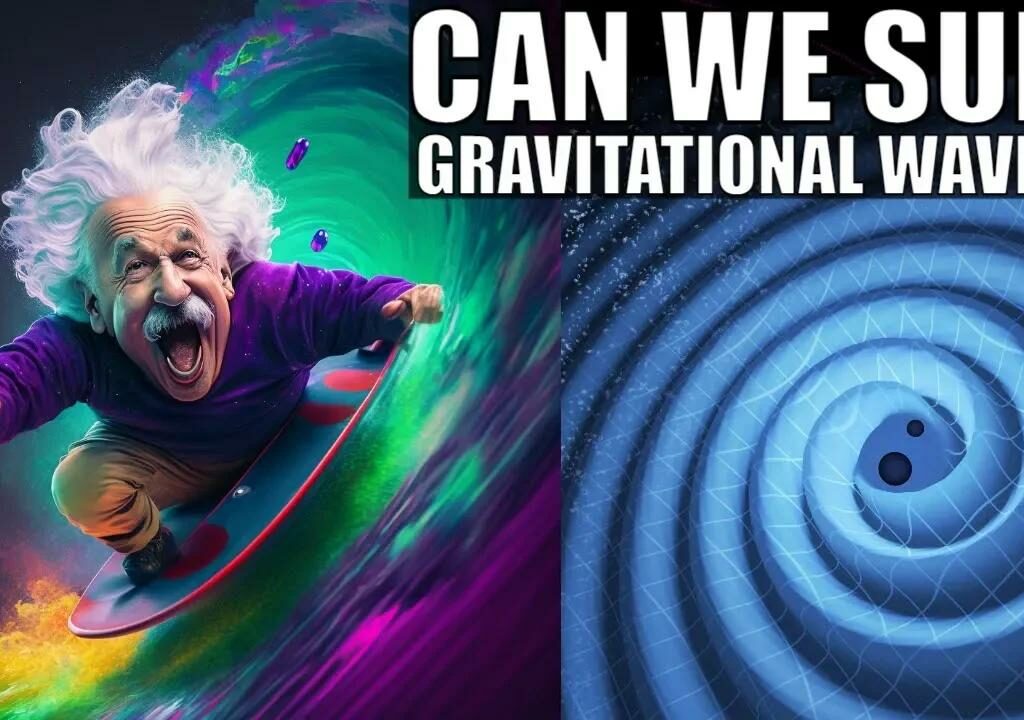
Gravitational waves are ripples in the fabric of spacetime, generated by massive accelerating objects such as merging black holes or neutron stars. Predicted by Albert Einstein’s general theory of relativity over a century ago, these waves propagate at the speed of light, carrying information about some of the universe’s most violent and energetic phenomena. Their detection, first achieved in 2015 through highly sensitive laser interferometers, marked a revolutionary milestone in astrophysics, opening a new window to observe cosmic events beyond electromagnetic radiation.
Nature and Characteristics of Gravitational Waves
Unlike conventional waves such as sound or water waves, gravitational waves do not transport matter. Instead, they represent dynamic distortions in spacetime geometry itself, stretching and compressing distances as they pass. The waves produced by cataclysmic events like black hole collisions have wavelengths that can span thousands to millions of kilometers, vastly exceeding the size of any human-made spacecraft. By the time these waves reach Earth, their amplitude-the degree to which they deform spacetime-is extraordinarily small, often less than the diameter of a proton, making them incredibly subtle and difficult to detect.
Challenges of Using Gravitational Waves for Space Travel
The idea of “surfing” gravitational waves to traverse the cosmos is a captivating concept but faces numerous fundamental obstacles:
- Absence of a Physical Medium:
Gravitational waves are fluctuations in spacetime itself rather than waves traveling through a medium. This means there is no physical surface or substance upon which a spacecraft could literally ride or float. - Scale and Wavelength:
The immense wavelengths of gravitational waves dwarf any conceivable spacecraft, making it nearly impossible to harness or interact with these waves on a localized scale. - Minuscule Amplitude:
The extremely faint distortions caused by gravitational waves at great distances mean that any effect on a spacecraft would be negligible, insufficient to provide propulsion or meaningful movement. - Energy Requirements:
The energy released in natural gravitational wave events, such as black hole mergers, is colossal-equivalent to converting several solar masses directly into gravitational radiation in fractions of a second. Replicating or generating such energy artificially is far beyond current or foreseeable human technology. - Navigation and Control:
Even if a vessel could somehow resonate with a gravitational wave, steering or controlling its trajectory would be nearly impossible, as the craft would be subject to the wave’s path and velocity without any means of modulation. - Potential Hazards:
The intense tidal forces near strong gravitational wave sources could be destructive to matter and technology, posing significant risks to any hypothetical travelers.
Theoretical Propulsion Concepts Related to Spacetime Manipulation
While direct propulsion via gravitational waves remains impractical, theoretical physics explores other exotic methods of faster-than-light travel involving spacetime manipulation. A notable example is the Alcubierre warp drive, which proposes contracting spacetime in front of a spacecraft and expanding it behind, effectively allowing superluminal travel without violating relativity. This concept requires exotic matter with negative energy density, a substance not yet observed or created. Although gravitational waves are natural spacetime fluctuations, their diffuse energy and uncontrollable nature make them unsuitable for propulsion in comparison.
Gravitational Waves in Astronomy and Scientific Discovery
Beyond speculative travel, gravitational waves have already transformed our understanding of the universe. Gravitational wave astronomy enables scientists to detect and analyze cosmic events invisible to traditional telescopes, such as black hole mergers and neutron star collisions. This new observational method complements electromagnetic observations, providing a richer, multi-messenger view of astrophysical phenomena. For the foreseeable future, the primary human interaction with gravitational waves will remain scientific exploration rather than physical transportation.
Common Misconceptions About Gravitational Wave Travel
Gravitational waves can be used like ocean waves to propel spacecraft.
Gravitational waves are distortions in spacetime, not physical waves with a medium to ride on, making them unsuitable for direct propulsion.
The energy in gravitational waves can be easily harnessed for travel.
The energy is extremely diffuse and requires astronomical scales to generate, far beyond current technological capabilities.
Navigating gravitational waves would be straightforward.
Control over gravitational wave trajectories is currently impossible, leaving any craft at the mercy of the wave’s natural path.
Significance of Gravitational Waves in Modern Science
Gravitational waves hold immense importance in advancing our comprehension of the cosmos. They provide a novel means to observe phenomena that are otherwise hidden or obscured in electromagnetic spectra, enriching astrophysics and cosmology. While their direct application in human space travel remains speculative and fraught with challenges, the study of gravitational waves continues to inspire innovative thinking about the nature of spacetime, energy, and the future of interstellar exploration.
Future Prospects and the Spirit of Exploration
Although the concept of surfing gravitational waves to journey through space currently belongs to the realm of science fiction, it stimulates curiosity and drives scientific inquiry. History shows that imaginative ideas often precede breakthroughs, and ongoing research into spacetime manipulation and gravitational phenomena may one day reveal new possibilities. For now, gravitational waves remain a profound cosmic symphony-an invitation to deepen our understanding of the universe and to dream about the extraordinary ways humanity might one day traverse it.
FAQ
Can gravitational waves be harnessed for travel?
No, they are distortions in spacetime without a medium for propulsion.
What makes gravitational wave research significant?
It enhances our understanding of the universe and reveals phenomena invisible to traditional telescopes.


Leave a Reply