
Short Answer
Definition of Gravity
Gravity is a fundamental force of nature that causes objects with mass to attract one another. It is the invisible force that keeps us grounded on Earth and orchestrates the movements of planets, stars, and galaxies throughout the cosmos. This force is essential in shaping the structure and behavior of the universe, influencing everything from the fall of an apple to the orbits of celestial bodies.
- Universal Attraction:
Every mass exerts a gravitational pull on every other mass, regardless of size or distance. - Dependence on Mass and Distance:
The strength of gravity depends on the amount of mass involved and the distance separating the objects.
Gravity on Earth Compared to Other Planets
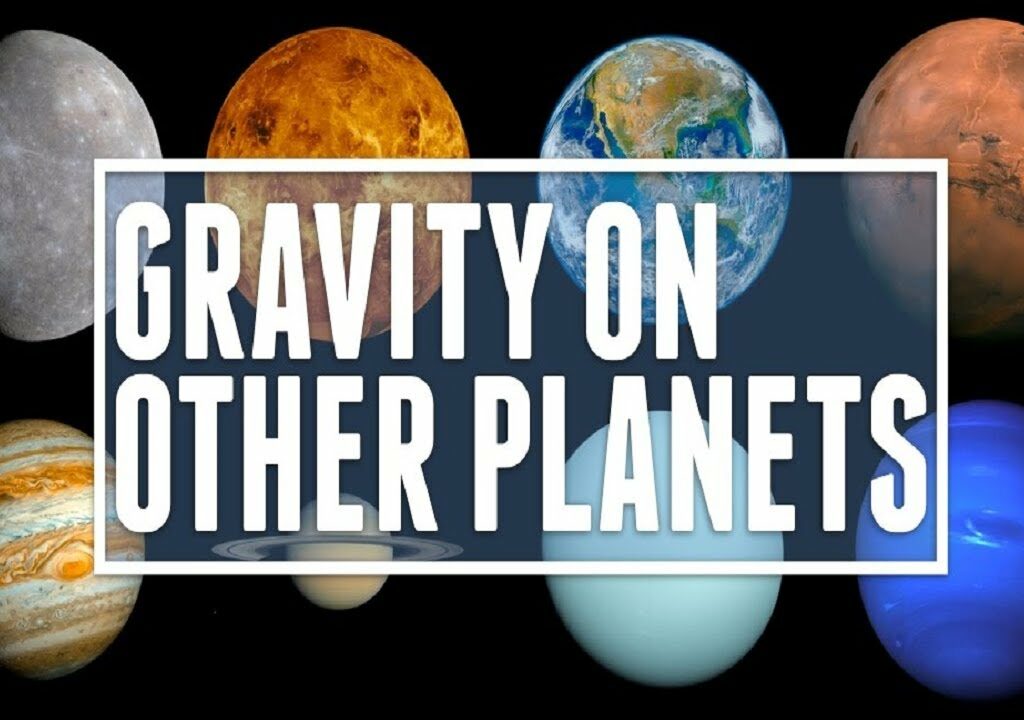
Earth’s gravitational acceleration at its surface is approximately 9.8 meters per second squared (m/s²). This value is not arbitrary but results from Earth’s specific mass and radius, creating a gravitational pull that supports life as we know it. To understand Earth’s gravity in a broader context, it is insightful to compare it with the gravitational forces found on other planets within our solar system.
Gravity on Terrestrial Planets
Venus, Earth’s nearest neighbor in both size and proximity, has a surface gravity close to 8.87 m/s², about 90% of Earth’s gravity. Despite being slightly smaller and less massive-around 81.5% of Earth’s mass-Venus’s gravity is strong enough to retain a thick atmosphere, influencing its climate and potential for exploration.
Mars, in contrast, has a much weaker gravitational pull of about 3.71 m/s², roughly 38% of Earth’s gravity. This reduced gravity significantly impacts human physiology, potentially causing muscle weakening and bone density loss over time. Mars’s low gravity also contributes to its thin atmosphere, making the environment more hostile compared to Earth.
Gravity on Gas Giants
At the opposite end of the spectrum are the gas giants, such as Jupiter and Saturn. Jupiter’s surface gravity is approximately 24.79 m/s², more than two and a half times that of Earth. This immense gravitational force results from Jupiter’s massive size and density, creating an environment vastly different from terrestrial planets. Saturn’s gravity, while less intense at 10.44 m/s², still exceeds Earth’s, highlighting the wide range of gravitational strengths across the solar system.
How Gravity Functions: The Underlying Principles
Gravity operates according to Newton’s Law of Universal Gravitation, which states that every two masses attract each other with a force proportional to the product of their masses and inversely proportional to the square of the distance between their centers. This relationship explains why larger and denser planets exert stronger gravitational pulls, while increased distance weakens the force.
Newton’s Law of Universal Gravitation
The gravitational force (F) between two objects is given by the formula:
F = G × (m₁ × m₂) / r²
- F: Gravitational force between the objects
- G: Gravitational constant (6.674 × 10⁻¹¹ N·m²/kg²)
- m₁, m₂: Masses of the two objects
- r: Distance between the centers of the two masses
On a planetary surface, the acceleration due to gravity (g) can be simplified as:
g = G × M / R²
- g: Acceleration due to gravity at the surface
- M: Mass of the planet
- R: Radius of the planet
Significance of Earth’s Gravity
Earth’s gravity is finely balanced to sustain life. It is strong enough to hold a protective atmosphere and maintain liquid water, yet gentle enough to allow complex organisms to thrive without excessive energy expenditure. This balance is often cited in discussions of the anthropic principle, which suggests that the universe’s physical constants appear tuned to permit human existence.
If Earth’s gravity were significantly stronger, movement and biological functions would be more energetically demanding, potentially hindering the evolution of complex life. Conversely, a weaker gravitational pull might fail to retain an atmosphere dense enough to shield life from harmful radiation and maintain stable bodies of water.
Impact of Gravity on Human Physiology and Experience
Gravity profoundly influences human biology and perception. On Earth, our bodies have adapted to the constant pull, which affects muscle strength, bone density, and fluid distribution. Astronauts returning from microgravity environments often report a sensation of heaviness as their bodies readjust to Earth’s gravity, highlighting the intimate connection between gravity and human sensory experience.
Gravity’s Role in Planetary and Cosmic Phenomena
Beyond its effects on living organisms, gravity shapes planetary interiors by compressing matter, which influences magnetic fields, tectonic activity, and the presence of subsurface oceans, especially on icy moons. Understanding gravity is crucial in the search for habitable exoplanets, as Earth-like gravity may indicate conditions favorable to life.
Common Misconceptions About Gravity
Gravity is the same everywhere on Earth.
Gravity varies slightly depending on altitude, latitude, and local geological structures.
Gravity only affects objects on Earth.
Gravity is a universal force acting between all masses, governing the motion of celestial bodies throughout the universe.
Why Understanding Gravity Is Essential
Gravity is a cornerstone of physics and astronomy, underpinning the structure and dynamics of the universe. Its influence extends from everyday life to the grand scale of galaxies, making it vital for scientific exploration, space travel, and understanding the conditions that allow life to exist. By studying gravity across different planets, we gain insight into the delicate balance that makes Earth uniquely hospitable and expand our horizons in the quest to explore and inhabit other worlds.
FAQ
How does Earth's gravity compare to other planets?
Earth's gravity is stronger than Mars's but weaker than that of gas giants like Jupiter.
What is the significance of Earth's gravity?
It sustains life by holding an atmosphere and maintaining liquid water.
Do gravity levels vary across Earth?
Yes, gravity can vary slightly based on altitude and local geological structures.

Leave a Reply