
Short Answer
Understanding Cosmology: An Ever-Evolving Quest
The study of cosmology-the science of the universe’s origin, structure, and ultimate fate-has captivated human curiosity for centuries. As we delve deeper into the vastness of space and time, a profound question emerges: Can cosmology ever reach a definitive conclusion? While this idea might initially seem straightforward, the reality is far more complex. Rather than approaching a finite endpoint, cosmology continuously transforms our understanding of the universe and challenges the very nature of knowledge itself.
Definition and Scope of Cosmology
Cosmology is the branch of astronomy that investigates the large-scale properties and evolution of the universe as a whole. It encompasses the study of cosmic origins, the distribution of matter and energy, and the fundamental laws governing cosmic phenomena.
- Cosmic Origins:
Examines how the universe began, including theories such as the Big Bang. - Structure and Evolution:
Studies the formation and development of galaxies, stars, and cosmic web patterns. - Fundamental Components:
Investigates dark matter, dark energy, and ordinary matter that constitute the universe.
The Expanding Horizon of Cosmological Knowledge
Unlike many scientific disciplines that may reach a stage of completion, cosmology is characterized by an ever-widening frontier of discovery. The universe’s immense scale-both in space and time-ensures that each breakthrough often uncovers new mysteries rather than final answers.
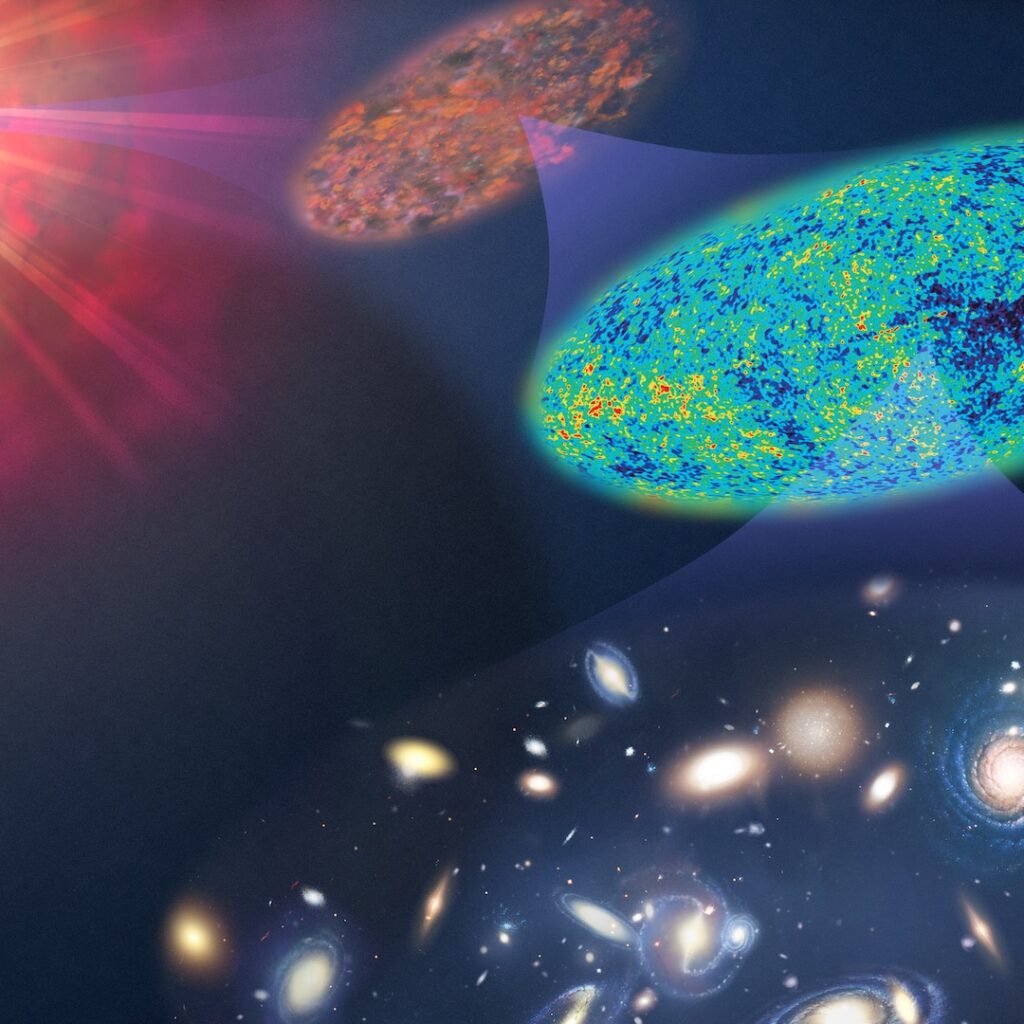
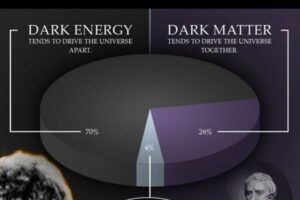
For example, while landmark discoveries such as the cosmic microwave background radiation have illuminated the universe’s early conditions, the enigmatic nature of dark matter and dark energy remains largely unresolved. These invisible constituents make up approximately 95% of the universe’s total mass-energy content and play crucial roles in cosmic expansion and galaxy formation, yet their true nature eludes scientists.
The Multiverse Hypothesis and Its Implications
Adding further complexity is the speculative concept of the multiverse, which proposes the existence of countless universes beyond our observable realm. If this hypothesis holds true, it implies that our cosmic understanding is inherently limited to a single “island” within an infinite archipelago of universes. This idea not only stretches scientific inquiry but also redefines philosophical perspectives on knowledge and existence.
Epistemological Challenges in Cosmology
Cosmology faces unique philosophical and methodological challenges because the universe is both the subject and the context of all scientific investigation. Unlike other sciences, cosmologists cannot observe the universe from an external vantage point; they must rely on indirect evidence and evolving theoretical frameworks to interpret observations.
This intrinsic limitation necessitates a degree of epistemic humility, as demonstrated by the history of cosmology’s paradigm shifts. From the acceptance of an expanding universe to the recognition that ordinary matter constitutes only a small fraction of cosmic content, each scientific advance has simultaneously resolved questions and unveiled deeper enigmas.
Technological and Theoretical Advances Shaping Cosmology
Future progress in cosmology is closely tied to innovations in observational technology and theoretical physics. Next-generation telescopes and space observatories are poised to provide unprecedented insights into the early universe and its large-scale structure. Concurrently, developments in quantum gravity and string theory may offer breakthroughs in understanding the fundamental nature of spacetime.
Nevertheless, these advancements are likely to reveal further layers of complexity, much like exploring fractal patterns that exhibit infinite detail at every scale.
Cosmology as an Ongoing Intellectual Journey
Rather than viewing cosmology as a finite project with a clear endpoint, it is more accurately described as a continuous intellectual expedition. Each new discovery reshapes our comprehension and generates fresh questions, creating an ever-expanding tapestry of knowledge.
This perpetual unfolding resonates with the human spirit’s innate curiosity. The true allure of cosmology lies not solely in definitive answers but in the mysteries that lie beyond our current understanding, inviting us to explore the vastness of existence and our place within it.
Why Cosmology’s Endless Pursuit Matters
The ongoing exploration of cosmology holds profound significance for science, philosophy, and human culture. It challenges our perceptions of scale, time, and meaning, reminding us of our small yet inquisitive role in the cosmic narrative.
Far from diminishing the field’s importance, the absence of a final conclusion enhances cosmology’s appeal, transforming it into a dynamic quest that embraces uncertainty and celebrates the unknown. This journey expands the horizons of human knowledge and inspires continual wonder about the universe’s grand epic.
Common Misconceptions About Cosmology
Cosmology will eventually provide all the answers about the universe.
Due to the universe’s complexity and the limits of observation, cosmology is likely an endless pursuit where each answer leads to new questions.
Dark matter and dark energy are fully understood.
Despite their critical role, these components remain largely mysterious and are active areas of research.
The multiverse is a proven scientific fact.
The multiverse remains a theoretical hypothesis without direct empirical evidence, serving more as a philosophical and scientific frontier.
FAQ
What is cosmology?
Cosmology is the branch of astronomy that studies the large-scale properties and evolution of the universe, including its origins, structure, and fundamental components.
Will cosmology ever be finished?
Due to the complexity of the universe and the limits of observation, cosmology is likely an endless pursuit where each answer leads to new questions.
What are dark matter and dark energy?
Dark matter and dark energy are mysterious components of the universe that make up about 95% of its total mass-energy content, yet remain largely unexplained.



Leave a Reply