
Short Answer
Definition of Brown Dwarfs and Auroras
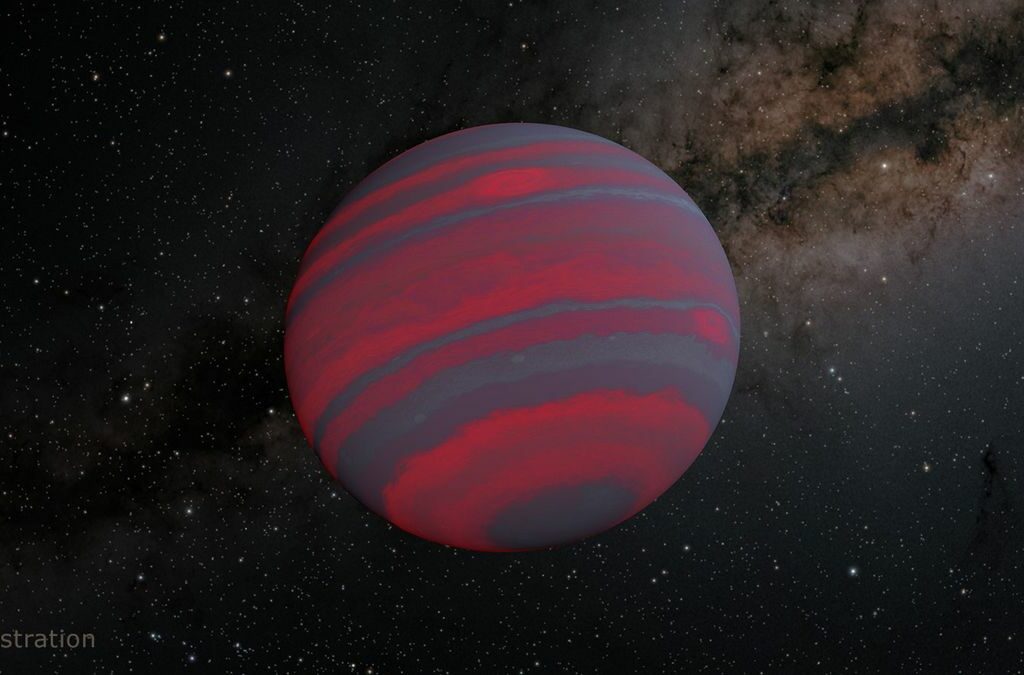
Brown dwarfs are celestial objects that occupy an intermediate position between the largest planets and the smallest stars. They possess masses roughly between 13 and 80 times that of Jupiter but lack the necessary mass to sustain hydrogen fusion in their cores, which is the hallmark of true stars. This limitation results in cooler temperatures and diminished brightness compared to stars. Despite this, brown dwarfs can still undergo limited nuclear reactions, such as deuterium and lithium burning, distinguishing them from both planets and stars.
Auroras are luminous atmospheric phenomena caused by interactions between magnetic fields and charged particles. While Earth’s auroras are the most familiar, similar displays have been observed or theorized on other celestial bodies, including brown dwarfs, where unique atmospheric and magnetic conditions give rise to spectacular light shows.
Atmospheric and Magnetic Characteristics of Brown Dwarfs
Though often labeled as “failed stars,” brown dwarfs exhibit complex atmospheric behaviors. Their atmospheres are subject to extreme conditions that facilitate interactions between charged particles and magnetic fields. These interactions are central to the formation of auroras.
- Magnetic Fields:
Brown dwarfs generate magnetic fields through dynamo processes within their interiors. Their rapid rotation rates amplify these magnetic fields, sometimes producing strengths comparable to or exceeding those found in planets and stars. - Charged Particles:
Charged particles, originating from stellar winds or surrounding cosmic material such as gas and dust clouds, become trapped by the magnetic fields of brown dwarfs. These particles spiral along magnetic field lines and collide with atmospheric gases, exciting them and causing light emission.
Mechanism Behind Auroral Displays on Brown Dwarfs
The auroral phenomenon on brown dwarfs arises from the interaction between their magnetic fields and incoming charged particles. When these particles enter the magnetic environment, they are guided along field lines toward the atmosphere, where collisions with atmospheric molecules excite the gases. This excitation leads to the emission of light at various wavelengths, producing auroras.
Color Variations and Atmospheric Composition
The hues and brightness of auroras on brown dwarfs depend on the atmospheric composition and the energy of the impacting particles. Different gases emit distinct colors when ionized:
- Hydrogen:
Collisions involving hydrogen atoms often produce red auroral glows. - Sodium:
Interactions with sodium can generate yellowish tones.
This diversity in coloration creates a dynamic and visually rich auroral display that can range from vivid to subtle, offering valuable clues about the atmospheric makeup of these substellar objects.
Detection Techniques for Auroras on Brown Dwarfs
Observing auroras on brown dwarfs is challenging due to their faintness and vast distances from Earth. However, advances in astronomical instrumentation have made it increasingly feasible:
- Infrared Astronomy:
Brown dwarfs emit primarily in the infrared spectrum, and modern infrared telescopes can detect their atmospheric features and potential auroral activity. - Radio Emissions:
Auroral processes generate radio waves when charged particles interact with magnetic fields. Sensitive radio telescopes can capture these emissions, providing indirect evidence of auroras. - Spectroscopy and Photometry:
Analyzing the light spectrum and brightness variations helps identify auroral signatures and atmospheric dynamics.
Scientific Significance of Auroras on Brown Dwarfs
Studying auroras on brown dwarfs enhances our understanding of several key astrophysical concepts:
- Magnetic Field Dynamics:
Investigating how magnetic fields operate in substellar objects informs models of magnetic generation and behavior across different celestial bodies. - Atmospheric Processes:
Auroral activity reveals the interactions between charged particles and atmospheric gases, shedding light on atmospheric composition and dynamics. - Stellar and Planetary Boundaries:
Brown dwarfs serve as transitional objects between stars and planets, and auroral studies help clarify the physical processes that define these categories. - Planetary System Formation:
Understanding auroras on brown dwarfs may provide insights into the environments surrounding young stars and the early stages of planet formation.
Future Research and Technological Developments
Ongoing and upcoming advancements in astronomical technology promise to deepen our knowledge of brown dwarfs and their auroral phenomena:
- Next-Generation Telescopes:
Enhanced spectroscopic and photometric instruments will allow for more detailed observations of brown dwarf atmospheres and auroras. - High-Resolution Imaging:
Improved imaging techniques will enable clearer visualization of auroral structures and magnetic field interactions. - Expanded Radio Astronomy:
More sensitive radio arrays will facilitate the detection of faint auroral radio emissions, broadening the scope of observational data.
Conclusion: The Broader Impact of Brown Dwarf Auroras
The exploration of auroral activity on brown dwarfs offers a unique perspective on the complex interplay between magnetic fields, charged particles, and atmospheric conditions in substellar environments. These “failed stars” illuminate the cosmos not through nuclear fusion but through their dynamic interactions with surrounding space. Continued research into their auroras not only enriches our understanding of brown dwarfs themselves but also contributes to the broader comprehension of magnetic and atmospheric phenomena across the universe.
FAQ
What are brown dwarfs?
Brown dwarfs are celestial objects that are larger than planets but smaller than stars, lacking the mass to sustain hydrogen fusion.
How do auroras form on brown dwarfs?
Auroras on brown dwarfs form from the interaction between their magnetic fields and incoming charged particles, which collide with atmospheric gases and emit light.
Leave a Reply